Nagarajan Balakrishnan, Schoen Martin A W, Trudel Simon, Qureshi Ahmed Jawad, Mertiny Pierre
Department of Mechanical Engineering, University of Alberta, 9211-116 St., NW Edmonton, AB T6G 1H9, Canada.
Department of Chemistry, University of Calgary, 2500 University Dr. NW, Calgary, AB T2N 1N4, Canada.
Polymers (Basel). 2020 Sep 20;12(9):2143. doi: 10.3390/polym12092143.
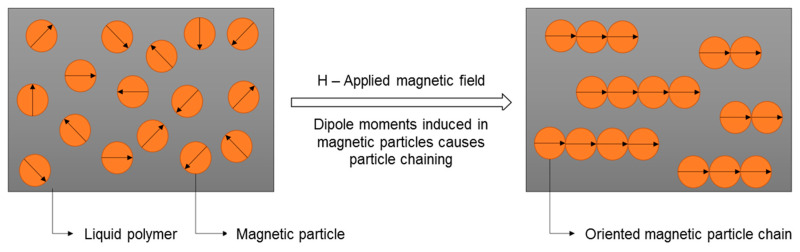
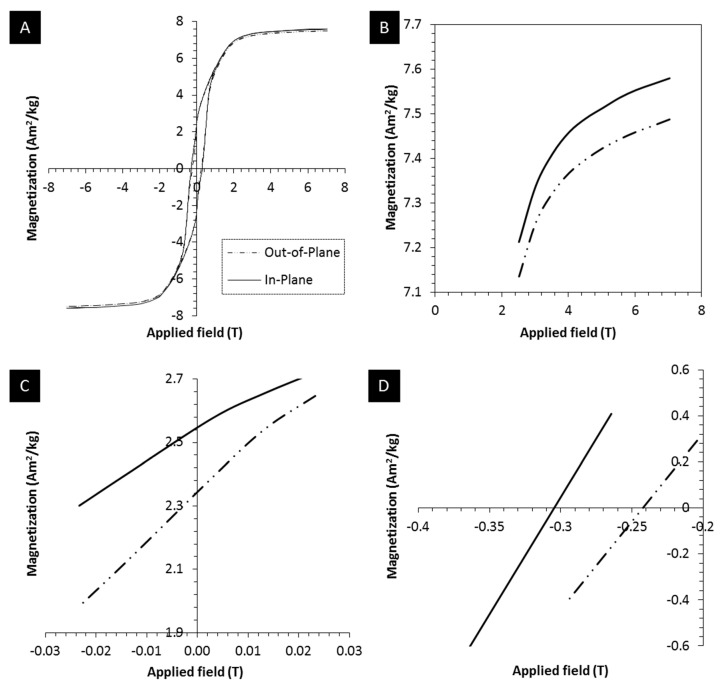
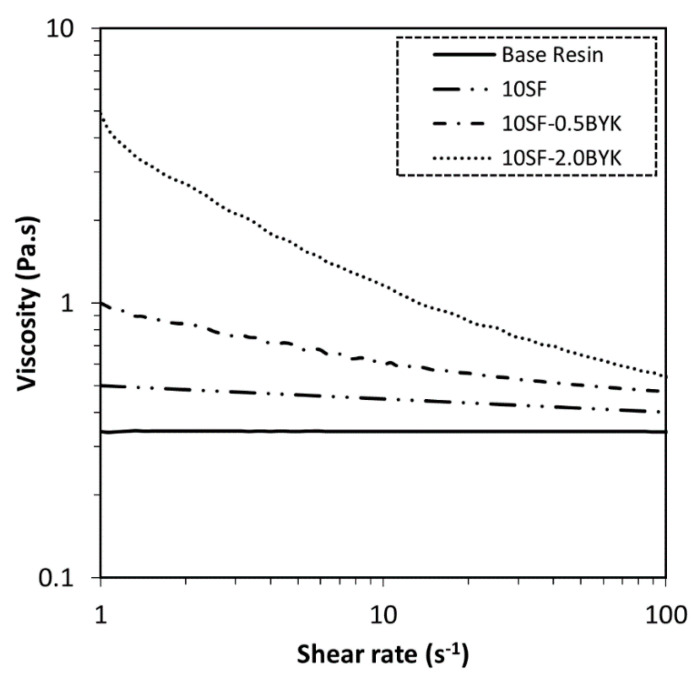
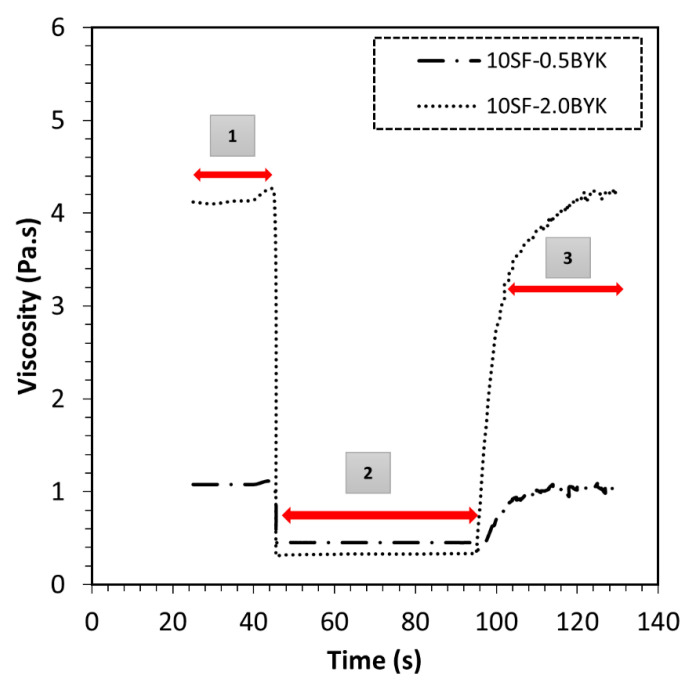
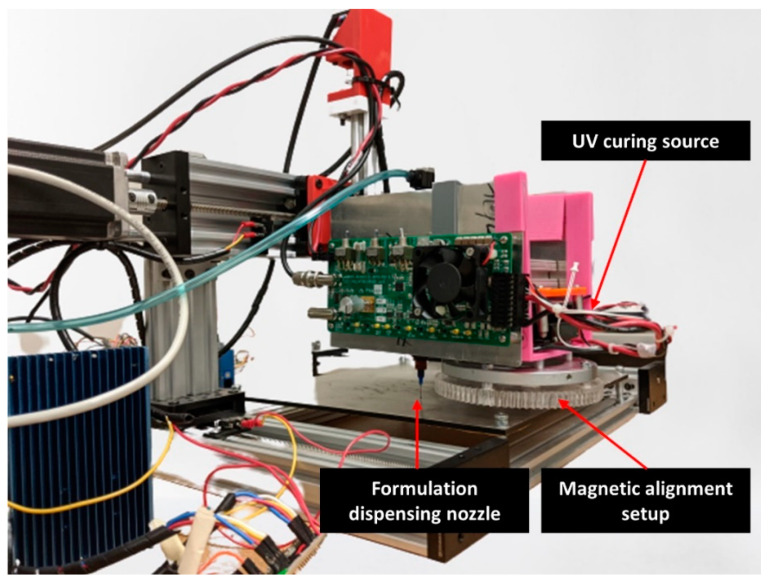
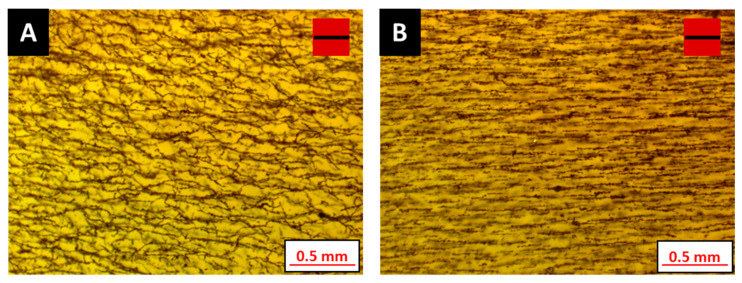
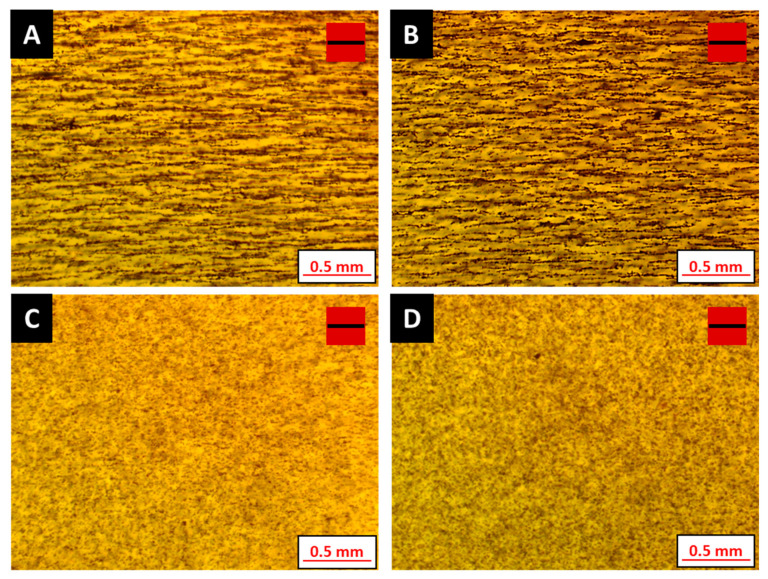
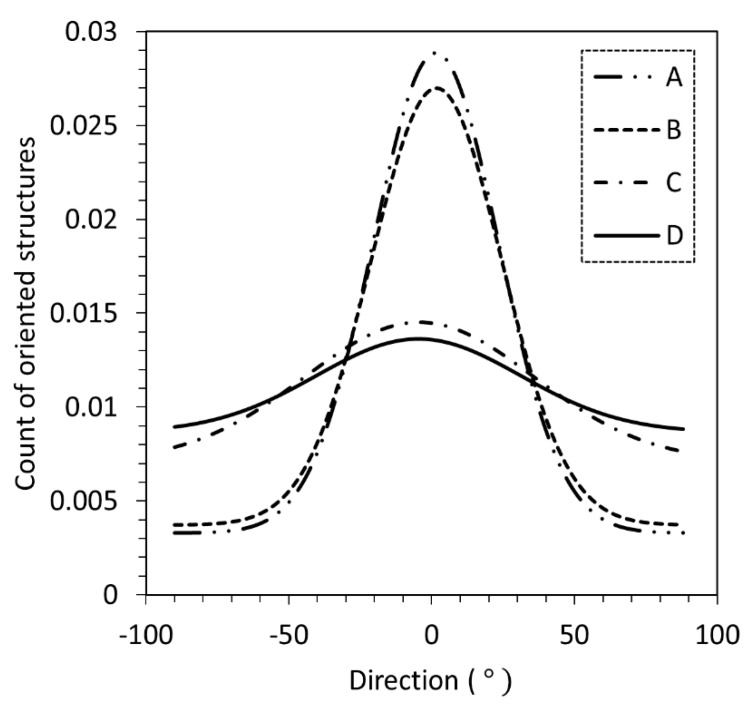
Magnetic composites play a significant role in various electrical and electronic devices. Properties of such magnetic composites depend on the particle microstructural distribution within the polymer matrix. In this study, a methodology to manufacture magnetic composites with isotropic and anisotropic particle distribution was introduced using engineered material formulations and manufacturing methods. An in-house developed material jetting 3D printer with particle alignment capability was utilized to dispense a UV curable resin formulation to the desired computer aided design (CAD) geometry. Formulations engineered using additives enabled controlling the rheological properties and the microstructure at different manufacturing process stages. Incorporating rheological additives rendered the formulation with thixotropic properties suitable for material jetting processes. Particle alignment was accomplished using a magnetic field generated using a pair of permanent magnets. Microstructure control in printed composites was observed to depend on both the developed material formulations and the manufacturing process. The rheological behavior of filler-modified polymers was characterized using rheometry, and the formulation properties were derived using mathematical models. Experimental observations were correlated with the observed mechanical behavior changes in the polymers. It was additionally observed that higher additive content controlled particle aggregation but reduced the degree of particle alignment in polymers. Directionality analysis of optical micrographs was utilized as a tool to quantify the degree of filler orientation in printed composites. Characterization of in-plane and out-of-plane magnetic properties using a superconducting quantum interference device (SQUID) magnetometer exhibited enhanced magnetic characteristics along the direction of field structuring. Results expressed in this fundamental research serve as building blocks to construct magnetic composites through material jetting-based additive manufacturing processes.
磁性复合材料在各种电气和电子设备中发挥着重要作用。此类磁性复合材料的性能取决于聚合物基体中颗粒的微观结构分布。在本研究中,采用工程材料配方和制造方法,引入了一种制造具有各向同性和各向异性颗粒分布的磁性复合材料的方法。利用一台内部开发的具有颗粒排列能力的材料喷射3D打印机,将紫外光固化树脂配方分配到所需的计算机辅助设计(CAD)几何形状中。使用添加剂设计的配方能够在不同制造工艺阶段控制流变性能和微观结构。加入流变添加剂使配方具有适合材料喷射工艺的触变性能。利用一对永久磁铁产生的磁场实现颗粒排列。观察到印刷复合材料中的微观结构控制取决于所开发的材料配方和制造工艺。使用流变仪对填料改性聚合物的流变行为进行了表征,并使用数学模型推导了配方性能。将实验观察结果与聚合物中观察到的力学行为变化进行了关联。此外还观察到,较高的添加剂含量可控制颗粒聚集,但会降低聚合物中颗粒的排列程度。利用光学显微镜照片的方向性分析作为一种工具,来量化印刷复合材料中填料的取向程度。使用超导量子干涉装置(SQUID)磁力计对平面内和平面外磁性进行表征,结果表明沿磁场结构方向的磁特性增强。本基础研究中给出的结果是通过基于材料喷射的增材制造工艺构建磁性复合材料的基石。