Department of Molecular Biology, Max Planck Institute for Infection Biology, Berlin, Germany.
Technische Universität Berlin, Institute of Biotechnology, Berlin, Germany.
mBio. 2020 Sep 22;11(5):e01911-20. doi: 10.1128/mBio.01911-20.
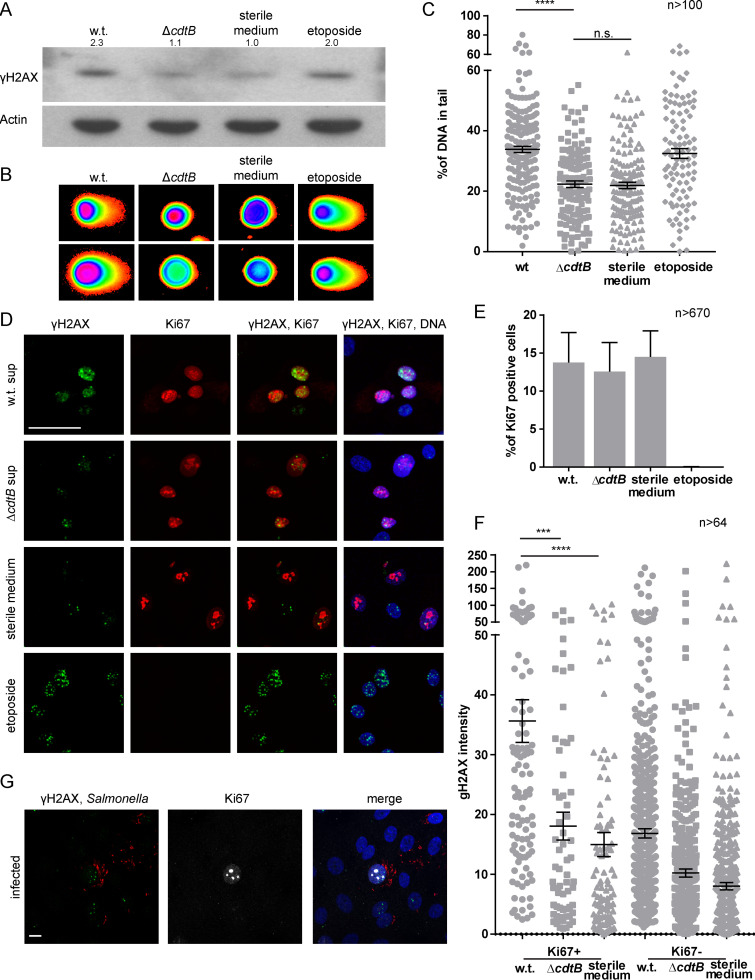
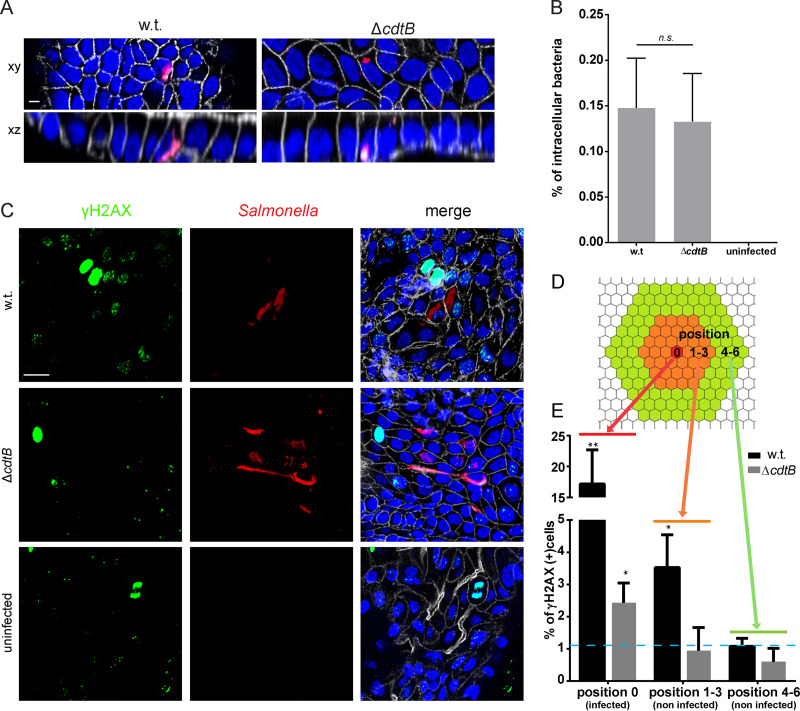
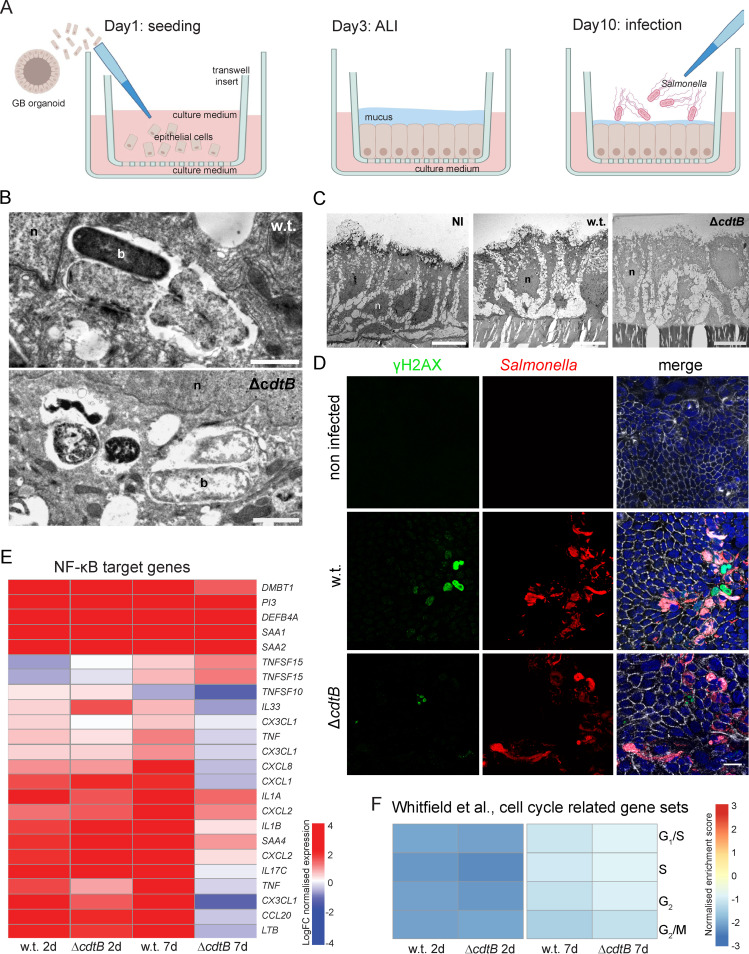
Carcinoma of the gallbladder (GBC) is the most frequent tumor of the biliary tract. Despite epidemiological studies showing a correlation between chronic infection with Typhi/Paratyphi A and GBC, the underlying molecular mechanisms of this fatal connection are still uncertain. The murine serovar Typhimurium has been shown to promote transformation of genetically predisposed cells by driving mitogenic signaling. However, insights from this strain remain limited as it lacks the typhoid toxin produced by the human serovars Typhi and Paratyphi A. In particular, the CdtB subunit of the typhoid toxin directly induces DNA breaks in host cells, likely promoting transformation. To assess the underlying principles of transformation, we used gallbladder organoids as an infection model for Paratyphi A. In this model, bacteria can invade epithelial cells, and we observed host cell DNA damage. The induction of DNA double-strand breaks after infection depended on the typhoid toxin CdtB subunit and extended to neighboring, non-infected cells. By cultivating the organoid derived cells into polarized monolayers in air-liquid interphase, we could extend the duration of the infection, and we observed an initial arrest of the cell cycle that does not depend on the typhoid toxin. Non-infected intoxicated cells instead continued to proliferate despite the DNA damage. Our study highlights the importance of the typhoid toxin in causing genomic instability and corroborates the epidemiological link between infection and GBC. Bacterial infections are increasingly being recognized as risk factors for the development of adenocarcinomas. The strong epidemiological evidence linking infection to stomach cancer has paved the way to the demonstration that bacterial infections cause DNA damage in the host cells, initiating transformation. In this regard, the role of bacterial genotoxins has become more relevant. serovars Typhi and Paratyphi A have been clinically associated with gallbladder cancer. By harnessing the stem cell potential of cells from healthy human gallbladder explant, we regenerated and propagated the epithelium of this organ and used these cultures to model Paratyphi A infection. This study demonstrates the importance of the typhoid toxin, encoded only by these specific serovars, in causing genomic instability in healthy gallbladder cells, posing intoxicated cells at risk of malignant transformation.
胆囊癌(GBC)是胆道最常见的肿瘤。尽管流行病学研究表明,伤寒/副伤寒 A 型慢性感染与 GBC 之间存在相关性,但这种致命联系的潜在分子机制仍不确定。鼠伤寒血清型已被证明通过驱动有丝分裂信号促进遗传易感性细胞的转化。然而,由于该菌株缺乏人类血清型伤寒和副伤寒 A 产生的伤寒毒素,因此其见解仍然有限。特别是,伤寒毒素的 CdtB 亚基直接诱导宿主细胞中的 DNA 断裂,可能促进转化。为了评估转化的基本原理,我们使用胆囊类器官作为副伤寒 A 的感染模型。在该模型中,细菌可以侵入上皮细胞,并且我们观察到宿主细胞 DNA 损伤。感染后 DNA 双链断裂的诱导取决于伤寒毒素 CdtB 亚基,并扩展到相邻的、未感染的细胞。通过将类器官衍生的细胞在气液界面中培养成极化单层,我们可以延长感染的持续时间,并且我们观察到初始的细胞周期停滞,这并不依赖于伤寒毒素。未感染的中毒细胞尽管存在 DNA 损伤,但仍继续增殖。我们的研究强调了伤寒毒素在引起基因组不稳定性方面的重要性,并证实了感染与 GBC 之间的流行病学联系。细菌感染越来越被认为是腺癌发展的危险因素。将感染与胃癌联系起来的强有力的流行病学证据为证明细菌感染导致宿主细胞中的 DNA 损伤,从而引发转化铺平了道路。在这方面,细菌遗传毒素的作用变得更加相关。伤寒和副伤寒 A 血清型已与胆囊癌临床相关。通过利用来自健康人胆囊外植体的细胞的干细胞潜力,我们再生并增殖了该器官的上皮细胞,并使用这些培养物来模拟副伤寒 A 感染。这项研究表明,仅由这些特定血清型编码的伤寒毒素在导致健康胆囊细胞基因组不稳定方面起着重要作用,使中毒细胞面临恶性转化的风险。