Zhao Xinling, Wang Hongbo, Zhang Ziwei, Jin Hong, Gong Yanling
Department of Pharmacy, College of Chemical Engineering, Qingdao University of Science and Technology, Qingdao, Shandong, China.
Department of Gastroenterology Surgery, Jimo People's Hospital, Qingdao, Shandong, China.
Iran J Basic Med Sci. 2020 Sep;23(9):1218-1224. doi: 10.22038/ijbms.2020.43521.10223.
Effects of ethyl acetate extract of (EES) on brain-gut peptides and interstitial cells of gastric Cajal in rats with diabetic gastroparesis were explored.
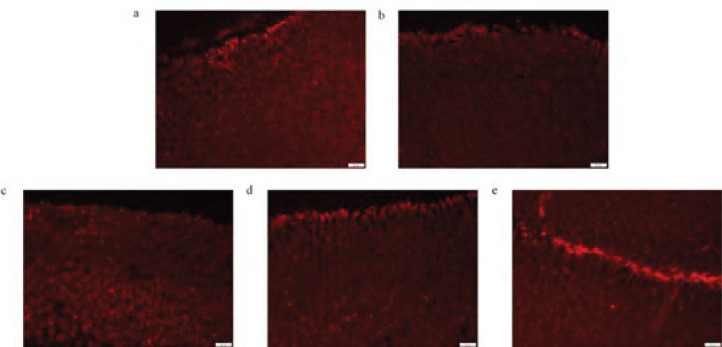
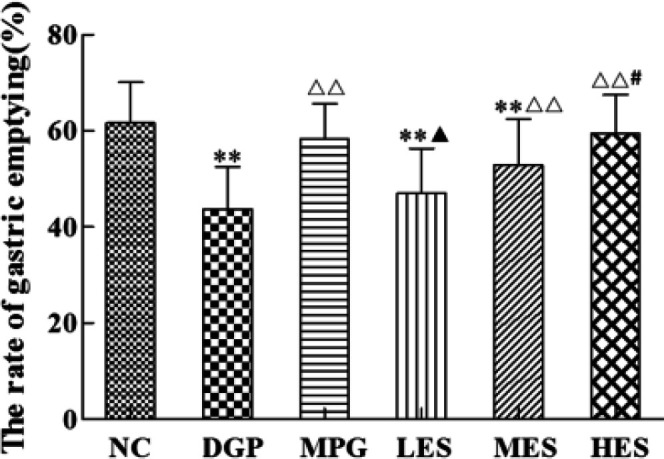
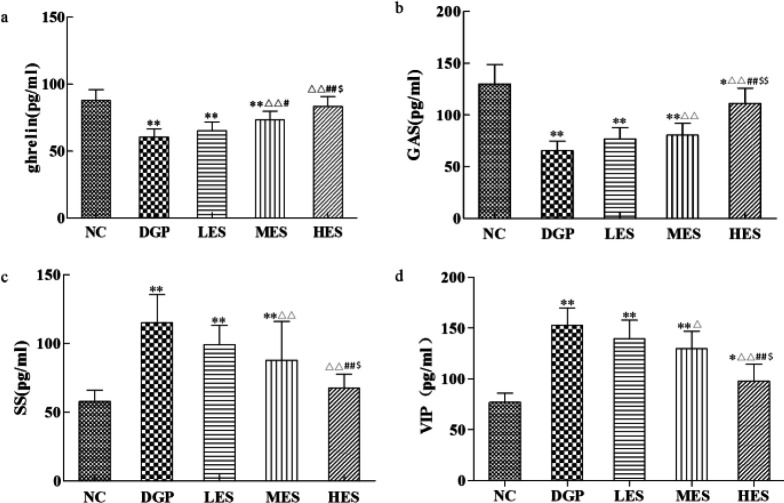
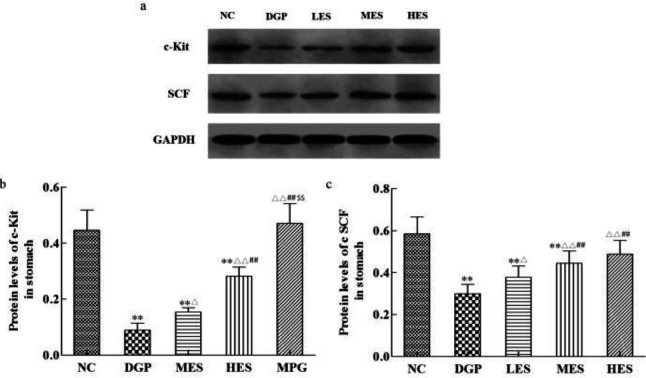
Rats were divided into six groups: normal control group (NC), diabetic gastroparesis model group (DGP), low, medium, and high dose of EES groups (LES, MES, and HES, respectively), and metoclopramide positive group (MPG). DGP rats were induced by streptozotocin (STZ) combined with a high-sugar-high-fat diet. The gastric emptying was measured by the phenol red labeling method. Enzyme-linked immunosorbent assay (ELISA) was employed to determine the concentrations of serum ghrelin, gastrin (GAS), somatostatin (SS), and vasoactive intestinal peptide (VIP). The expressions of c-Kit and its natural ligand stem cell factor (SCF) in gastric tissues were determined by Western blot and immunofluorescence.
Gastric emptying rate increased in a different degree after intervention by EES, among which MES and HES groups showed a significant effect (compared with DGP, <0.01) and the HES group was equivalent to the MPG group; serum ghrelin and content of serum GAS increased while SS and VIP decreased (compared with the DGP group, <0.05 or <0.01); c-Kit and SCF protein expressions in gastric tissue increased (compared with DGP group, <0.05 or <0.01).
EES significantly improved gastric emptying by regulating gastrointestinal hormone excretion and c-Kit/SCF signaling pathway. Our study provides a pharmacological basis for the use of the EES in the treatment of DGP. However, the detailed molecular mechanism remains to be clarified.
探讨[具体植物名称]乙酸乙酯提取物(EES)对糖尿病胃轻瘫大鼠脑肠肽及胃Cajal间质细胞的影响。
将大鼠分为六组:正常对照组(NC)、糖尿病胃轻瘫模型组(DGP)、低、中、高剂量EES组(分别为LES、MES和HES)以及胃复安阳性组(MPG)。采用链脲佐菌素(STZ)联合高糖高脂饮食诱导DGP大鼠。通过酚红标记法测量胃排空情况。采用酶联免疫吸附测定(ELISA)法测定血清胃饥饿素、胃泌素(GAS)、生长抑素(SS)和血管活性肠肽(VIP)的浓度。通过蛋白质免疫印迹法和免疫荧光法测定胃组织中c-Kit及其天然配体干细胞因子(SCF)的表达。
EES干预后胃排空率不同程度升高,其中MES组和HES组效果显著(与DGP组相比,P<0.01),且HES组与MPG组相当;血清胃饥饿素和GAS含量升高,而SS和VIP降低(与DGP组相比,P<0.05或P<0.01);胃组织中c-Kit和SCF蛋白表达增加(与DGP组相比,P<0.05或P<0.01)。
EES通过调节胃肠激素分泌及c-Kit/SCF信号通路显著改善胃排空。本研究为EES用于治疗DGP提供了药理学依据。然而,具体分子机制仍有待阐明。