Department of Anesthesiology, the First Hospital of Lanzhou University, Lanzhou, China.
Department of Thoracic Surgery, the First Hospital of Lanzhou University, Lanzhou, China.
J Cell Mol Med. 2020 Nov;24(21):12750-12764. doi: 10.1111/jcmm.15860. Epub 2020 Sep 23.
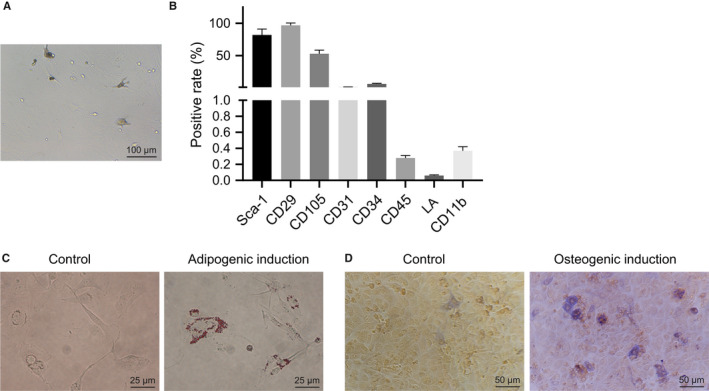
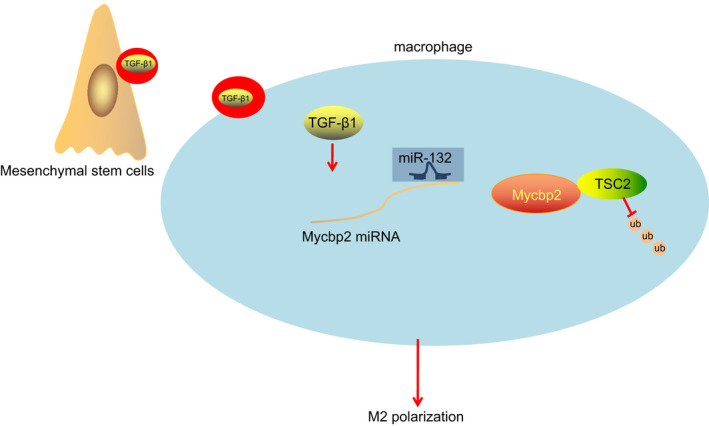
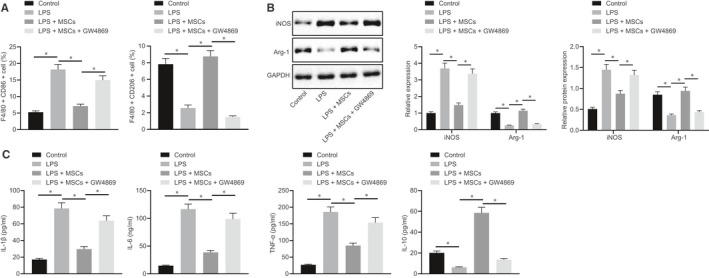
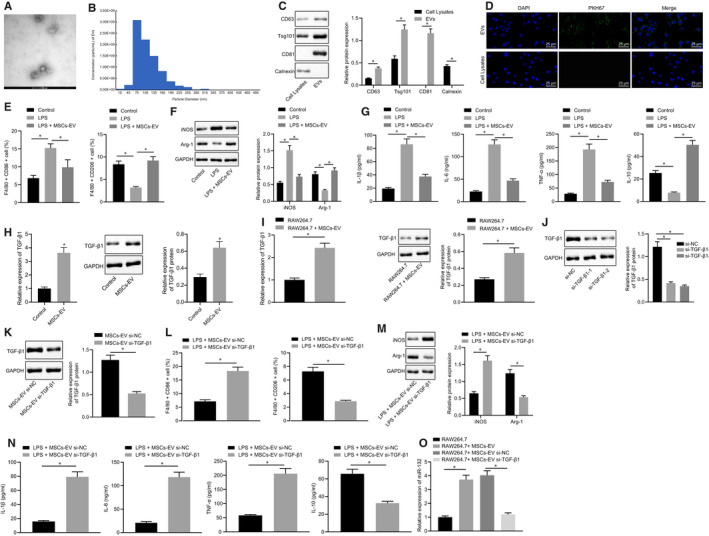
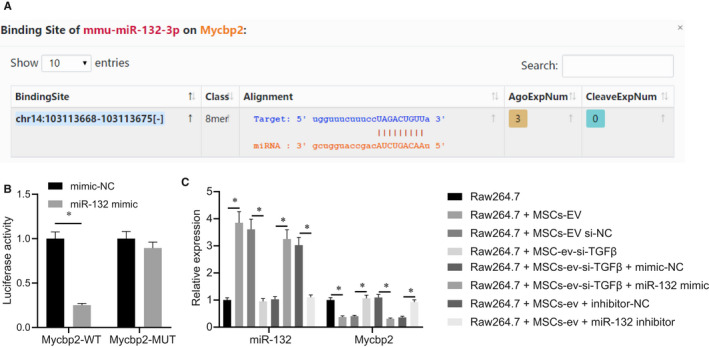
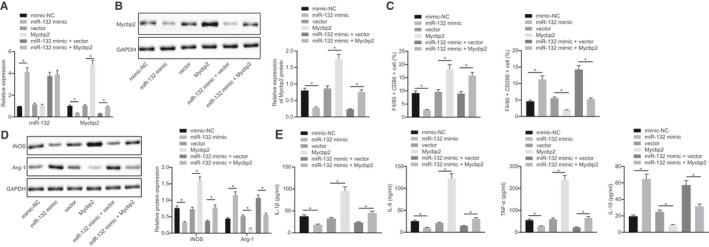
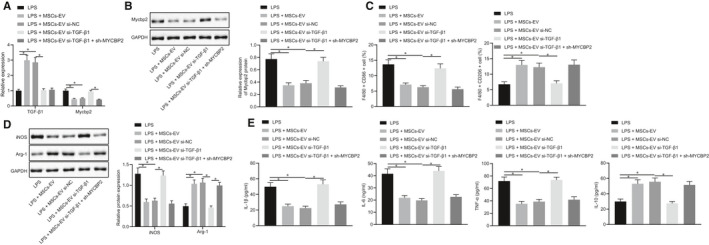
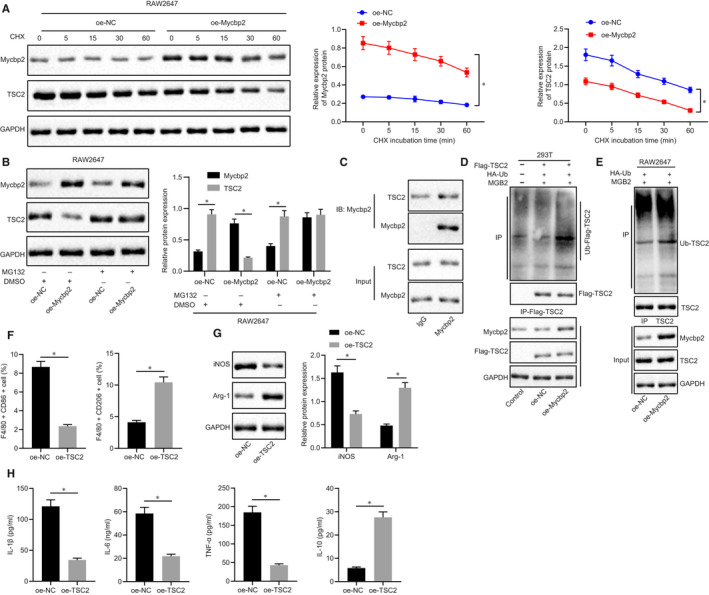
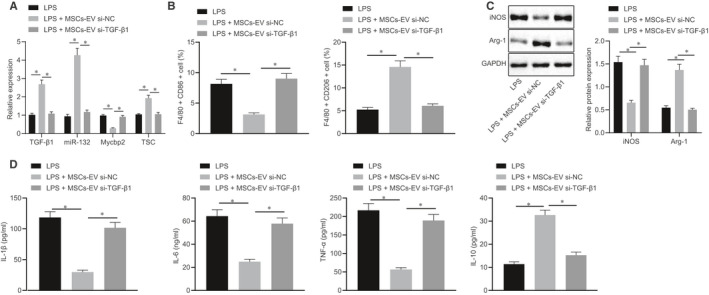
The effects of mesenchymal stem cells (MSCs) on different types of diseases are controversial, and the inner mechanisms remain unknown, which retards the utilization of MSCs in disease therapy. In this study, we aimed to elucidate the mechanisms of MSCs-extracellular vesicles (EVs) carrying transforming growth factor-beta 1 (TGF-β1) in M2 polarization in mouse macrophages via the microRNA-132 (miR-132)/E3 ubiquitin ligase myc binding protein 2 (Mycbp2)/tuberous sclerosis complex 2 (TSC2) axis. Mouse MSCs were isolated for adipogenic and osteogenic induction, followed by co-culture with mouse macrophages RAW264.7. Besides, mouse macrophages RAW264.7 were co-cultured with MSCs-EVs in vitro, where the proportion of macrophages and inflammation were detected by flow cytometry and ELISA. The experimental data revealed that MSCs-EVs promoted M2 polarization of macrophages, and elevated interleukin (IL)-10 expression and inhibited levels of IL-1β, tumour necrosis factor (TNF)-α and IL-6. MSC-EV-treated macrophages RAW264.7 increased TGF-β1 expression, thus elevating miR-132 expression. MiR-132 directly bound to Mycbp2, as confirmed by luciferase activity assay. Meanwhile, E3 ubiquitin ligase Mycbp2 could ubiquitinate TSC2 protein. Furthermore, silencing TGF-β1 inhibited M2 polarization of MSC-EV-treated macrophages. Taken conjointly, this study provides evidence reporting that MSC-secreted EVs carry TGF-β1 to promote M2 polarization of macrophages via modulation of the miR-132/Mycbp2/TSC2 axis.
间充质干细胞(MSCs)对不同类型疾病的影响存在争议,其内在机制尚不清楚,这阻碍了 MSCs 在疾病治疗中的应用。在这项研究中,我们旨在通过 microRNA-132(miR-132)/E3 泛素连接酶 myc 结合蛋白 2(Mycbp2)/结节性硬化复合物 2(TSC2)轴阐明 MSCs 衍生的外泌体(EVs)携带转化生长因子-β1(TGF-β1)在小鼠巨噬细胞 M2 极化中的作用机制。我们分离了小鼠 MSCs 进行成脂和成骨诱导,然后与小鼠巨噬细胞 RAW264.7 共培养。此外,还在体外将小鼠巨噬细胞 RAW264.7 与 MSC-EVs 共培养,通过流式细胞术和 ELISA 检测巨噬细胞和炎症的比例。实验数据表明,MSCs-EVs 促进了巨噬细胞的 M2 极化,提高了白细胞介素(IL)-10 的表达,抑制了白细胞介素(IL)-1β、肿瘤坏死因子(TNF)-α 和白细胞介素(IL)-6 的水平。MSC-EV 处理的 RAW264.7 巨噬细胞增加了 TGF-β1 的表达,从而提高了 miR-132 的表达。通过荧光素酶活性测定证实了 miR-132 直接与 Mycbp2 结合。同时,E3 泛素连接酶 Mycbp2 可以泛素化 TSC2 蛋白。此外,沉默 TGF-β1 抑制了 MSC-EV 处理的巨噬细胞的 M2 极化。综上所述,本研究提供了证据表明,MSC 分泌的 EVs 通过调节 miR-132/Mycbp2/TSC2 轴携带 TGF-β1 促进巨噬细胞 M2 极化。