Huang Dong, Gao Wei, Zhong Xin, Ge Junbo
Department of Cardiology, Zhongshan Hospital, Fudan University, Shanghai Institute of Cardiovascular Diseases, Shanghai 200032, China.
Aging (Albany NY). 2020 Sep 23;12(18):18181-18191. doi: 10.18632/aging.103666.
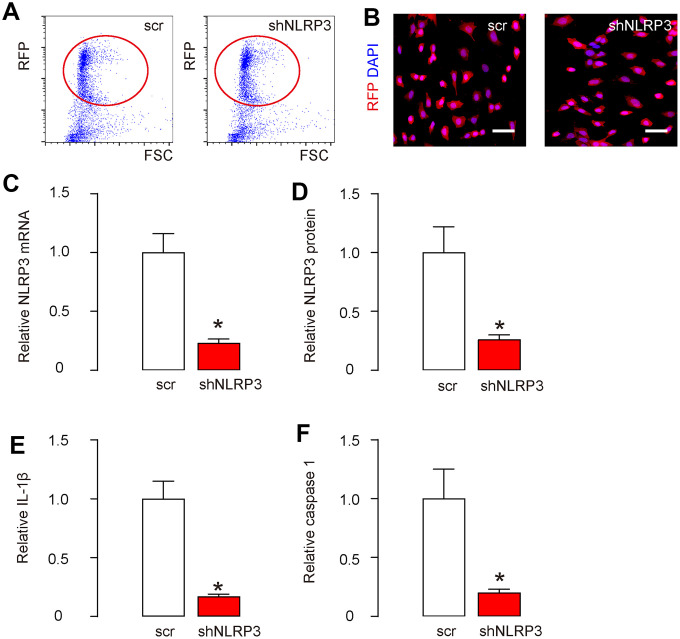
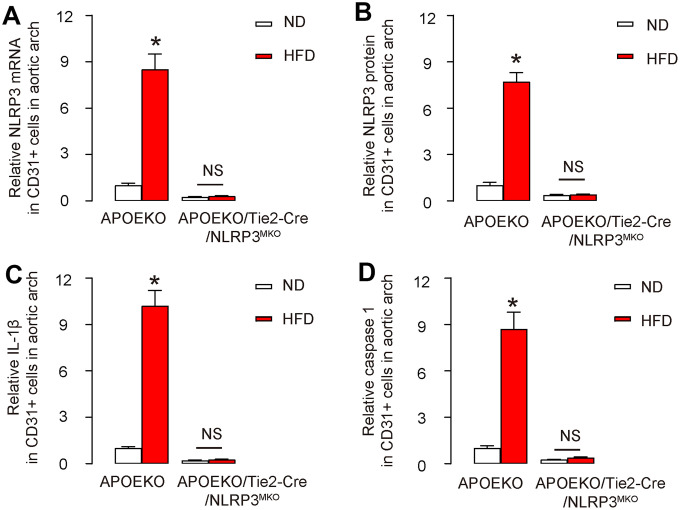
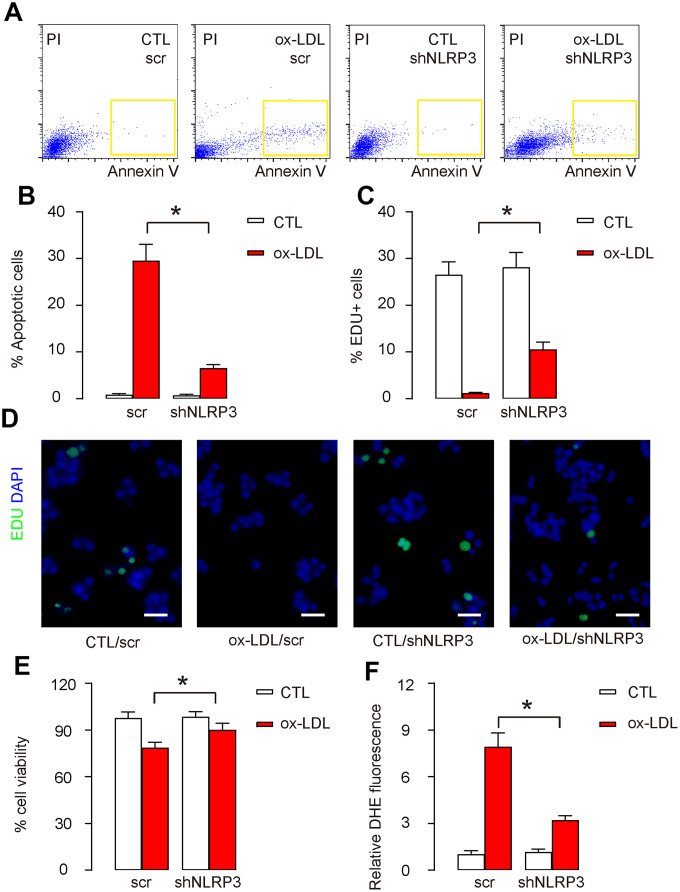
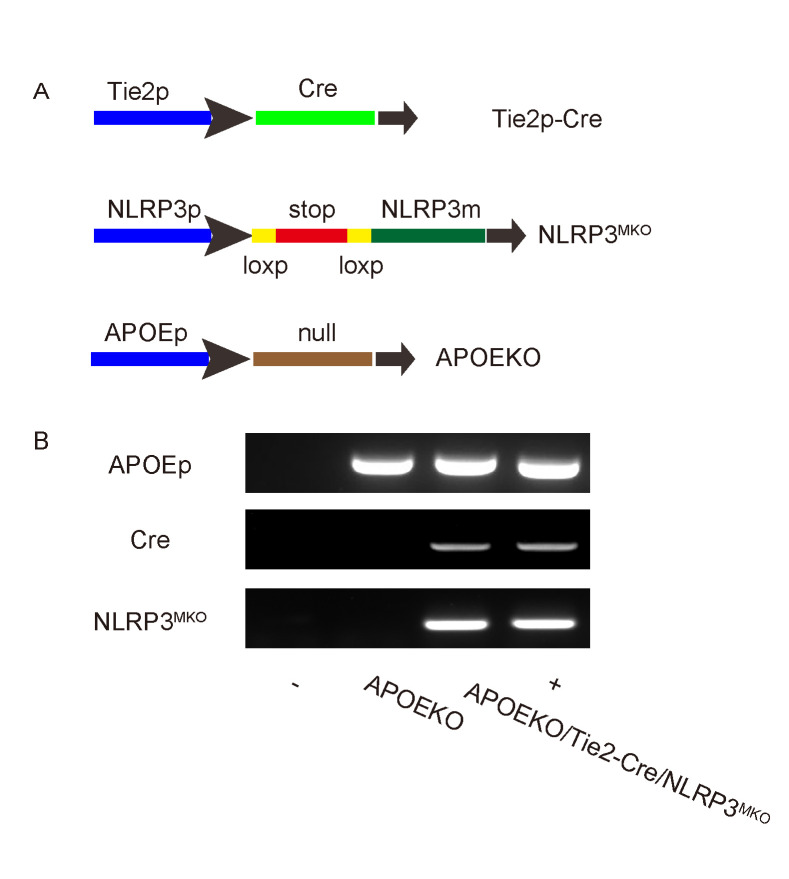
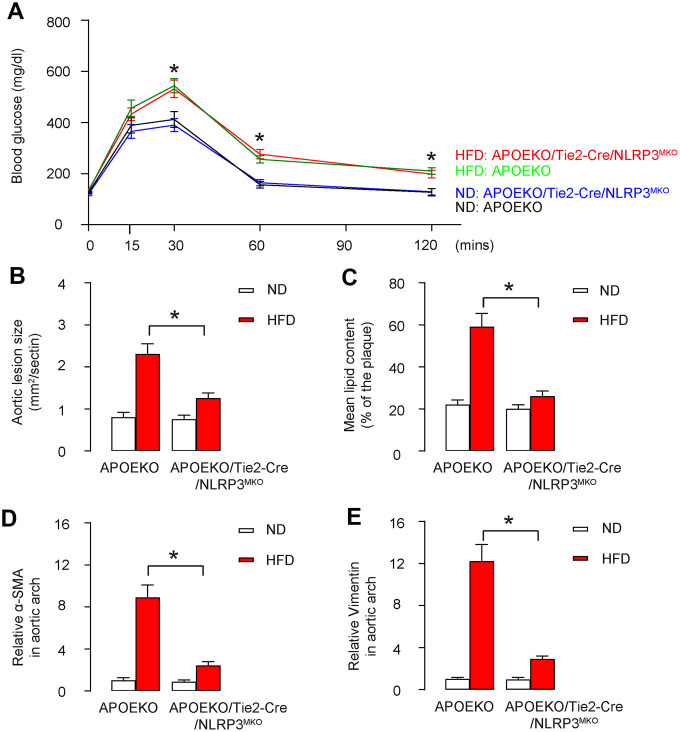
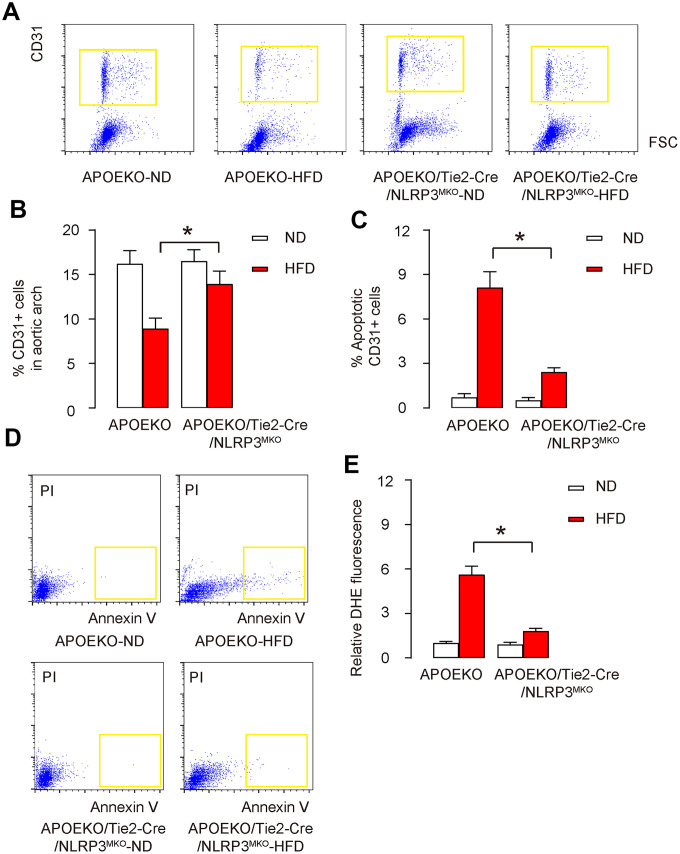
Inflammatory damage to endothelial cells plays a pivotal role in the diabetes-provoked atherosclerosis (AS). PYD domains-containing protein 3 (NLRP3) induces formation of inflammasome activates caspase-1, which subsequently cleaves the precursor form of IL-1β (pro-IL-1β) into the processed, secreted form IL-1β to promote the immune responses in AS. However, it is not known whether NLRP3 activation specifically in endothelial cells causes AS. Here, in an in vitro model for AS, we showed that NLRP3-depleted human aortic endothelial cells (HAECs) became resistant to apoptotic cell death, maintained proliferative potential and reduced reactive oxygen species (ROS) production upon treatment with oxidized low-density lipoprotein (ox-LDL). Next, the role of NLRP3 in endothelial cells in the development of diabetes-associated AS was assessed in endothelial cell-specific NLRP3 mutant, ApoE (-/-) mice (APOEKO/Tie2p-Cre/NLRP3), compared to control ApoE (-/-) mice (APOEKO), supplied with either high-fat diet (HFD), or normal diet (ND). We found that endothelia-specific NLRP3-depletion significantly attenuated AS severity in mice treated with HFD, likely through reduced apoptotic death of endothelial cells and production of ROS. Together, our data suggest that NLRP3 activation in endothelial cells promotes development of diabetes-associated AS.
内皮细胞的炎症损伤在糖尿病诱发的动脉粥样硬化(AS)中起关键作用。含PYD结构域的蛋白3(NLRP3)诱导炎性小体形成,激活半胱天冬酶-1,后者随后将白细胞介素-1β(IL-1β)的前体形式(pro-IL-1β)切割成加工后的分泌形式IL-1β,以促进AS中的免疫反应。然而,尚不清楚内皮细胞中NLRP3的特异性激活是否会导致AS。在此,在一个AS的体外模型中,我们发现,在用氧化型低密度脂蛋白(ox-LDL)处理后,NLRP3缺失的人主动脉内皮细胞(HAECs)对凋亡性细胞死亡产生抗性,维持增殖潜能并减少活性氧(ROS)的产生。接下来,在内皮细胞特异性NLRP3突变的ApoE(-/-)小鼠(APOEKO/Tie2p-Cre/NLRP3)中评估了NLRP3在内皮细胞中在糖尿病相关AS发展中的作用,并与喂食高脂饮食(HFD)或正常饮食(ND)的对照ApoE(-/-)小鼠(APOEKO)进行比较。我们发现,内皮特异性NLRP3缺失显著减轻了HFD处理小鼠的AS严重程度,这可能是通过减少内皮细胞的凋亡死亡和ROS的产生实现的。总之,我们的数据表明,内皮细胞中NLRP3的激活促进了糖尿病相关AS的发展。