Geldsetzer Pascal, Bärnighausen Kate, Hettema Anita, McMahon Shannon A, Dalal Shona, Chase Rachel P, Oldenburg Catherine E, Kohler Stefan, Chen Simiao, Dlamini Phiwayinkhosi, Mavuso Mxolisi, Hughey Allison B, Matse Sindy, Bärnighausen Till
Division of Primary Care and Population Health, Department of Medicine, Stanford University School of Medicine, Stanford, CA 94035, USA.
Heidelberg Institute of Global Health (HIGH), Heidelberg University, 69120 Heidelberg, Germany.
Sci Transl Med. 2020 Sep 23;12(562). doi: 10.1126/scitranslmed.aba4487.
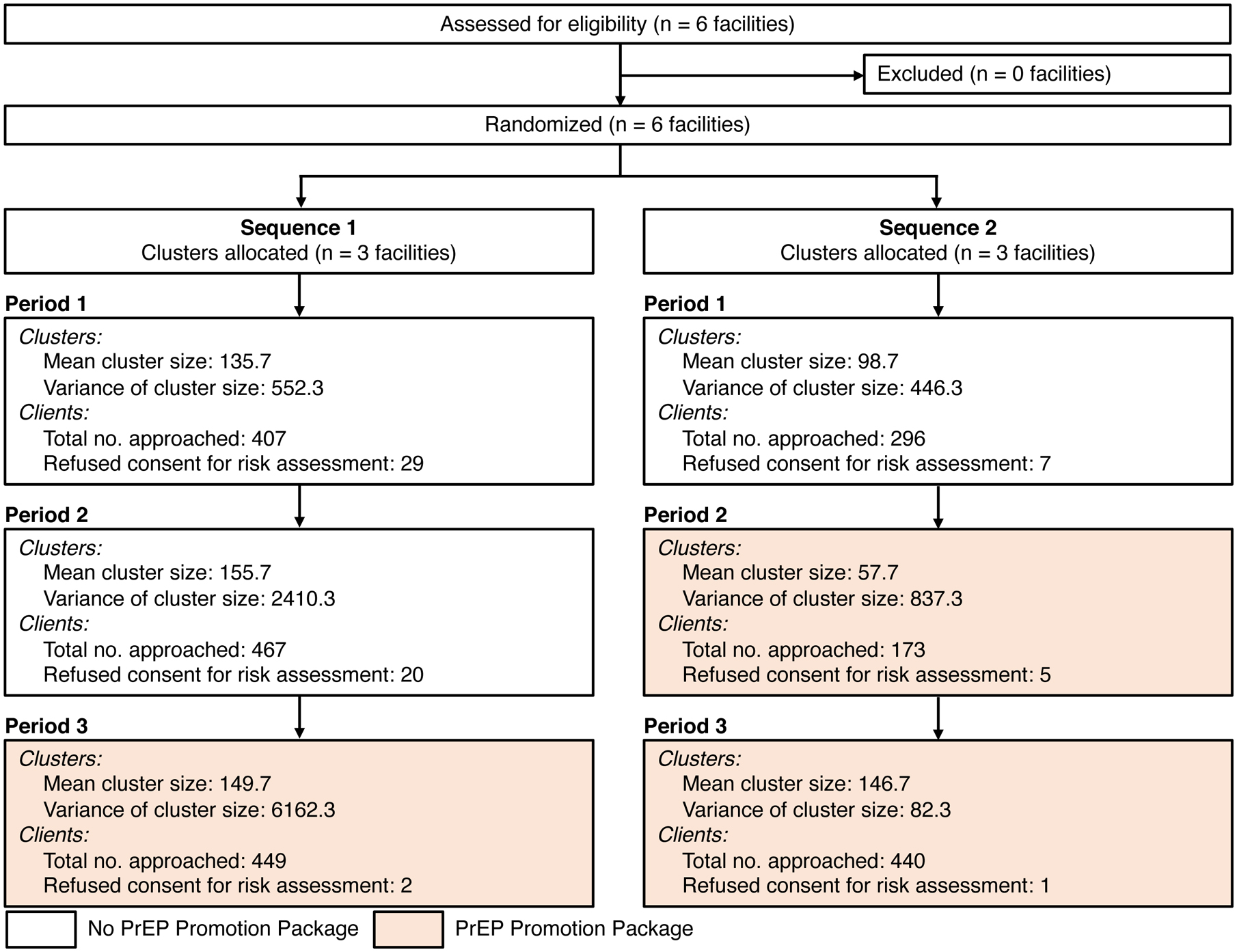
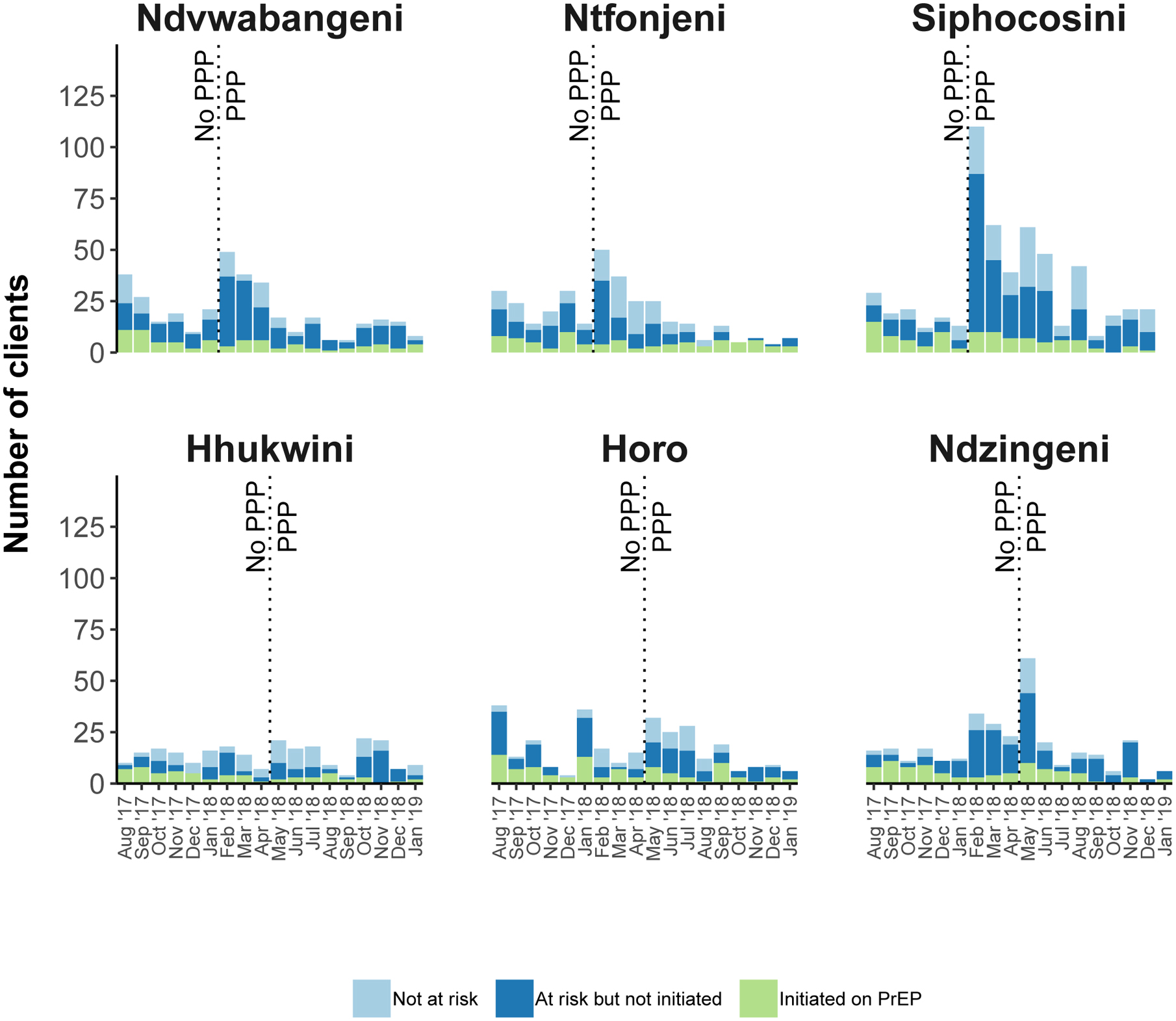
Clinical trials have shown that antiretroviral drugs used as pre-exposure prophylaxis (PrEP) are highly effective for preventing HIV acquisition. PrEP efforts, including in sub-Saharan Africa, have almost exclusively focused on certain priority groups, particularly female sex workers, men having sex with men, pregnant women, serodiscordant couples, and young women. As part of a PrEP demonstration project involving the general population at six primary health care facilities in Eswatini (formerly Swaziland), we conducted a randomized trial of a health care facility-based PrEP promotion package designed to increase PrEP uptake. Over the 18-month study duration, 33.6% (517 of 1538) of adults identified by health care workers as being at risk of acquiring HIV took up PrEP, and 30.0% of these individuals attended all scheduled appointments during the first 6 months after initiation of PrEP. The PrEP promotion package was associated with a 55% (95% confidence interval, 15 to 110%; = 0.036) relative increase in the number of individuals taking up PrEP, with an absolute increase of 2.2 individuals per month per health care facility. When asked how PrEP uptake could be improved in 217 accompanying in-depth qualitative interviews, interviewees recommended an expansion of PrEP promotion activities beyond health care facilities to communities. Although a health care facility-based promotion package improved PrEP uptake, both uptake and retention remained low. Expanding promotion activities to the community is needed to achieve greater PrEP coverage among adults at risk of HIV infection in Eswatini and similar settings.
临床试验表明,用作暴露前预防(PrEP)的抗逆转录病毒药物在预防感染艾滋病毒方面非常有效。包括撒哈拉以南非洲地区在内的PrEP工作几乎完全集中在某些优先群体上,特别是女性性工作者、男男性行为者、孕妇、血清学不一致的夫妇以及年轻女性。作为一项在斯威士兰(前称斯威士兰)六个初级卫生保健机构针对普通人群开展的PrEP示范项目的一部分,我们进行了一项随机试验,该试验采用了一套以卫生保健机构为基础的PrEP推广方案,旨在提高PrEP的使用率。在为期18个月的研究期间,被卫生保健工作者认定有感染艾滋病毒风险的成年人中,有33.6%(1538人中的517人)使用了PrEP,其中30.0%的人在开始PrEP后的前6个月内参加了所有预定的预约。PrEP推广方案使使用PrEP的人数相对增加了55%(95%置信区间为15%至110%;P = 0.036),每个卫生保健机构每月的绝对增加人数为2.2人。在217次伴随的深入定性访谈中,当被问及如何提高PrEP的使用率时,受访者建议将PrEP推广活动从卫生保健机构扩展到社区。尽管以卫生保健机构为基础的推广方案提高了PrEP的使用率,但使用率和留存率仍然很低。需要将推广活动扩展到社区,以在斯威士兰及类似环境中,使有感染艾滋病毒风险的成年人中PrEP的覆盖率更高。