Opitz Alexander K, Nenning Andreas, Vonk Vedran, Volkov Sergey, Bertram Florian, Summerer Harald, Schwarz Sabine, Steiger-Thirsfeld Andreas, Bernardi Johannes, Stierle Andreas, Fleig Jürgen
TU Wien, Institute of Chemical Technologies and Analytics, Getreidemarkt 9/164-EC, 1060, Vienna, Austria.
Deutsches Elektronen-Synchrotron (DESY), 22607, Hamburg, Germany.
Nat Commun. 2020 Sep 23;11(1):4801. doi: 10.1038/s41467-020-18563-w.
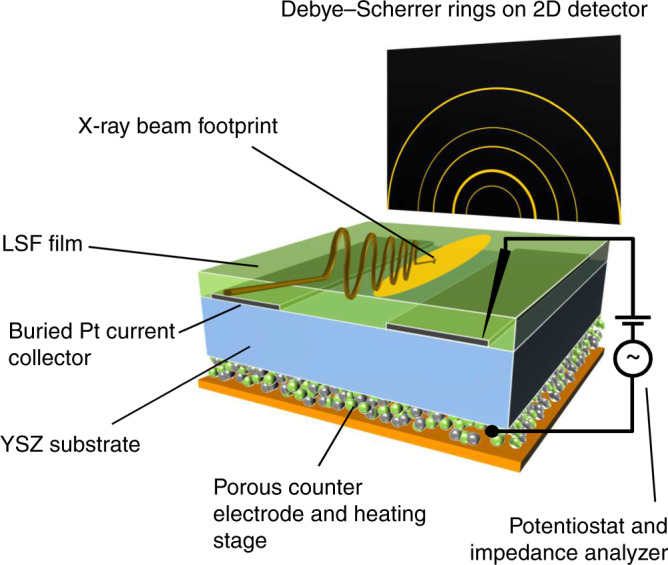
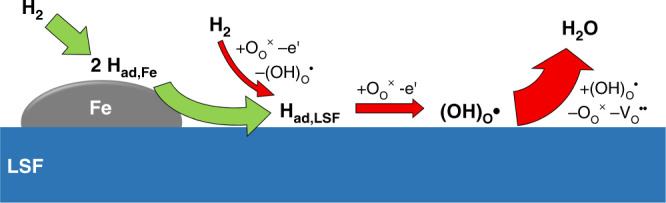
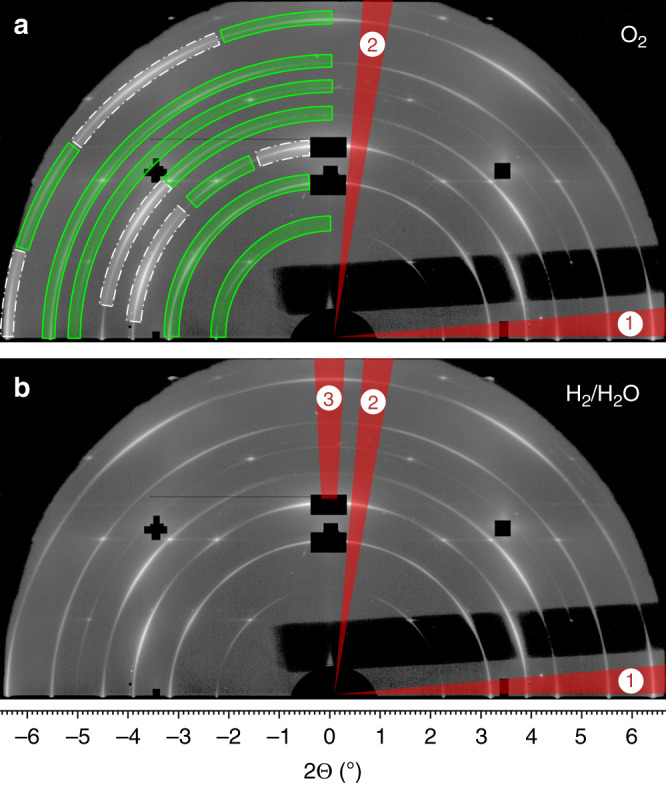
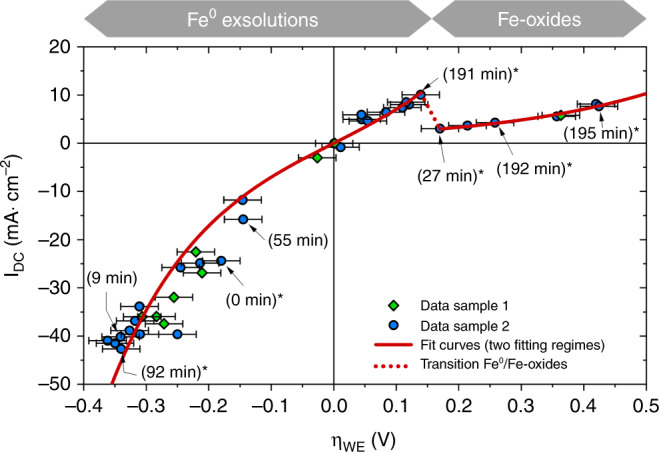
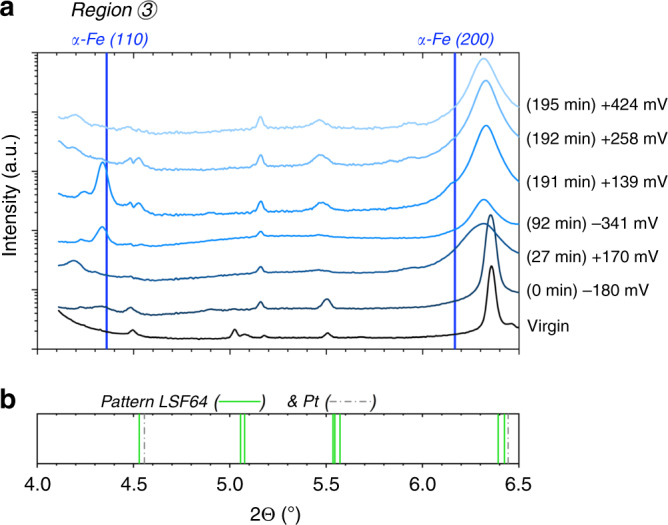
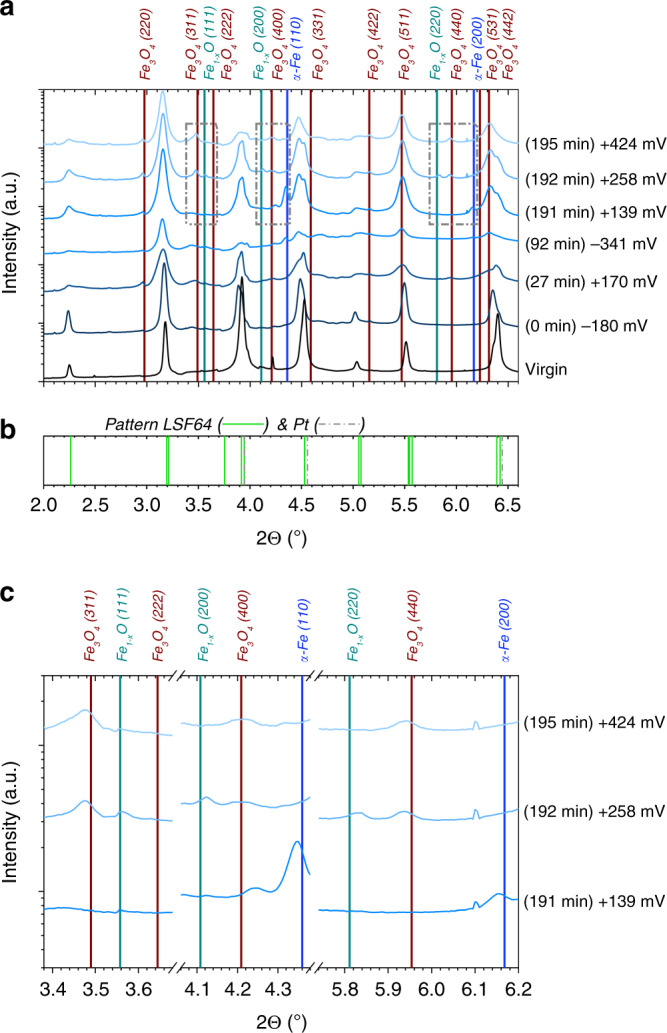
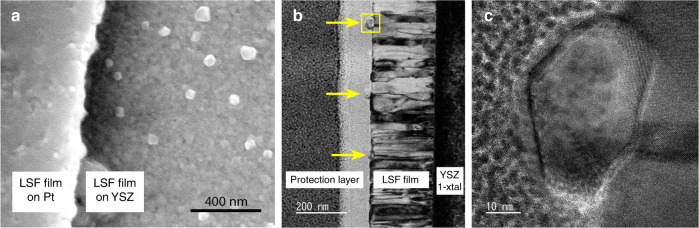
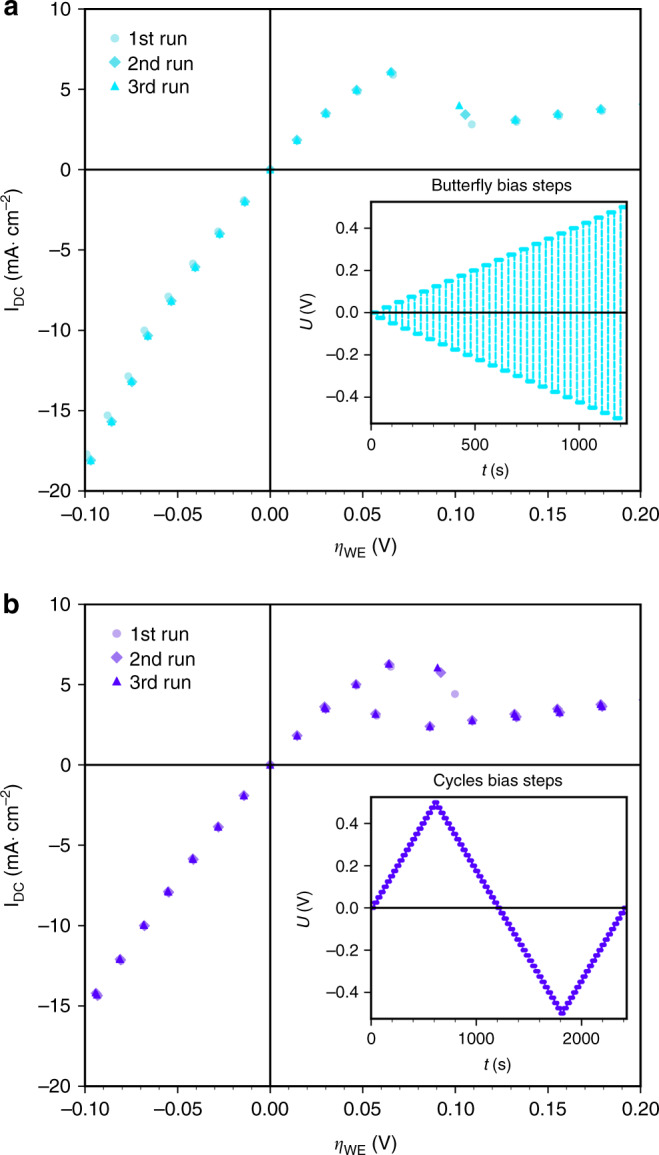
Exsolution of metal nanoparticles from perovskite-type oxides is a very promising approach to obtain catalysts with superior properties. One particularly interesting property of exsolution catalysts is the possibility of electrochemical switching between different activity states. In this work, synchrotron-based in-situ X-ray diffraction experiments on electrochemically polarized LaSrFeO thin film electrodes are performed, in order to simultaneously obtain insights into the phase composition and the catalytic activity of the electrode surface. This shows that reversible electrochemical switching between a high and low activity state is accompanied by a phase change of exsolved particles between metallic α--Fe and Fe-oxides. Reintegration of iron into the perovskite lattice is thus not required for obtaining a switchable catalyst, making this process especially interesting for intermediate temperature applications. These measurements also reveal how metallic particles on LaSrFeO electrodes affect the H oxidation and HO splitting mechanism and why the particle size plays a minor role.
从钙钛矿型氧化物中析出金属纳米颗粒是获得具有优异性能催化剂的一种非常有前景的方法。析出催化剂的一个特别有趣的特性是可以在不同活性状态之间进行电化学切换。在这项工作中,对电化学极化的LaSrFeO薄膜电极进行了基于同步加速器的原位X射线衍射实验,以便同时深入了解电极表面的相组成和催化活性。结果表明,在高活性状态和低活性状态之间的可逆电化学切换伴随着析出颗粒在金属α-Fe和铁氧化物之间的相变。因此,获得可切换催化剂不需要将铁重新整合到钙钛矿晶格中,这使得该过程对于中温应用特别有吸引力。这些测量还揭示了LaSrFeO电极上的金属颗粒如何影响H氧化和H₂O分解机制,以及为什么颗粒尺寸起次要作用。