Botanical Institute, Karlsruhe Institute of Technology, Fritz-Haber-Weg 4, 76131, Karlsruhe, Germany.
Institute for Pulsed Power and Microwave Technology (IHM), Karlsruhe Institute of Technology, Campus Nord, 76344, Eggenstein-Leopoldshafen, Germany.
Sci Rep. 2020 Sep 23;10(1):15508. doi: 10.1038/s41598-020-72479-5.
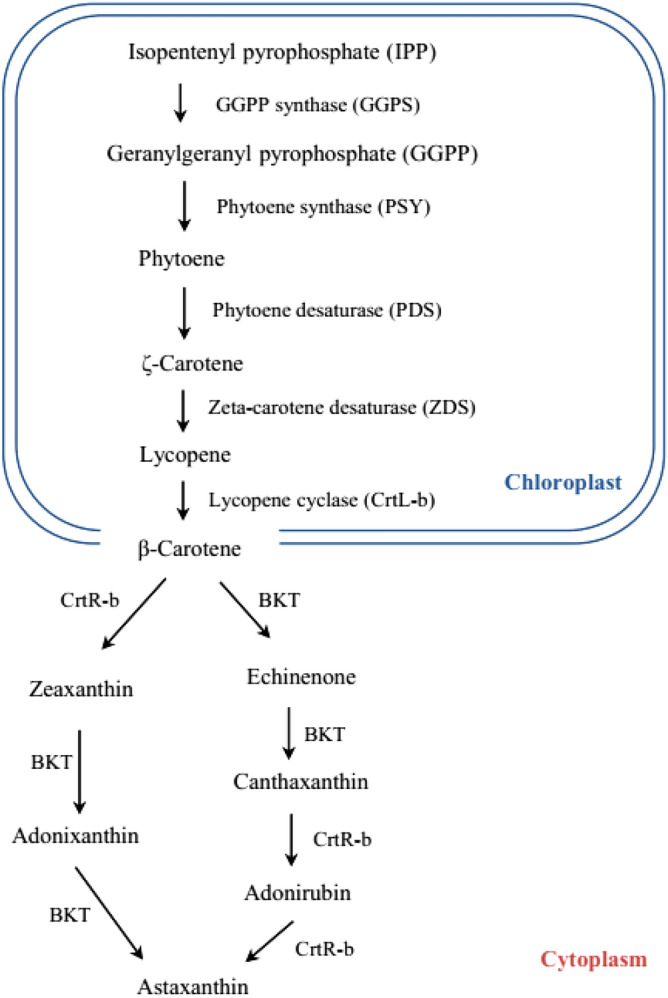
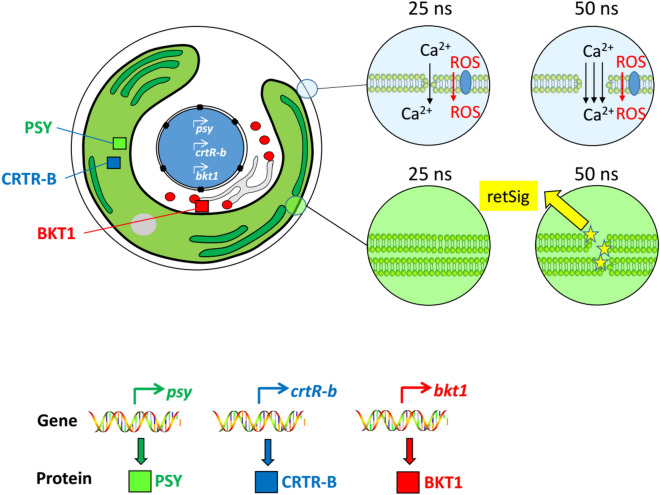
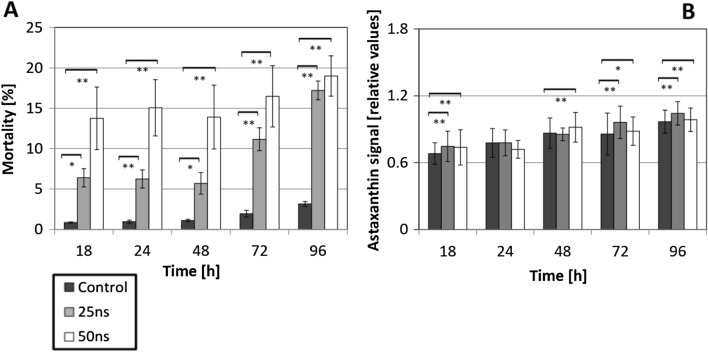
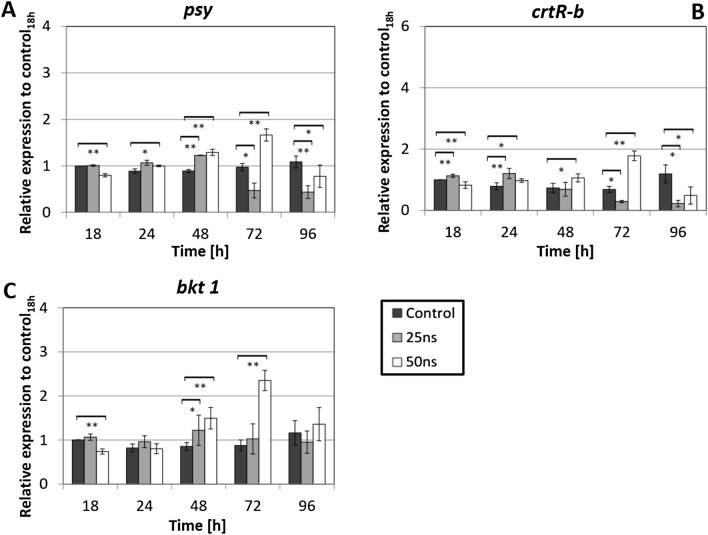
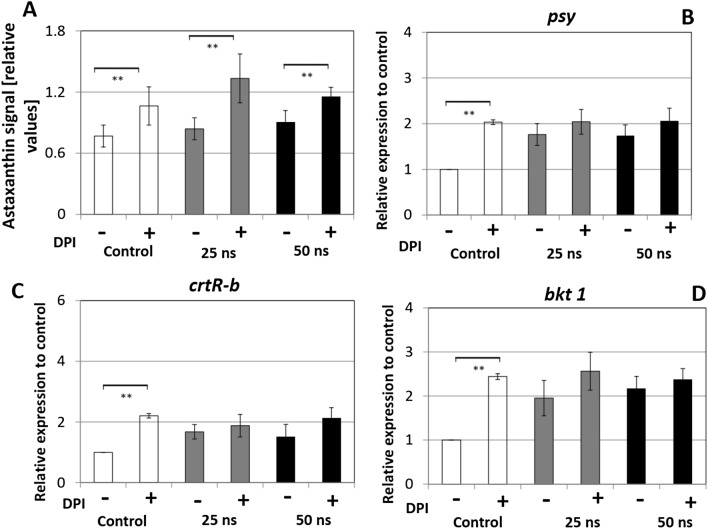
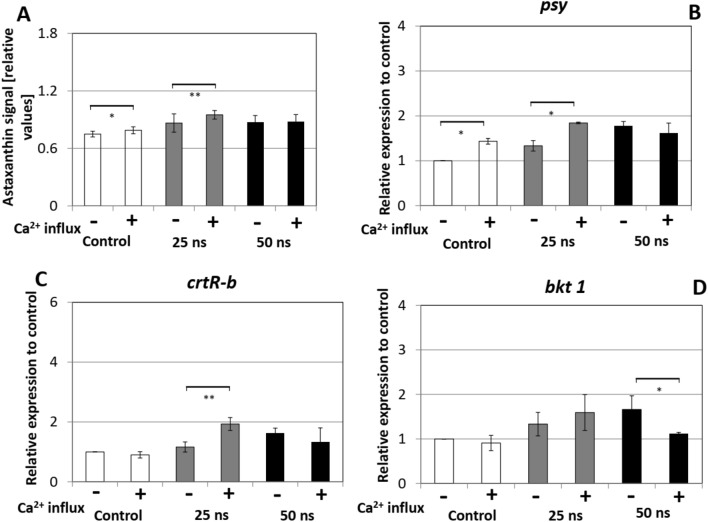
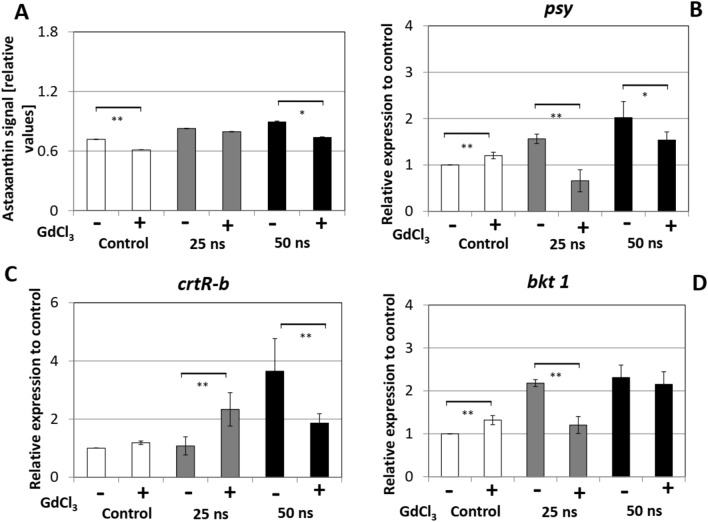
Nanosecond pulsed electric fields (nsPEFs) have been extensively studied with respect to cellular responses. Whether nsPEFs can regulate gene expression and to modulate the synthesis of valuable compounds, has so far been only tested in the context of apoptosis in cancer cells. We used the unicellular algae Haematococcus pluvialis as system to test, whether nsPEFs could alter gene expression and to promote the biosynthesis of astaxanthin. We find that nsPEFs induce a mild, but significant increase of mortality up to about 20%, accompanied by a moderate increase of astaxanthin accumulation. Steady-state transcript levels of three key genes psy, crtR-b and bkt 1 were seen to increase with a maximum at 3 d after PEF treatment at 50 ns. Pulsing at 25 ns reduce the transcripts of psy, crtR-b from around day 2 after the pulse, while those of bkt 1 remain unchanged. By blocking the membrane-located NADPH oxidase RboH, diphenylene iodonium by itself increased both, the levels of astaxanthin and transcripts of all three biosynthetic genes, and this increase was added up to that produced by nsPEFs. Artificial calcium influx by an ionophore did not induce major changes in the accumulation of astaxanthin, nor in the transcript levels, but amplified the response of crtR-b to nsPEFs at 25 ns, while decreased in 50 ns treatment. When Ca influx was inhibited by GdCl, the transcript of psy and bkt 1 were decreased for both 25 ns and 50 ns treatments, while crtR-b exhibited an obvious increase for the 25 ns treatment. We interpret these data in a working model, where nsPEFs permeabilise plasma and chloroplast membrane depending on pulse duration leading to a differential release of plastid retrograde signaling to the nucleus.
纳秒级脉冲电场 (nsPEFs) 已广泛研究细胞反应。纳秒级脉冲电场是否可以调节基因表达并调节有价值化合物的合成,迄今为止仅在癌细胞凋亡的背景下进行了测试。我们使用单细胞藻类雨生红球藻作为系统来测试纳秒级脉冲电场是否可以改变基因表达并促进虾青素的生物合成。我们发现,纳秒级脉冲电场会引起轻微但显著的死亡率增加,最高可达 20%左右,同时虾青素积累也适度增加。稳态转录水平的三个关键基因 psy、crtR-b 和 bkt1 被观察到在 PEF 处理后 3 天增加,最大值为 50ns。在 25ns 下脉冲会降低 psy、crtR-b 的转录,从脉冲后大约 2 天开始,而 bkt1 的转录保持不变。通过阻断膜定位的 NADPH 氧化酶 RboH,二苯基碘鎓本身就增加了虾青素的水平和所有三个生物合成基因的转录水平,并且这种增加与纳秒级脉冲电场产生的增加相加。通过离子载体人工诱导钙离子内流不会引起虾青素积累的主要变化,也不会引起转录水平的变化,但会放大 crtR-b 对 25ns 的 nsPEFs 的反应,而在 50ns 处理中则降低。当 Ca 流入被 GdCl 抑制时,psy 和 bkt1 的转录都在 25ns 和 50ns 处理中减少,而 crtR-b 在 25ns 处理中表现出明显增加。我们在工作模型中解释这些数据,其中纳秒级脉冲电场根据脉冲持续时间使质膜和叶绿体膜通透性增加,导致质体逆行信号向核的不同释放。