Laboratory of Structural Biophysics and Mechanobiology, The Rockefeller University, New York, United States.
Tri-Institutional PhD Program in Chemical Biology, The Rockefeller University, New York, United States.
Elife. 2020 Sep 24;9:e62514. doi: 10.7554/eLife.62514.
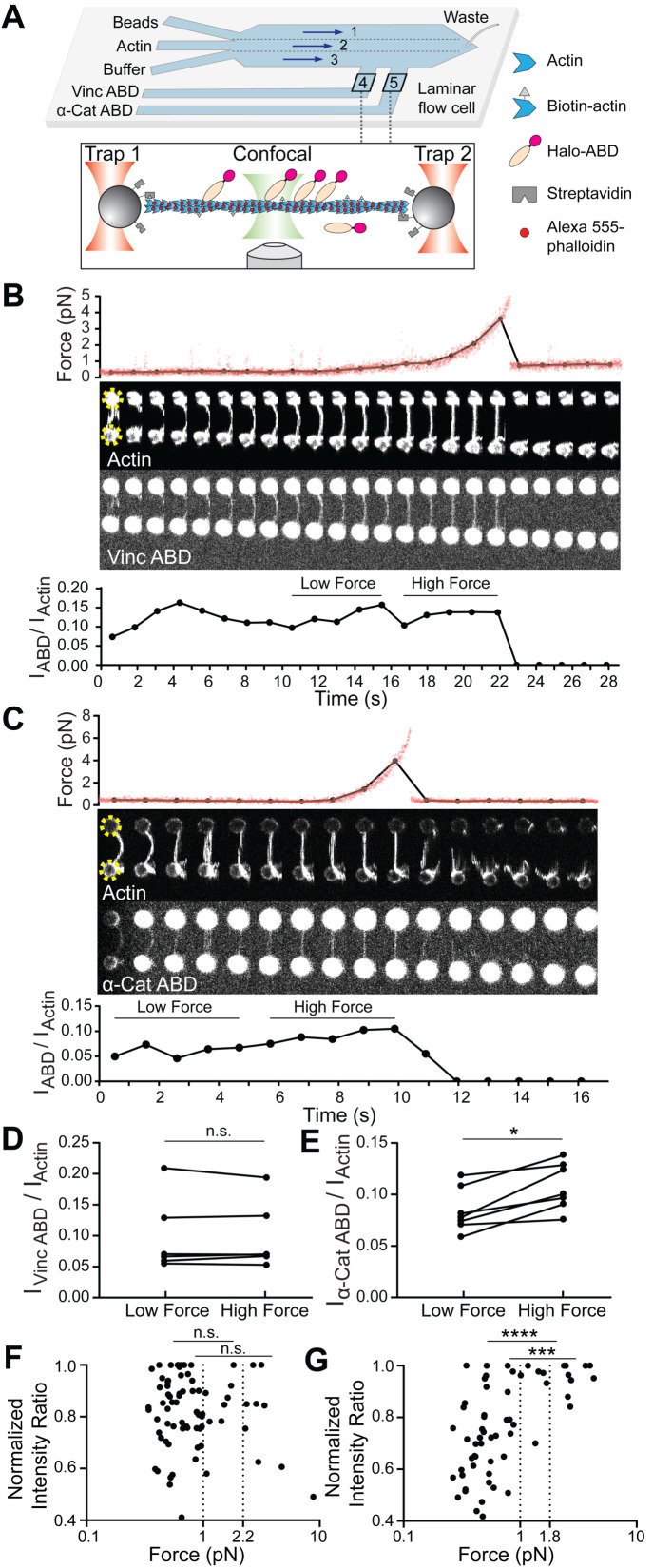
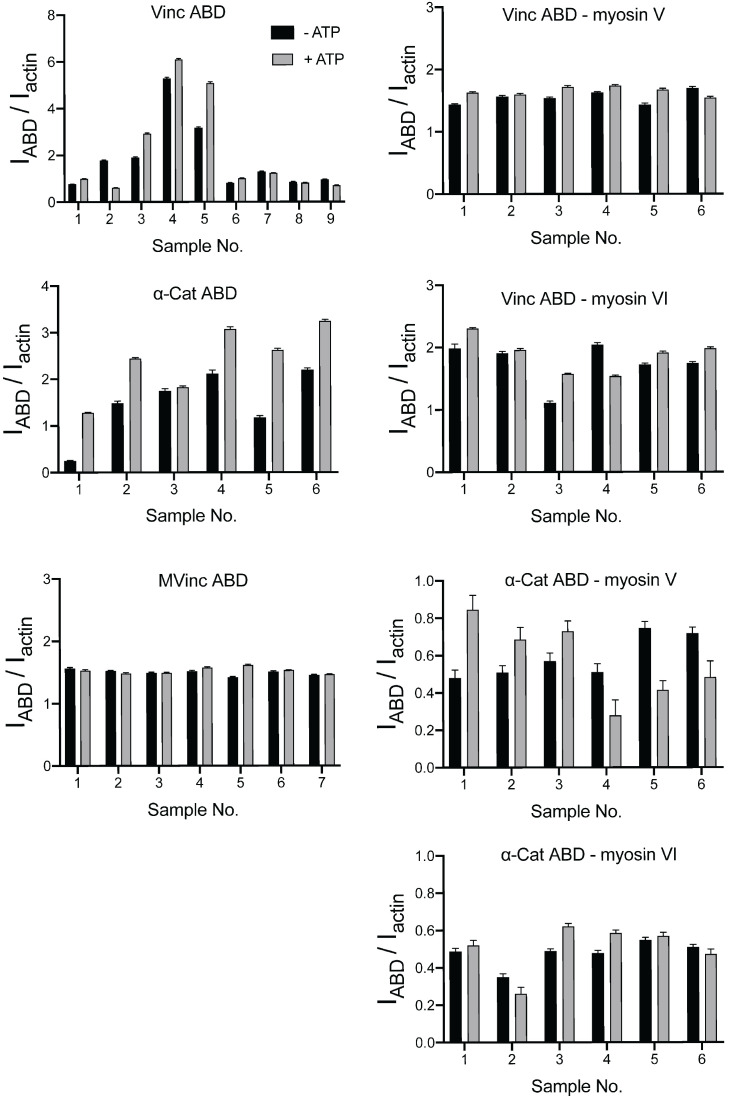
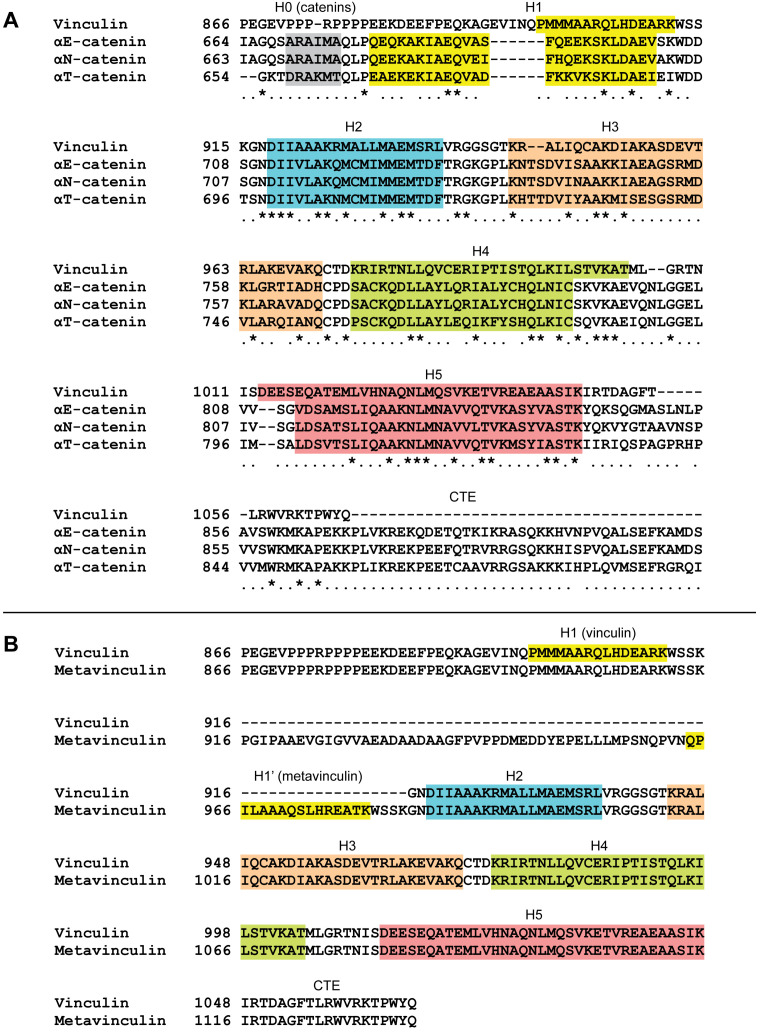
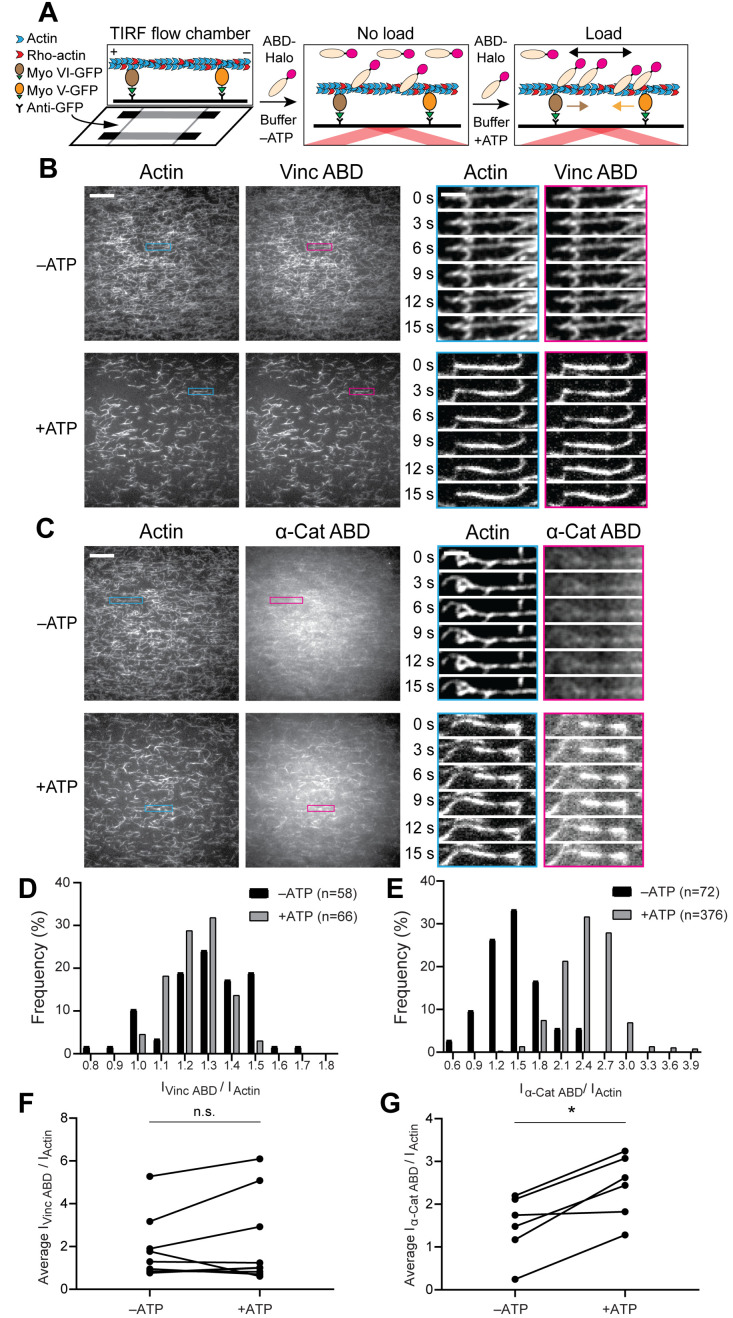
The actin cytoskeleton mediates mechanical coupling between cells and their tissue microenvironments. The architecture and composition of actin networks are modulated by force; however, it is unclear how interactions between actin filaments (F-actin) and associated proteins are mechanically regulated. Here we employ both optical trapping and biochemical reconstitution with myosin motor proteins to show single piconewton forces applied solely to F-actin enhance binding by the human version of the essential cell-cell adhesion protein αE-catenin but not its homolog vinculin. Cryo-electron microscopy structures of both proteins bound to F-actin reveal unique rearrangements that facilitate their flexible C-termini refolding to engage distinct interfaces. Truncating α-catenin's C-terminus eliminates force-activated F-actin binding, and addition of this motif to vinculin confers force-activated binding, demonstrating that α-catenin's C-terminus is a modular detector of F-actin tension. Our studies establish that piconewton force on F-actin can enhance partner binding, which we propose mechanically regulates cellular adhesion through α-catenin.
肌动蛋白细胞骨架将细胞与其组织微环境机械偶联。肌动蛋白网络的结构和组成受到力的调节;然而,肌动蛋白丝(F-actin)与相关蛋白之间的相互作用如何受到机械调节尚不清楚。在这里,我们同时使用光学捕获和肌球蛋白马达蛋白的生化重组来表明,仅施加于 F-actin 的单个皮牛顿力增强了人类细胞间必需粘附蛋白 αE-连环蛋白(αE-catenin)而非其同源物粘连蛋白(vinculin)的结合。两种蛋白与 F-actin 结合的冷冻电镜结构揭示了独特的重排,促进了它们灵活的 C 端重新折叠以参与不同的界面。截断 α-连环蛋白的 C 端消除了力激活的 F-actin 结合,并且将该基序添加到粘连蛋白中赋予了力激活的结合,表明 α-连环蛋白的 C 端是 F-actin 张力的模块化检测器。我们的研究确立了 F-actin 上的皮牛顿力可以增强伴侣的结合,我们提出通过α-连环蛋白机械调节细胞粘附。