
原生北美的杂草豚草(苋科)的农业适应。
Agricultural adaptation in the native North American weed waterhemp, Amaranthus tuberculatus (Amaranthaceae).
机构信息
Department of Biology, College of Arts and Sciences, Washington University, St. Louis, Missouri, United States of America.
Department of Biology, College of Science and Mathematics, California State University, Fresno, California, United States of America.
出版信息
PLoS One. 2020 Sep 24;15(9):e0238861. doi: 10.1371/journal.pone.0238861. eCollection 2020.
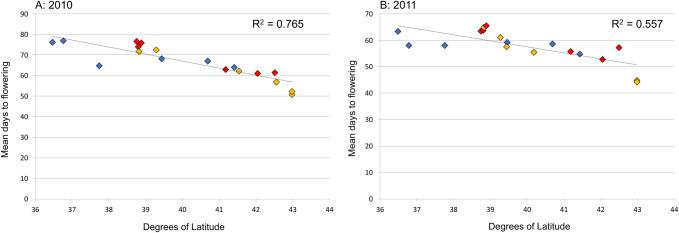
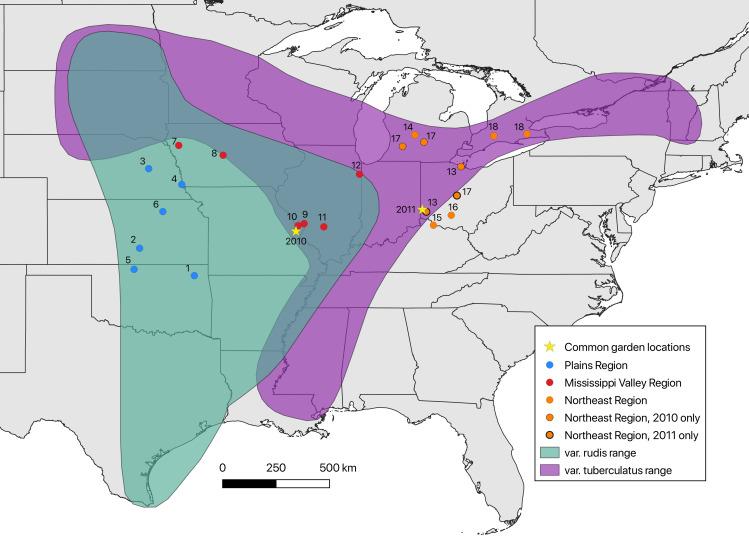
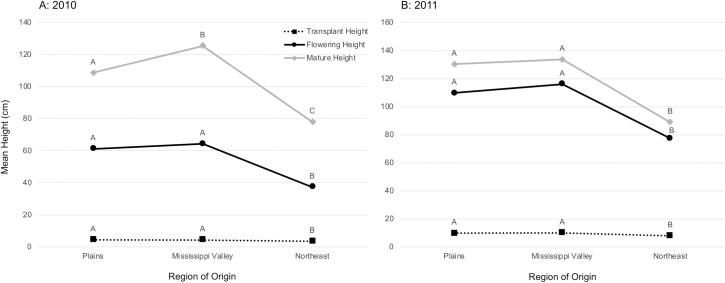
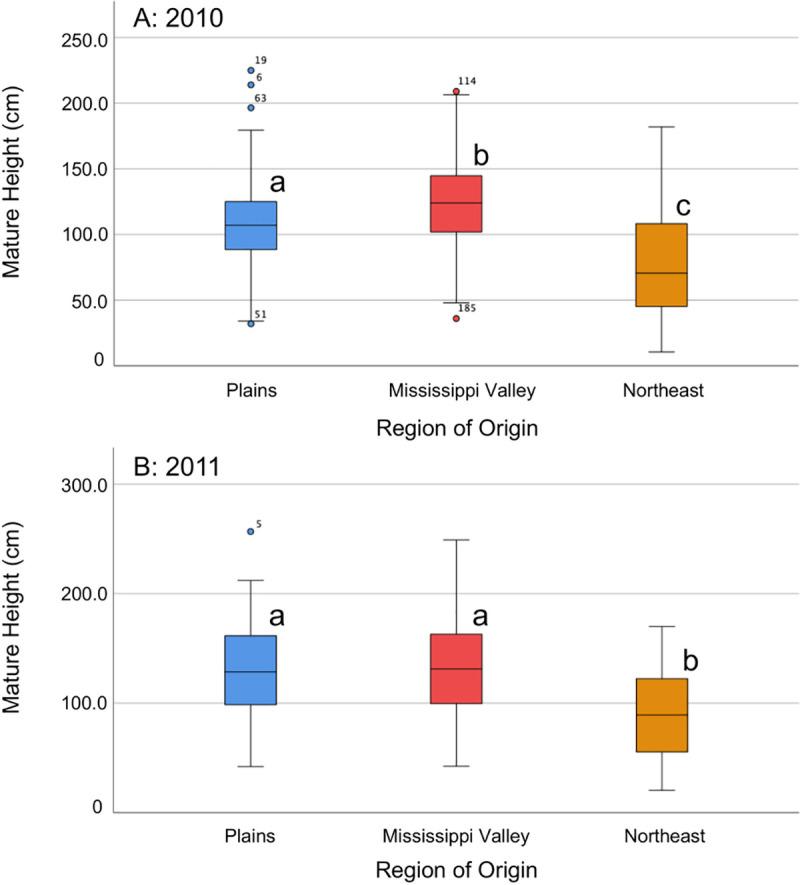
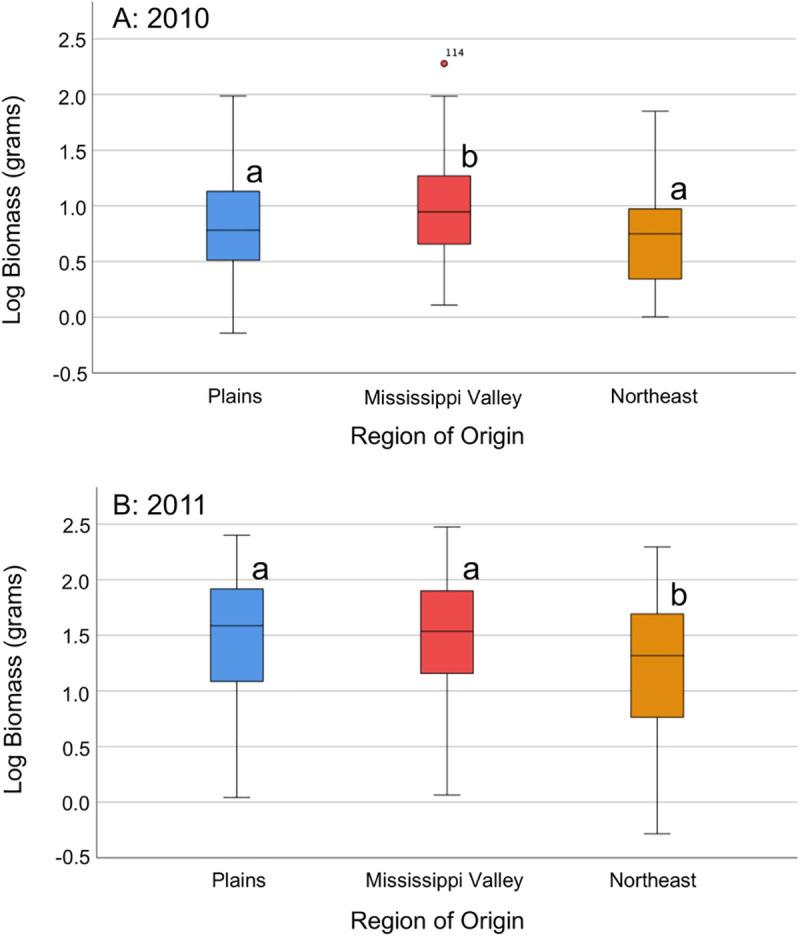
There is increasing interest in documenting adaptation of weedy plant species to agricultural ecosystems, beyond the evolution of herbicide resistance. Waterhemp (Amaranthus tuberculatus) is a native plant of the Midwestern U.S. that began infesting agricultural fields in the 20th century within the central portion of its range. We hypothesized that the vegetative growth and reproductive traits of waterhemp from this heavily infested central region provide differential fitness benefits in agricultural environments. We collected seeds from across the species' native range, representing regions with varying degrees of waterhemp infestation, and planted them together in common garden soybean plots. A 2010 common garden experiment was conducted within the range of agriculturally weedy waterhemp (in Missouri), and a 2011 common garden experiment was conducted outside of this range (in Ohio). Days to flowering and flowering plant height, mature plant size data (height, number of branches, and length of the longest branch), and above-ground biomass were measured to estimate relative fitness. In both common garden locations, plants from regions where waterhemp occurs as an agricultural weed - including those from the heavily infested Mississippi Valley region (Iowa, Illinois, and Missouri) and the less severely infested Plains region (Nebraska, Kansas, and Oklahoma) - had higher relative performance in almost all fitness-related measures than plants from the Northeast region (Ohio, Michigan, and Ontario), which had little to no agriculturally weedy waterhemp at the time of our study. Further analysis revealed that fewer days to flowering in the Northeast populations can be largely accounted for by latitude of origin, suggesting a strong genetic influence on this reproductive trait. These findings suggest intraspecific variation in agricultural adaptation in a native U.S. weed, and support the use of agricultural weeds to study adaptation.
人们越来越关注记录杂草物种对农业生态系统的适应,而不仅仅是除草剂抗性的进化。水苋菜(Amaranthus tuberculatus)是美国中西部的一种本地植物,它于 20 世纪在其分布范围的中心地带开始侵袭农田。我们假设来自这个受重度侵袭的中心地区的水苋菜的营养生长和生殖特征在农业环境中提供了不同的适应优势。我们从整个物种的自然分布区收集种子,代表了不同程度水苋菜侵袭的地区,并将它们一起种植在大豆的公共花园中。2010 年在农业杂草水苋菜的分布范围内(密苏里州)进行了一个公共花园实验,2011 年在这个范围之外(俄亥俄州)进行了一个公共花园实验。我们测量了开花天数和开花植物高度、成熟植物大小数据(高度、分枝数和最长分枝的长度)和地上生物量,以估计相对适应度。在两个公共花园地点,来自水苋菜作为农业杂草出现的地区的植物 - 包括来自密西西比河谷地区(爱荷华州、伊利诺伊州和密苏里州)的高度受侵袭地区和受侵袭程度较轻的大平原地区(内布拉斯加州、堪萨斯州和俄克拉荷马州) - 在几乎所有与适应相关的测量中都表现出更高的相对性能,而来自东北部地区(俄亥俄州、密歇根州和安大略省)的植物则很少或根本没有农业杂草水苋菜,这是我们研究时的情况。进一步的分析表明,东北部种群的开花天数较少,可以在很大程度上归因于起源的纬度,这表明这种生殖特征受到强烈的遗传影响。这些发现表明,一种美国本地杂草存在着农业适应的种内变异,并支持利用农业杂草来研究适应。
 Zotero 插件