Centre for Improving Health-Related Quality of Life (CIHRQoL), School of Psychology, Queen's University Belfast, Belfast, United Kingdom.
Stress Trauma and Related Conditions (STARC) Research Lab, School of Psychology, Queen's University Belfast, Belfast, United Kingdom.
PLoS One. 2020 Sep 24;15(9):e0239698. doi: 10.1371/journal.pone.0239698. eCollection 2020.
Loneliness is a significant public health issue. The COVID-19 pandemic has resulted in lockdown measures limiting social contact. The UK public are worried about the impact of these measures on mental health outcomes. Understanding the prevalence and predictors of loneliness at this time is a priority issue for research.
The study employed a cross-sectional online survey design. Baseline data collected between March 23rd and April 24th 2020 from UK adults in the COVID-19 Psychological Wellbeing Study were analysed (N = 1964, 18-87 years, M = 37.11, SD = 12.86, 70% female). Logistic regression analysis examined the influence of sociodemographic, social, health and COVID-19 specific factors on loneliness.
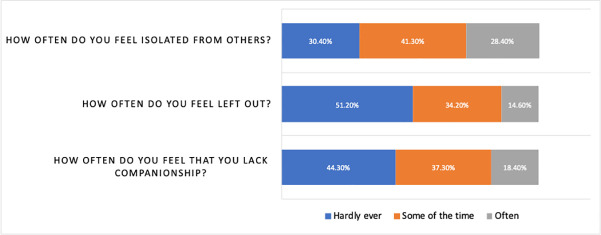
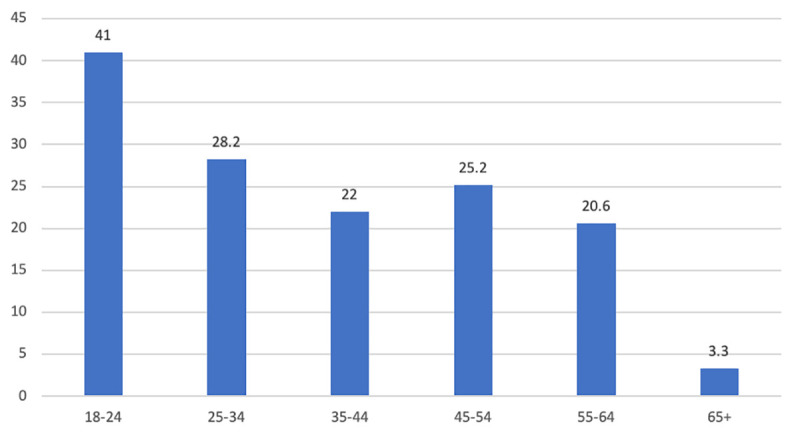
The prevalence of loneliness was 27% (530/1964). Risk factors for loneliness were younger age group (OR: 4.67-5.31), being separated or divorced (OR: 2.29), scores meeting clinical criteria for depression (OR: 1.74), greater emotion regulation difficulties (OR: 1.04), and poor quality sleep due to the COVID-19 crisis (OR: 1.30). Higher levels of social support (OR: 0.92), being married/co-habiting (OR: 0.35) and living with a greater number of adults (OR: 0.87) were protective factors.
Rates of loneliness during the initial phase of lockdown were high. Risk factors were not specific to the COVID-19 crisis. Findings suggest that supportive interventions to reduce loneliness should prioritise younger people and those with mental health symptoms. Improving emotion regulation and sleep quality, and increasing social support may be optimal initial targets to reduce the impact of COVID-19 regulations on mental health outcomes.
孤独是一个严重的公共卫生问题。COVID-19 大流行导致了限制社交接触的封锁措施。英国公众担心这些措施对心理健康结果的影响。了解此时孤独的患病率和预测因素是研究的优先事项。
该研究采用了横断面在线调查设计。从 2020 年 3 月 23 日至 4 月 24 日,对 COVID-19 心理福利研究中的英国成年人进行了基线数据收集(N = 1964,年龄 18-87 岁,M = 37.11,SD = 12.86,70%为女性)。逻辑回归分析考察了社会人口统计学、社会、健康和 COVID-19 特定因素对孤独感的影响。
孤独感的患病率为 27%(530/1964)。孤独感的危险因素是年龄较小的年龄组(OR:4.67-5.31)、分居或离婚(OR:2.29)、符合抑郁临床标准的分数(OR:1.74)、情绪调节困难更大(OR:1.04)以及因 COVID-19 危机而导致的睡眠质量差(OR:1.30)。较高的社会支持水平(OR:0.92)、已婚/同居(OR:0.35)和与较多成年人同住(OR:0.87)是保护因素。
在封锁的初始阶段,孤独感的发生率很高。危险因素并非特定于 COVID-19 危机。研究结果表明,减少孤独感的支持性干预措施应优先考虑年轻人和有心理健康症状的人。改善情绪调节和睡眠质量,增加社会支持可能是减少 COVID-19 法规对心理健康结果影响的最佳初始目标。