Climate Change, Agriculture, and Food Security (CCAFS), International Institute of Tropical Agriculture (IITA), Kampala, Uganda.
Department of Earth and Environmental Sciences, KU Leuven, Leuven, Belgium.
PLoS One. 2020 Sep 24;15(9):e0239552. doi: 10.1371/journal.pone.0239552. eCollection 2020.
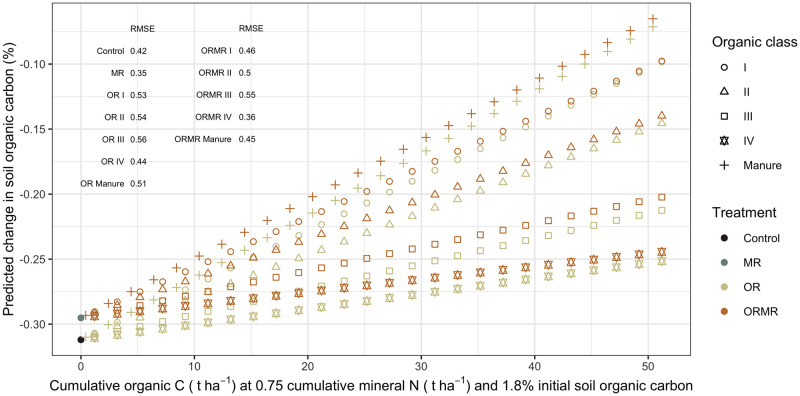
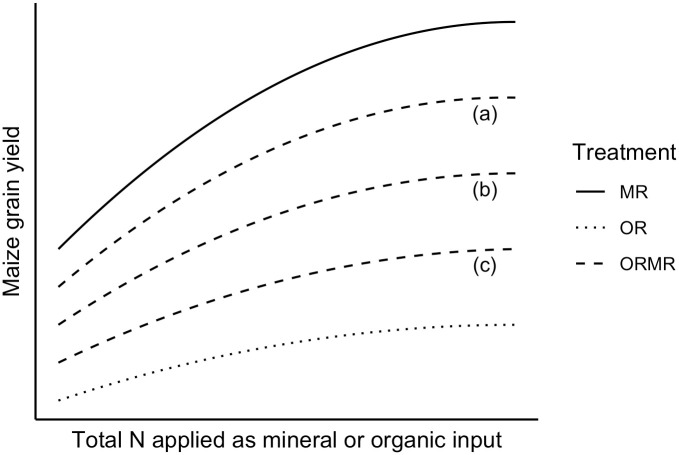
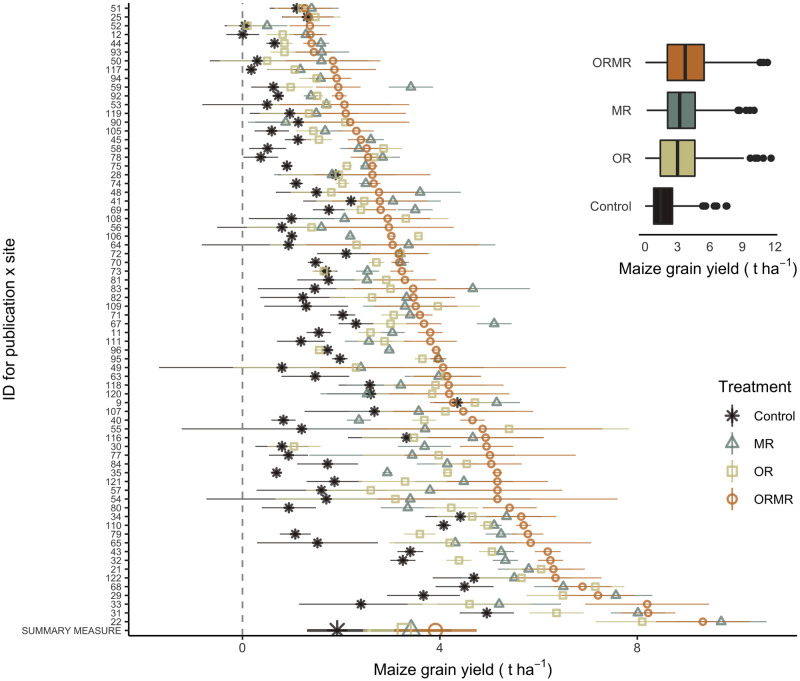
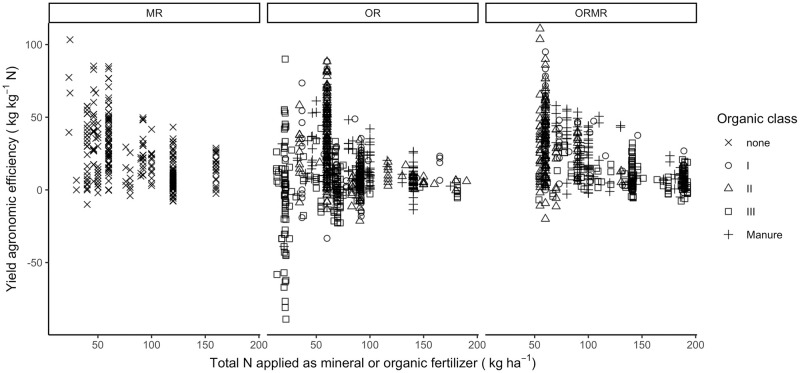
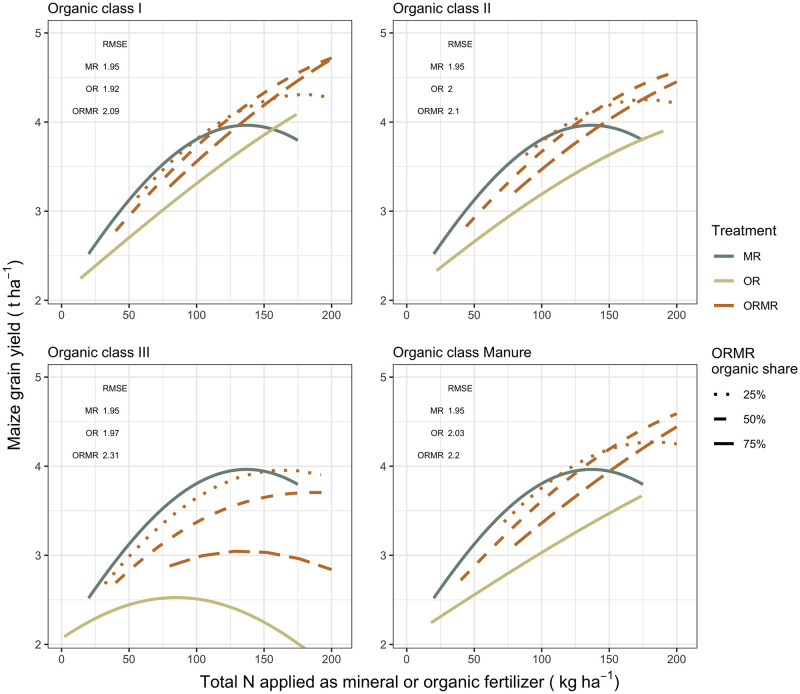
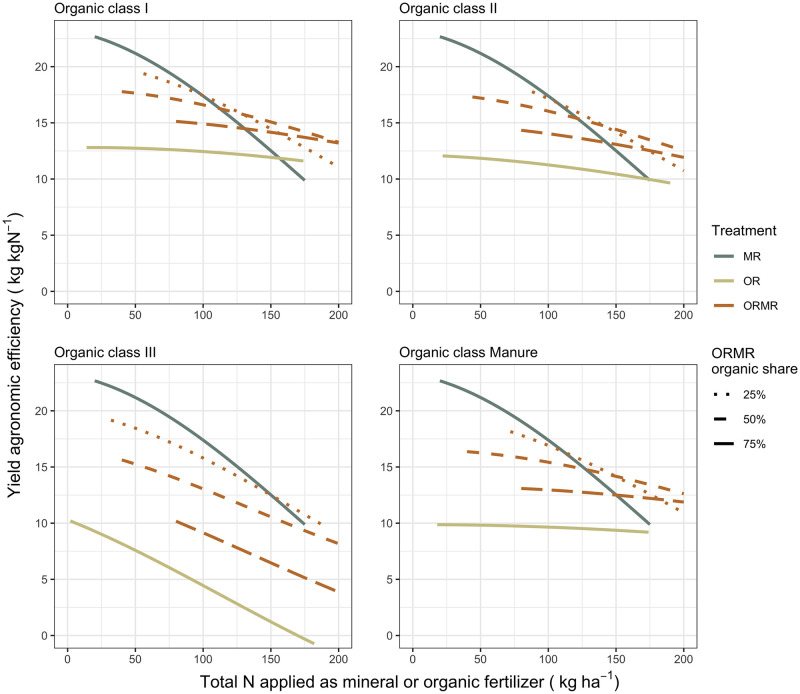
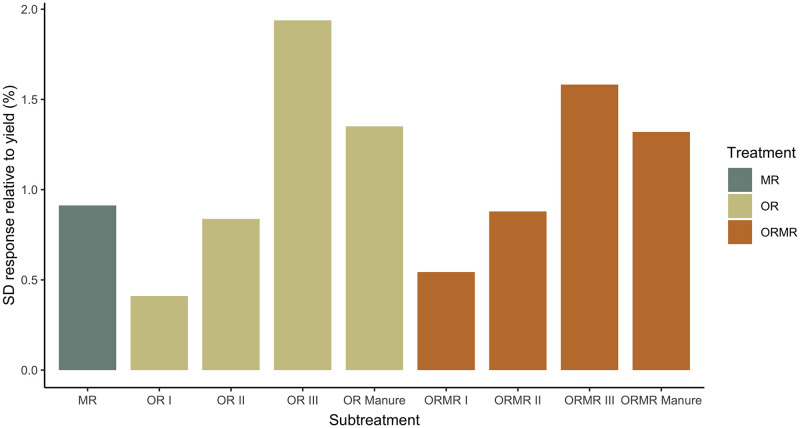
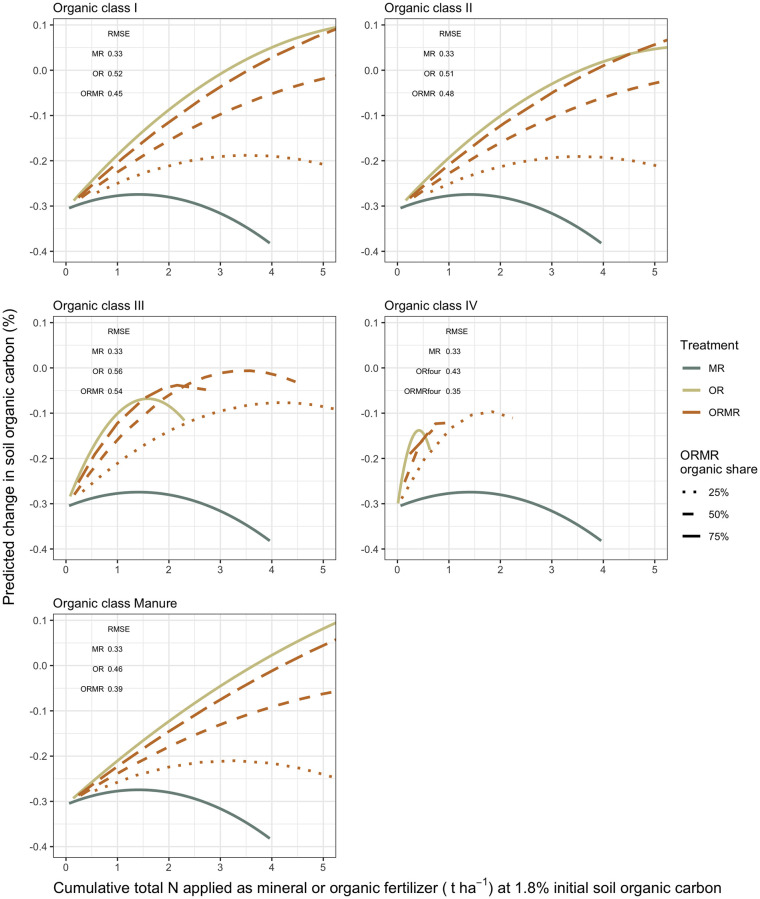
Low productivity and climate change require climate-smart agriculture (CSA) for sub-Saharan Africa (SSA), through (i) sustainably increasing crop productivity, (ii) enhancing the resilience of agricultural systems, and (iii) offsetting greenhouse gas emissions. We conducted a meta-analysis on experimental data to evaluate the contributions of combining organic and mineral nitrogen (N) applications to the three pillars of CSA for maize (Zea mays). Linear mixed effect modeling was carried out for; (i) grain productivity and agronomic efficiency of N (AE) inputs, (ii) inter-seasonal yield variability, and (iii) changes in soil organic carbon (SOC) content, while accounting for the quality of organic amendments and total N rates. Results showed that combined application of mineral and organic fertilizers leads to greater responses in productivity and AE as compared to sole applications when more than 100 kg N ha-1 is used with high-quality organic matter. For yield variability and SOC, no significant interactions were found when combining mineral and organic fertilizers. The variability of maize yields in soils amended with high-quality organic matter, except manure, was equal or smaller than for sole mineral fertilizer. Increases of SOC were only significant for organic inputs, and more pronounced for high-quality resources. For example, at a total N rate of 150 kg N ha-1 season-1, combining mineral fertilizer with the highest quality organic resources (50:50) increased AE by 20% and reduced SOC losses by 18% over 7 growing seasons as compared to sole mineral fertilizer. We conclude that combining organic and mineral N fertilizers can have significant positive effects on productivity and AE, but only improves the other two CSA pillars yield variability and SOC depending on organic resource input and quality. The findings of our meta-analysis help to tailor a climate smart integrated soil fertility management in SSA.
低生产力和气候变化要求撒哈拉以南非洲(SSA)采用气候智能型农业(CSA),方法是(i)可持续地提高作物生产力,(ii)增强农业系统的弹性,以及(iii)抵消温室气体排放。我们对实验数据进行了荟萃分析,以评估将有机氮和矿物氮(N)结合应用于玉米(Zea mays)的 CSA 的三个支柱的贡献。线性混合效应模型用于:(i)谷物生产力和 N 投入的农学效率(AE),(ii)跨季节产量变异性,以及(iii)土壤有机碳(SOC)含量的变化,同时考虑有机改良剂的质量和总 N 率。结果表明,与单独施用相比,当使用超过 100kg N ha-1 并添加高质量有机物时,同时施用矿物和有机肥料会导致生产力和 AE 更大的响应。对于产量变异性和 SOC,当同时施用矿物和有机肥料时,没有发现显著的相互作用。在添加高质量有机物(除粪肥外)的土壤中,玉米产量的变异性与单独使用矿物肥料时相等或更小。SOC 的增加仅对有机投入有显著影响,而对高质量资源更为明显。例如,在 150kg N ha-1 季-1 的总 N 率下,与单独施用矿物肥料相比,将矿物肥料与最高质量的有机资源(50:50)结合使用,可使 AE 提高 20%,并在 7 个生长季中减少 18%的 SOC 损失。我们得出结论,将有机氮和矿物 N 肥料结合使用可以对生产力和 AE 产生显著的积极影响,但仅在有机资源投入和质量的情况下才能改善 CSA 的其他两个支柱产量变异性和 SOC。我们的荟萃分析结果有助于在 SSA 中定制气候智能型综合土壤肥力管理。