Koch Institute for Integrative Cancer Research and Department of Biology, Massachusetts Institute of Technology, Cambridge, MA, 02139, USA.
Department of Materials Science and Engineering, Massachusetts Institute of Technology, Cambridge, MA, 02139, USA.
Nat Commun. 2020 Sep 24;11(1):4837. doi: 10.1038/s41467-020-18607-1.
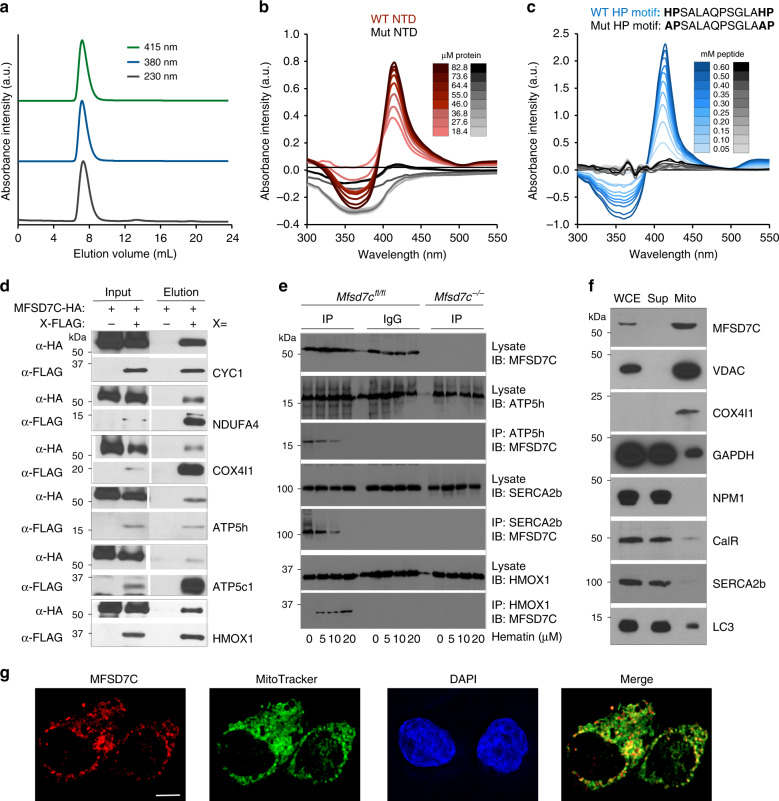
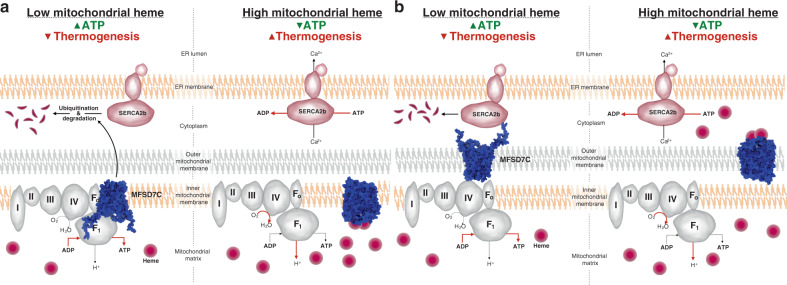
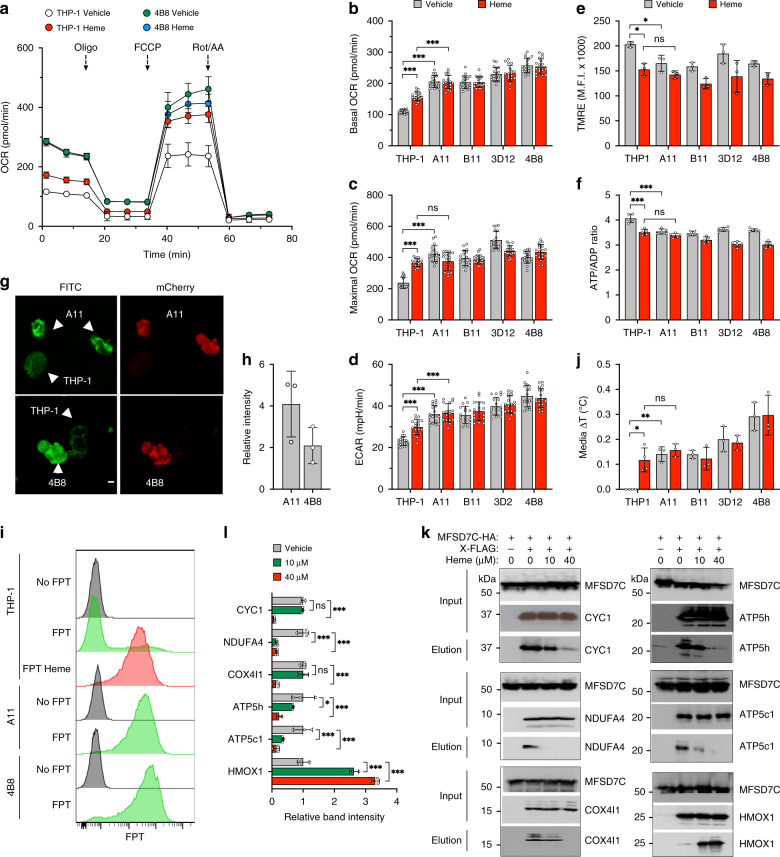
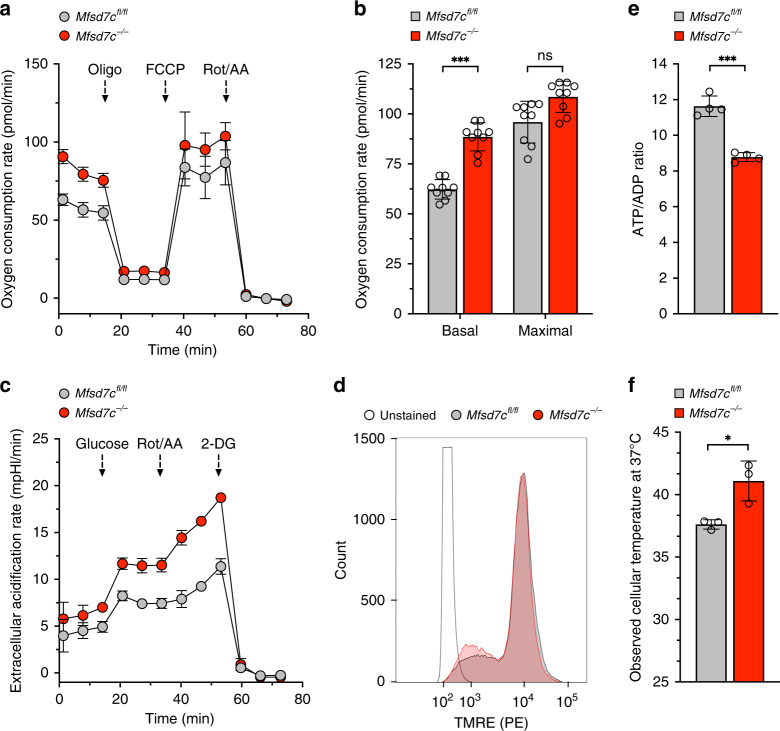
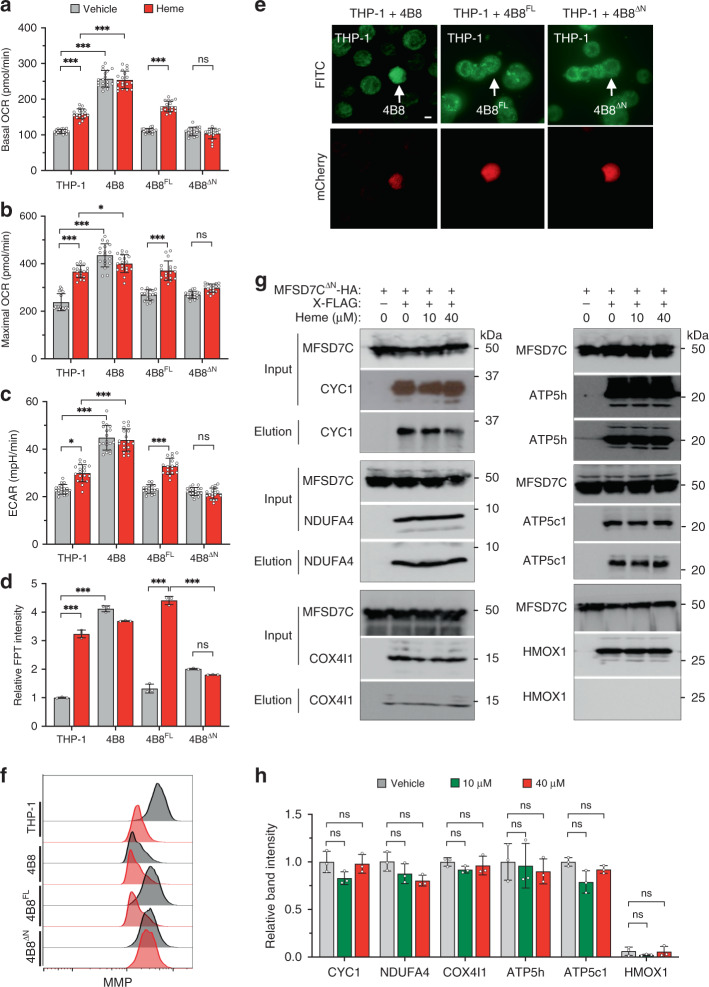
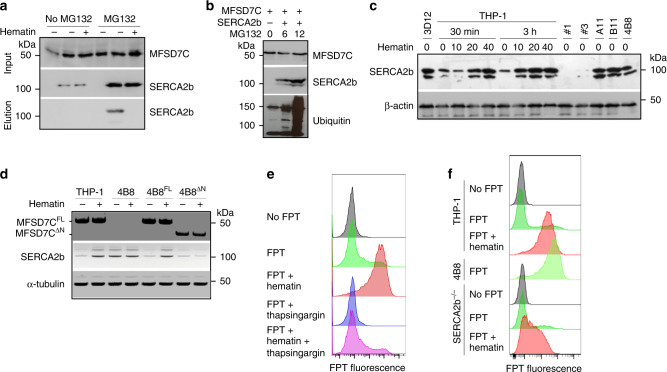
ATP synthesis and thermogenesis are two critical outputs of mitochondrial respiration. How these outputs are regulated to balance the cellular requirement for energy and heat is largely unknown. Here we show that major facilitator superfamily domain containing 7C (MFSD7C) uncouples mitochondrial respiration to switch ATP synthesis to thermogenesis in response to heme. When heme levels are low, MSFD7C promotes ATP synthesis by interacting with components of the electron transport chain (ETC) complexes III, IV, and V, and destabilizing sarcoendoplasmic reticulum Ca-ATPase 2b (SERCA2b). Upon heme binding to the N-terminal domain, MFSD7C dissociates from ETC components and SERCA2b, resulting in SERCA2b stabilization and thermogenesis. The heme-regulated switch between ATP synthesis and thermogenesis enables cells to match outputs of mitochondrial respiration to their metabolic state and nutrient supply, and represents a cell intrinsic mechanism to regulate mitochondrial energy metabolism.
三磷酸腺苷合成和产热是线粒体呼吸的两个关键输出。这些输出如何被调节以平衡细胞对能量和热量的需求在很大程度上是未知的。在这里,我们表明,主要易化超家族结构域包含 7C(MFSD7C)通过解偶联线粒体呼吸来切换三磷酸腺苷合成以产热,以响应血红素。当血红素水平较低时,MSFD7C 通过与电子传递链(ETC)复合物 III、IV 和 V 的组件相互作用并使肌浆内质网 Ca-ATPase 2b(SERCA2b)不稳定来促进三磷酸腺苷合成。血红素结合到 N 端结构域后,MFSD7C 从 ETC 组件和 SERCA2b 中解离,导致 SERCA2b 稳定和产热。血红素调节的三磷酸腺苷合成和产热之间的转换使细胞能够将线粒体呼吸的输出与其代谢状态和营养供应相匹配,并代表了一种调节线粒体能量代谢的细胞内在机制。