Seidel Constanze, Moreno-Velásquez Sergio D, Ben-Ghazzi Nagwa, Gago Sara, Read Nick D, Bowyer Paul
Manchester Fungal Infection Group, Faculty of Biology, Medicine and Health, The University of Manchester, Manchester Academic Health Science Centre, Core Technology Facility, Manchester, United Kingdom.
Front Microbiol. 2020 Aug 20;11:1955. doi: 10.3389/fmicb.2020.01955. eCollection 2020.
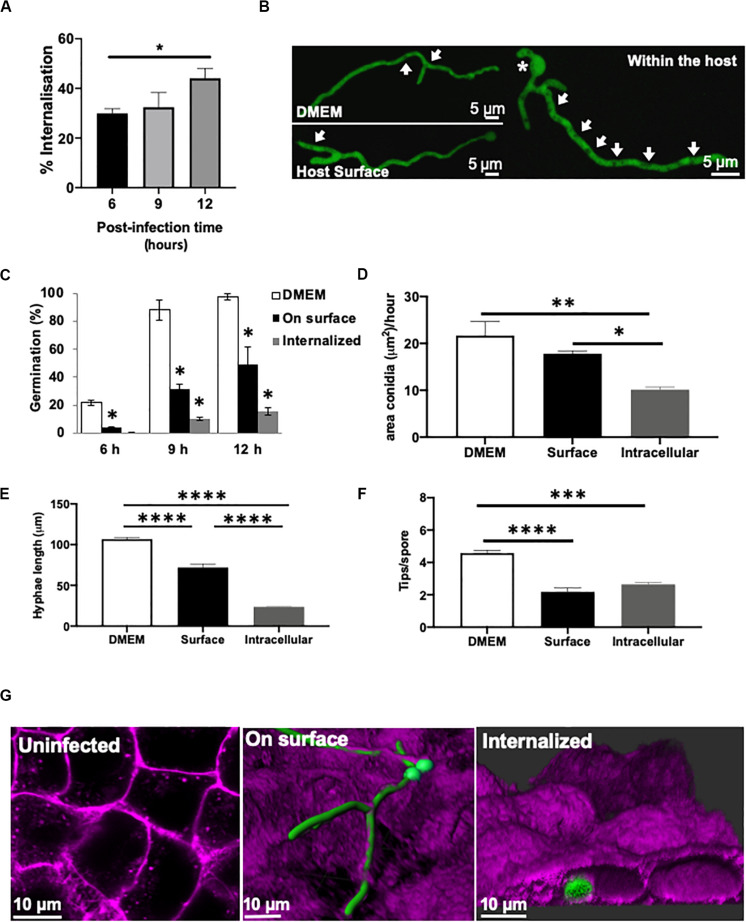
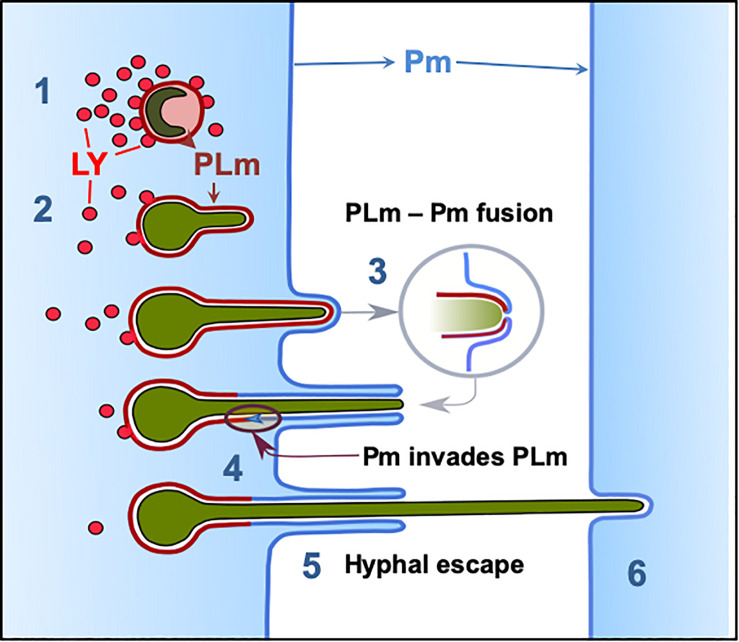
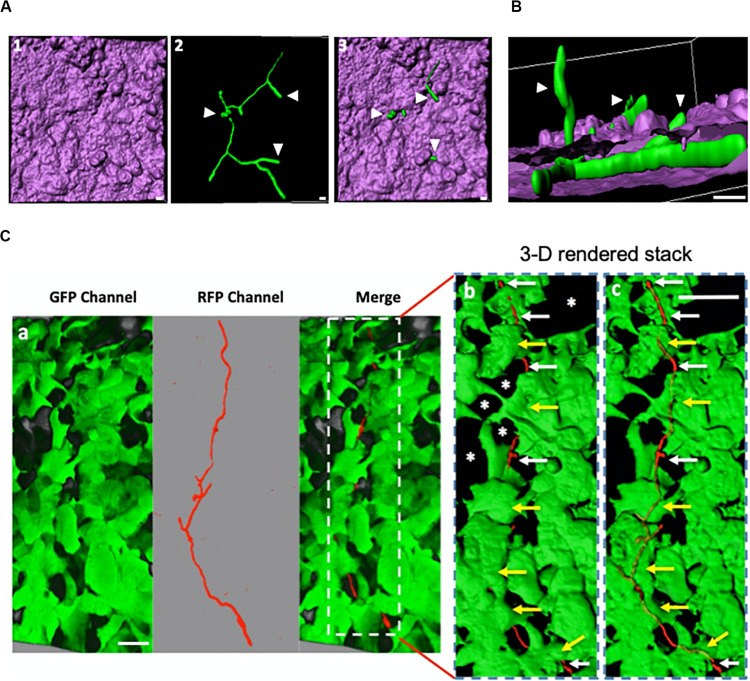
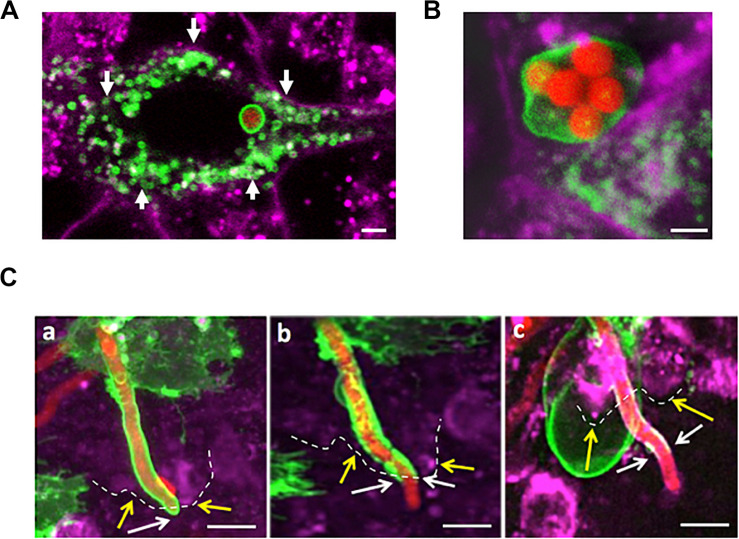
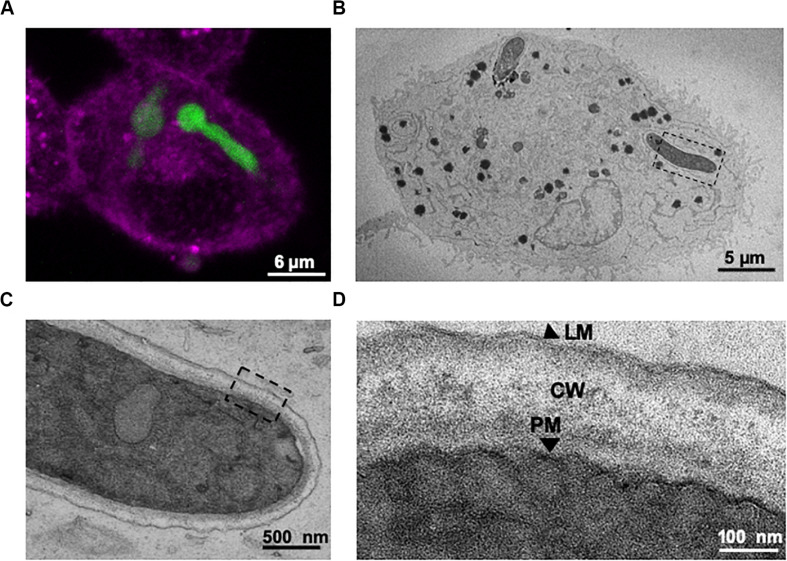
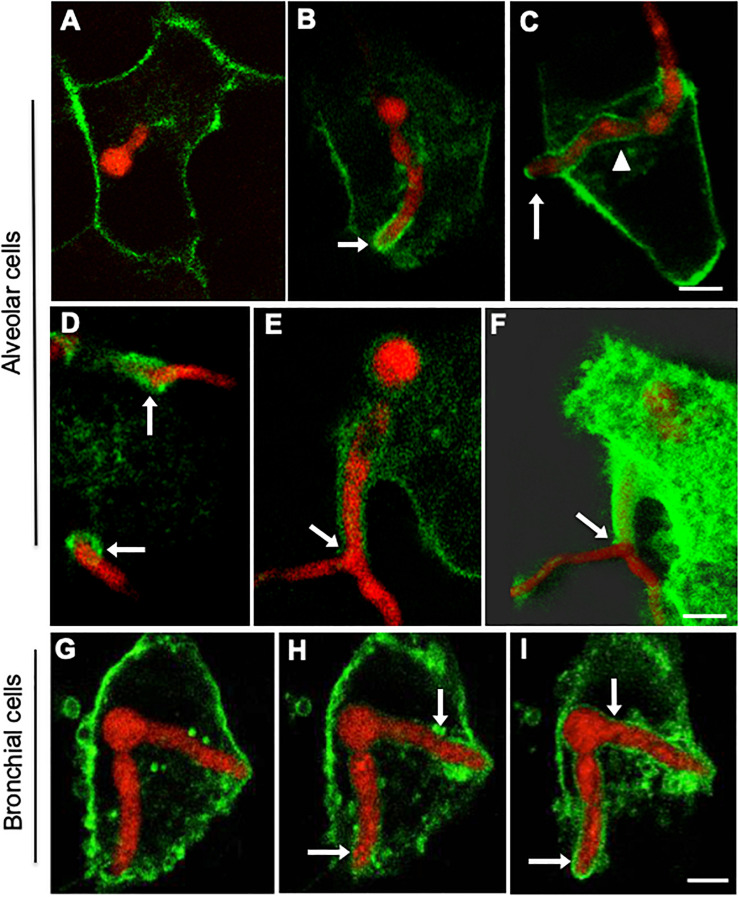
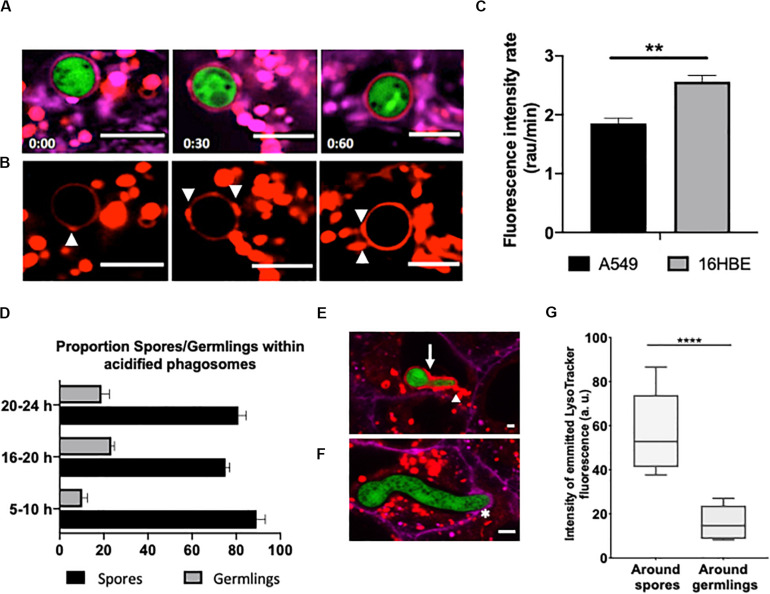
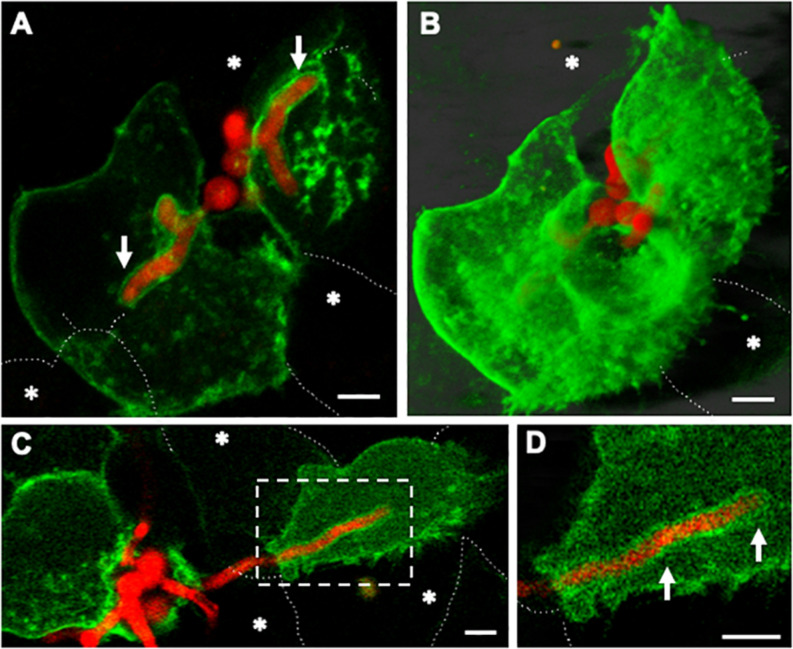
is the most important mould pathogen in immunosuppressed patients. Suboptimal clearance of inhaled spores results in the colonisation of the lung airways by invasive hyphae. The first point of contact between and the host is the lung epithelium. and studies have characterised critical aspects of the interaction of invasive hyphae on the surface of epithelial cells. However, the cellular interplay between internalised and the lung epithelium remains largely unexplored. Here, we use high-resolution live-cell confocal microscopy, 3D rendered imaging and transmission electron microscopy to define the development of after lung epithelium internalisation . Germination, morphology and growth of were significantly impaired upon internalisation by alveolar (A549) and bronchial (16HBE) lung epithelial cells compared to those growing on the host surface. Internalised spores and germlings were surrounded by the host phagolysosome membrane. Sixty per cent of the phagosomes containing germlings were not acidified at 24 h post infection allowing hyphal development. During escape, the phagolysosomal membrane was not ruptured but likely fused to host plasma membrane allowing hyphal exit from the intact host cell in an non-lytic Manner. Subsequently, escaping hyphae elongated between or through adjacent epithelial lung cells without penetration of the host cytoplasm. Hyphal tips penetrating new epithelial cells were surrounded by the recipient cell plasma membrane. Altogether, our results suggest cells of lung epithelium survive fungal penetration because the phagolysosomal and plasma membranes are never breached and that conversely, fungal spores survive due to phagosome maturation failure. Consequently, fungal hyphae can grow through the epithelial cell layer without directly damaging the host. These processes likely prevent the activation of downstream immune responses alongside limiting the access of professional phagocytes to the invading fungal hypha. Further research is needed to investigate if these events also occur during penetration of fungi in endothelial cells, fibroblasts and other cell types.
是免疫抑制患者中最重要的霉菌病原体。吸入的孢子清除不充分会导致侵袭性菌丝在肺气道定植。与宿主的第一个接触点是肺上皮。[具体研究主体1]和[具体研究主体2]的研究已经描述了侵袭性菌丝与上皮细胞表面相互作用的关键方面。然而,内化的[具体研究主体]与肺上皮之间的细胞相互作用在很大程度上仍未被探索。在这里,我们使用高分辨率活细胞共聚焦显微镜、3D渲染成像和透射电子显微镜来确定[具体研究主体]在肺上皮内化后的发育情况。与在宿主表面生长的情况相比,肺泡(A549)和支气管(16HBE)肺上皮细胞内化后,[具体研究主体]的萌发、形态和生长受到显著损害。内化的孢子和芽管被宿主吞噬溶酶体膜包围。感染后24小时,60%含有芽管的吞噬体未酸化,从而允许菌丝发育。在逸出过程中,吞噬溶酶体膜未破裂,但可能与宿主质膜融合,使菌丝以非裂解方式从完整的宿主细胞中逸出。随后,逸出的菌丝在相邻的肺上皮细胞之间或穿过相邻的肺上皮细胞伸长,而不穿透宿主细胞质。穿透新上皮细胞的菌丝尖端被受体细胞质膜包围。总之,我们的结果表明,肺上皮细胞在真菌穿透后存活,因为吞噬溶酶体膜和质膜从未被破坏,相反,真菌孢子由于吞噬体成熟失败而存活。因此,真菌菌丝可以穿过上皮细胞层而不直接损害宿主。这些过程可能会阻止下游免疫反应的激活,同时限制专业吞噬细胞接触入侵的真菌菌丝。需要进一步研究来调查这些事件是否也发生在真菌穿透内皮细胞、成纤维细胞和其他细胞类型的过程中。