Institute of Veterinary Physiology and Biochemistry, Justus Liebig University Giessen, Giessen, Germany.
Department of Rheumatology and Clinical Immunology, Campus Kerckhoff, Justus Liebig University Gießen, Bad Nauheim, Germany.
Front Immunol. 2020 Aug 19;11:1800. doi: 10.3389/fimmu.2020.01800. eCollection 2020.
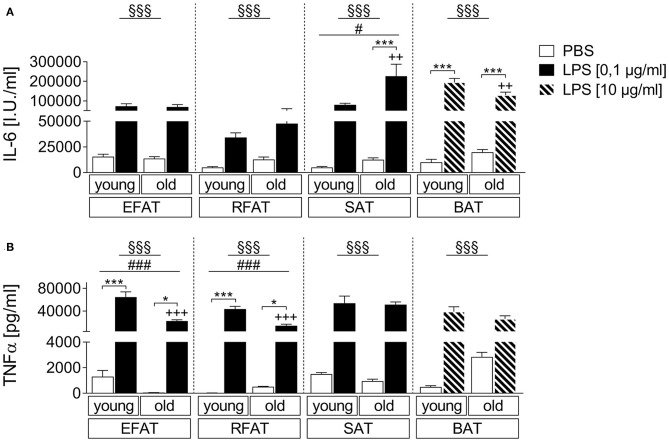
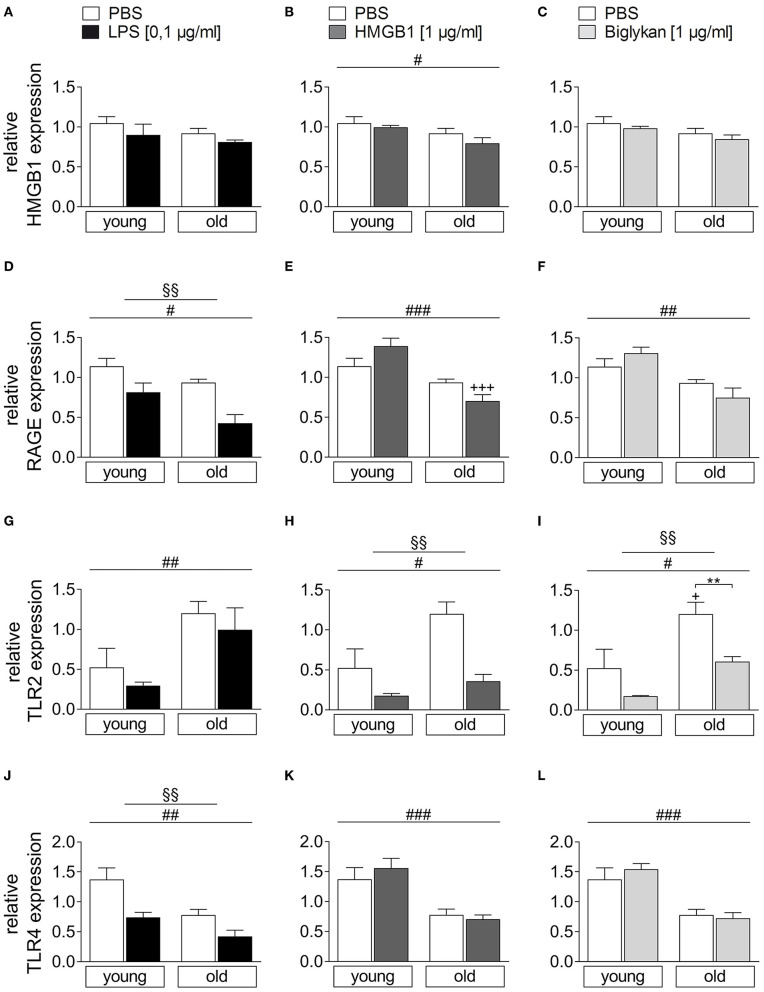
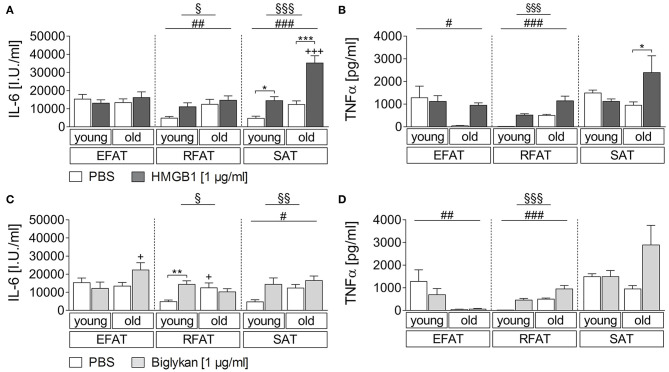
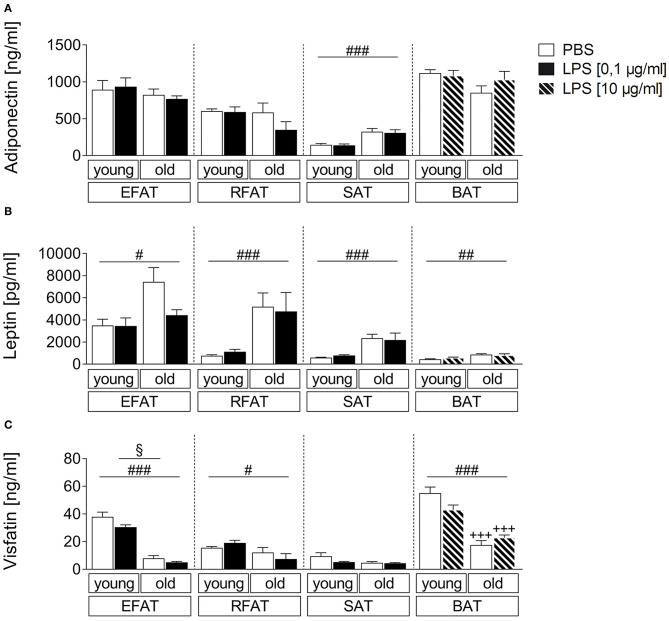
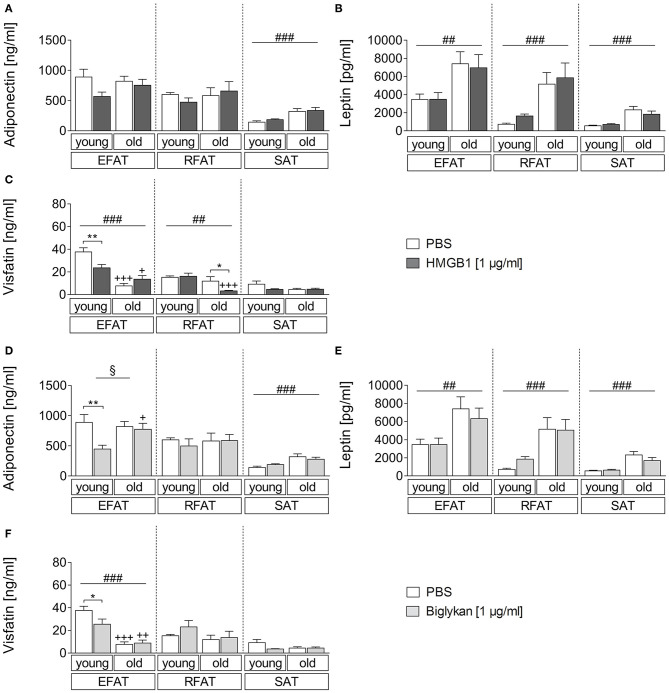
White adipose tissue but recently also brown adipose tissue have emerged as endocrine organs. Age-associated obesity is accompanied by prolonged and elevated lipopolysaccharide (LPS)-induced sickness symptoms and increased cytokine and adipokine levels in the circulation partially originating from adipose tissue. In the present study, fat explants were used to investigate how the exogenous pathogen-associated molecular pattern (PAMP) LPS or the endogenous danger-associated molecular patterns (DAMPs) high mobility group box-1 protein (HMGB1) and biglycan modulate the release of cytokines and adipokines/batokines and, thus, could influence systemic and/or local inflammation. The response of adipose tissue (epididymal, retroperitoneal, subcutaneous, and brown) was compared between young lean and old obese rats (2 vs. 24 months old). LPS induced a strong interleukin (IL)-6 and tumor necrosis factor (TNF) alpha release into the supernatant of all adipose tissue types investigated. HMGB1 (subcutaneous) and biglycan (retroperitoneal) led to an increased release of IL-6 and TNFalpha (HMGB1) and decreased visfatin and adiponectin (biglycan) secretion from epididymal adipose tissue (young rats). Visfatin was also decreased by HMGB1 in retroperitoneal adipose tissue of old rats. We found significantly higher leptin (all fat pads) and adiponectin (subcutaneous) levels in supernatants of adipose tissue from old compared to young rats, whereas visfatin secretion showed the opposite. The expression of the biglycan receptor Toll-like receptor (TLR) 2 as well as the LPS and HMGB1 receptors TLR4 and receptor for advanced glycation end products (RAGE) were reduced with age (TLR4/RAGE) and by stimulation with their ligands (subcutaneous). Overall, we revealed that adipokines/adipose-tissue released cytokines show some modulation of their release caused by mediators of septic (batokines) and sterile inflammation with potential implication for acute and chronic disease. Moreover, aging may increase or decrease the release of fat-derived mediators. These data show that DAMPS and LPS locally modulate cytokine secretion while only DAMPS but not LPS can locally alter adipokine secretion during inflammation.
白色脂肪组织,但最近也棕色脂肪组织已成为内分泌器官。与年龄相关的肥胖伴随着延长和升高的脂多糖(LPS)诱导的疾病症状和增加细胞因子和脂肪因子水平在循环中部分来源于脂肪组织。在本研究中,脂肪外植体被用来研究外源性病原体相关分子模式(PAMP)脂多糖(LPS)或内源性危险相关分子模式(DAMPs)高迁移率族蛋白 B1(HMGB1)和 biglycan 如何调节细胞因子和脂肪因子/脂肪因子的释放,从而影响全身和/或局部炎症。比较了年轻瘦大鼠(2 个月)和老年肥胖大鼠(24 个月)之间的脂肪组织(附睾、腹膜后、皮下和棕色)的反应。LPS 诱导所有研究的脂肪组织类型的上清液中白细胞介素(IL)-6 和肿瘤坏死因子(TNF)alpha 的强烈释放。HMGB1(皮下)和 biglycan(腹膜后)导致 IL-6 和 TNFalpha 的释放增加(HMGB1)和附睾脂肪组织中 visfatin 和 adiponectin(biglycan)分泌减少(年轻大鼠)。HMGB1 还降低了老年大鼠腹膜后脂肪组织中的 visfatin。我们发现,与年轻大鼠相比,老年大鼠脂肪组织上清液中的瘦素(所有脂肪垫)和脂联素(皮下)水平显著升高,而 visfatin 分泌则相反。biglycan 受体 Toll 样受体(TLR)2 以及 LPS 和 HMGB1 受体 TLR4 和晚期糖基化终产物受体(RAGE)的表达随着年龄的增长而降低(TLR4/RAGE)并受到其配体的刺激(皮下)。总体而言,我们发现,adipokines/adipose-tissue 释放的细胞因子的释放受到败血症(batokines)和无菌性炎症的介质的一些调节,这可能对急性和慢性疾病有潜在的影响。此外,衰老可能会增加或减少脂肪来源介质的释放。这些数据表明,DAMPs 和 LPS 局部调节细胞因子分泌,而只有 DAMPs 而不是 LPS 可以在炎症期间局部改变脂肪因子的分泌。