Meng Xinyao, Li Honglin, Fang Erhu, Feng Jiexiong, Zhao Xiang
Department of Pediatric Surgery, Tongji Hospital, Tongji Medical College, Huazhong University of Science and Technology, Wuhan, China.
Front Oncol. 2020 Aug 19;10:1411. doi: 10.3389/fonc.2020.01411. eCollection 2020.
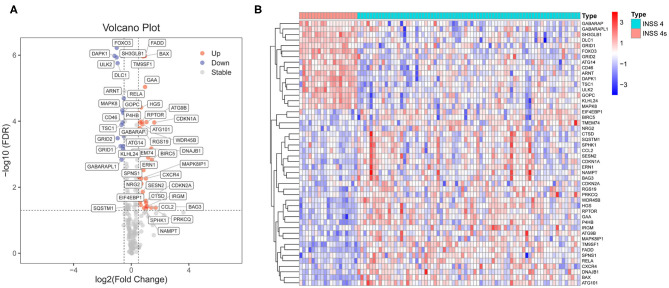
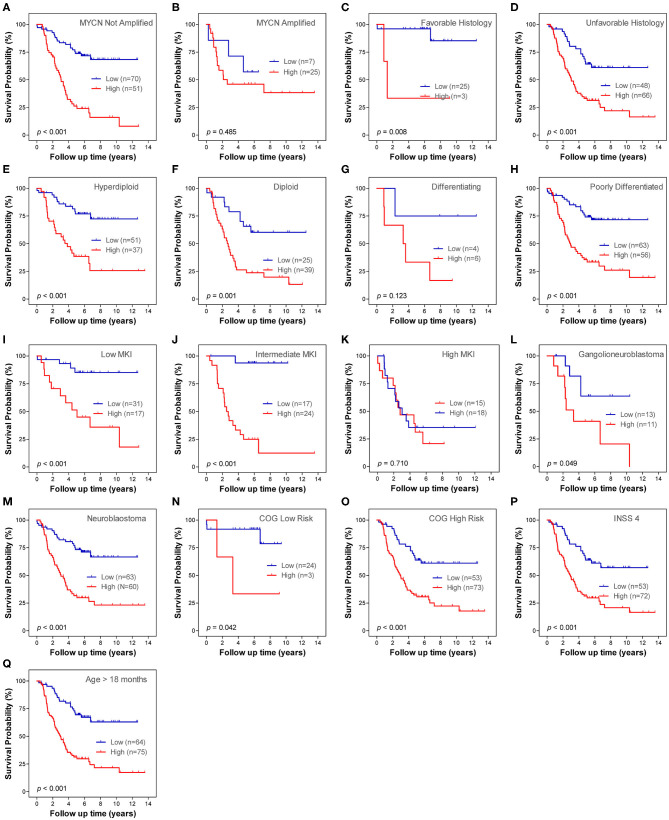
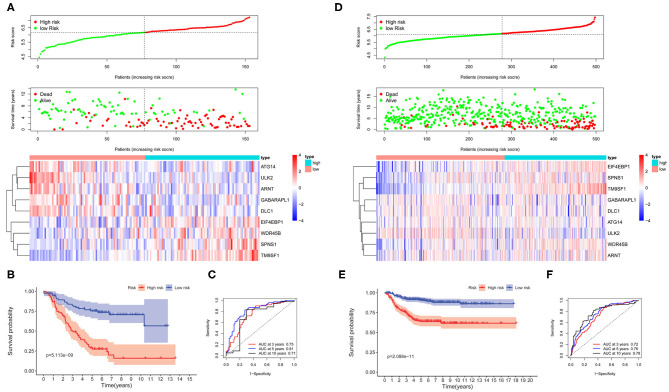
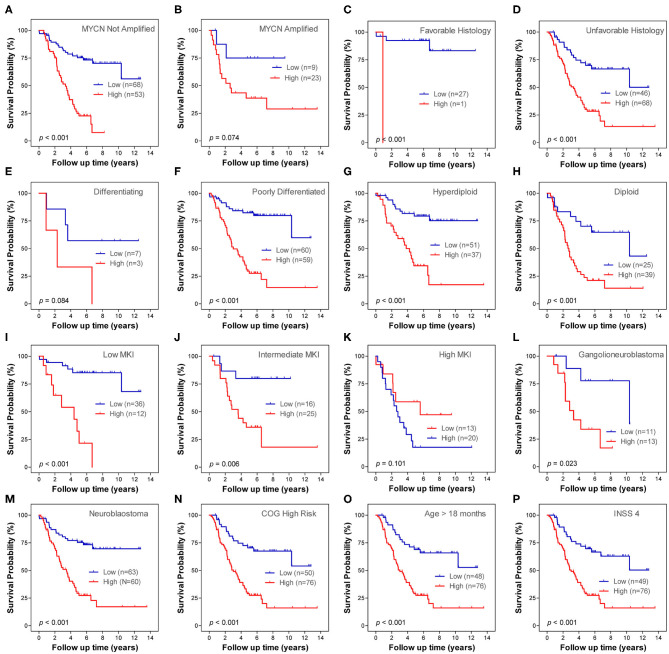
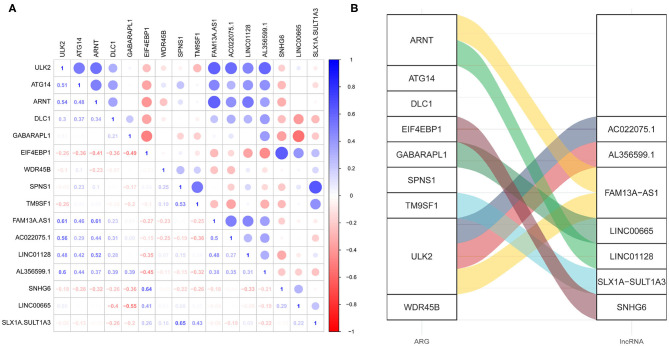
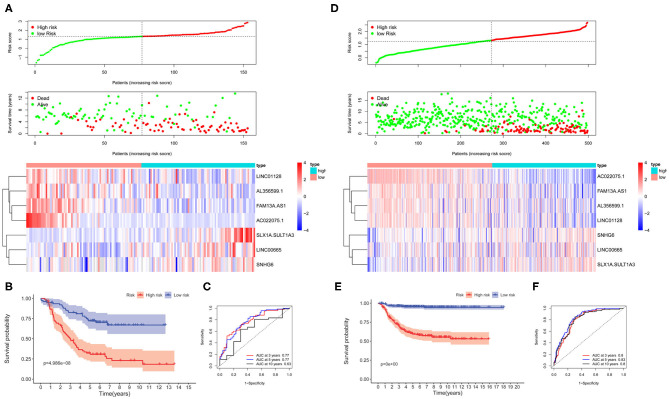
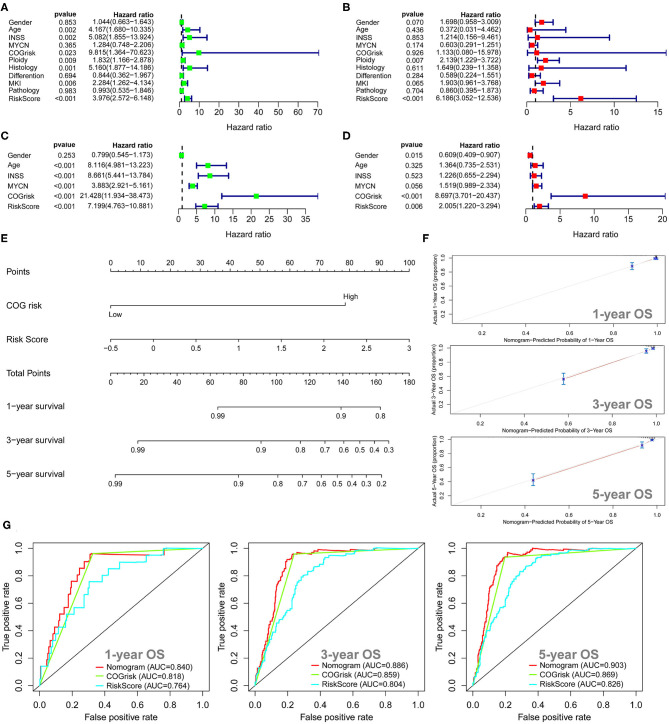
The spontaneous regression of neuroblastoma (NB) is most prevalent and well-documented in stage 4s NB patients. However, whether autophagy plays roles in the spontaneous regression of NB is unknown. This study aimed to identify autophagy-related genes (ARGs) and autophagy-related long non-coding RNAs (lncRNAs) differentially expressed in stage 4 and stage 4s NB and to build prognostic risk signatures on the basis of the ARGs and autophagy-related lncRNAs. One RNA-sequence (RNA-Seq) dataset (TARGET NBL, = 153) was utilized as discovery cohort, and two microarray datasets ( = 498 and = 223) were used as validation cohorts. Differentially expressed ARGs were identified by comparing stage 4s and stage 4 NB samples. An ARG signature risk score and an autophagy-related lncRNA signature risk score were constructed. The receiver operating characteristic (ROC) curve analyses were used to evaluate the survival prediction ability of the two signatures. Gene function annotation and Gene Set Enrichment Analysis (GSEA) were performed to clarify the autophagic biological processes enriched in different risk groups. Nine ARGs were integrated into the ARG signature. Patients in the high-risk group of the ARG signature had significantly poorer overall survival (OS) than patients in the low-risk group. The ROC curves analyses revealed that the ARG signature performed very well in predicting OS [5-year area under the curve (AUC) = 0.81]. Seven autophagy-related lncRNAs were integrated into the autophagy-related lncRNA signature. Patients in the high-risk group of the lncRNA signature had significantly poorer OS than patients in the low-risk group. The ROC curve analyses also revealed that the lncRNA signature performed well in predicting OS (5-year AUC = 0.77). Both the ARG signature and lncRNA signature are independent with other clinical risk factors in the multivariate Cox regression survival analyses. GSEAs revealed that autophagy-related biological processes are enriched in low-risk groups. Autophagy-related genes and lncRNAs are differentially expressed between stage 4 and stage 4s NB. The ARG signature and autophagy-related lncRNA signature successfully stratified NB patients into two risk groups. Autophagy-related biological processes are highly enriched in low-risk NB groups.
神经母细胞瘤(NB)的自发消退在4s期NB患者中最为普遍且有充分记录。然而,自噬是否在NB的自发消退中起作用尚不清楚。本研究旨在鉴定在4期和4s期NB中差异表达的自噬相关基因(ARG)和自噬相关长链非编码RNA(lncRNA),并基于这些ARG和自噬相关lncRNA构建预后风险特征。一个RNA测序(RNA-Seq)数据集(TARGET NBL,n = 153)用作发现队列,两个微阵列数据集(n = 498和n = 223)用作验证队列。通过比较4s期和4期NB样本鉴定差异表达的ARG。构建了ARG特征风险评分和自噬相关lncRNA特征风险评分。采用受试者工作特征(ROC)曲线分析来评估这两个特征的生存预测能力。进行基因功能注释和基因集富集分析(GSEA)以阐明不同风险组中富集的自噬生物学过程。九个ARG被整合到ARG特征中。ARG特征高风险组患者的总生存期(OS)明显低于低风险组患者。ROC曲线分析显示,ARG特征在预测OS方面表现良好[5年曲线下面积(AUC)= 0.81]。七个自噬相关lncRNA被整合到自噬相关lncRNA特征中。lncRNA特征高风险组患者的OS明显低于低风险组患者。ROC曲线分析还显示,lncRNA特征在预测OS方面表现良好(5年AUC = 0.77)。在多变量Cox回归生存分析中,ARG特征和lncRNA特征均独立于其他临床风险因素。GSEA显示自噬相关生物学过程在低风险组中富集。自噬相关基因和lncRNA在4期和4s期NB之间差异表达。ARG特征和自噬相关lncRNA特征成功地将NB患者分为两个风险组。自噬相关生物学过程在低风险NB组中高度富集。