Department of Occupational and Environmental Medicine, Epidemiology and Hygiene, Italian Workers' Compensation Authority (INAIL), Rome, Italy.
Department of Prevention, Prevention and Safety at Workplace, ASUR Marche, Ancona, Italy.
Front Public Health. 2020 Aug 19;8:445. doi: 10.3389/fpubh.2020.00445. eCollection 2020.
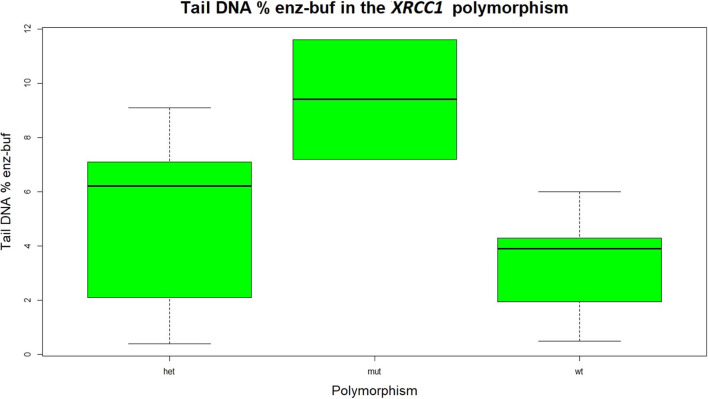
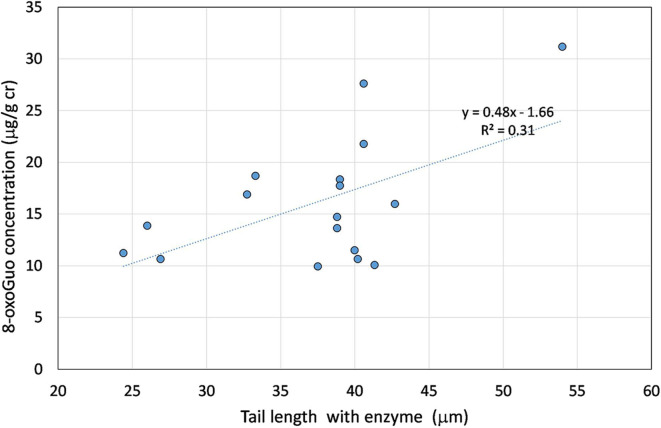
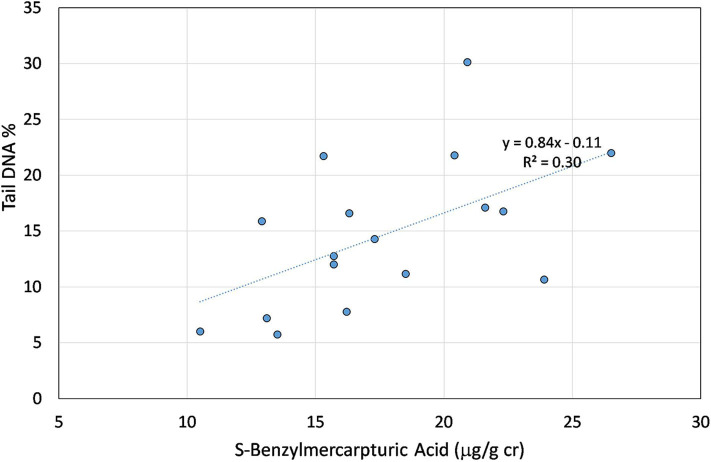
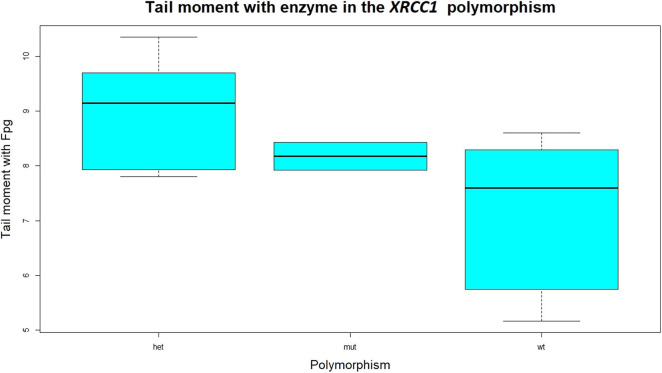
Volatile organic compounds (VOCs) are present in several working activities. This work is aimed at comparing oxidative stress and DNA damage biomarkers to specific VOCs in the occupational exposure of painters. Dose-response relationships between biomarkers of oxidative stress and of dose were studied. Unmetabolized VOCs and their urinary metabolites were analyzed. Urinary Methylhyppuric acids (MHIPPs, xylenes metabolite), Phenylglyoxylic and Mandelic acid (PGA, MA ethylbenzene metabolites), S-Benzylmercapturic acid (SBMA, toluene metabolite), and S-Phenylmercapturic acid (SPMA, benzene metabolite) were quantified at the end of work-shift. Oxidative stress was determined by: urinary excretion of 8-oxodGuo, 8-oxoGua and 8-oxoGuo and direct/oxidative DNA damage in blood by Fpg-Comet assay. Multivariate linear regression models were used to assess statistical significance of the association between dose and effect biomarkers. The regressions were studied with and without the effect of and gene polymorphisms. Statistically significant associations were found between MHIPPs and both 8-oxoGuo and oxidative DNA damage effect biomarkers measured with the Comet assay. Oxidative DNA damage results significantly associated with airborne xylenes and toluene, whilst 8-oxodGuo was significantly related to urinary xylenes and toluene. Direct DNA damage was significantly associated to SBMA. wild-type gene polymorphism was significantly associated with lower oxidative and total DNA damage with respect to heterozygous and mutant genotypes. The interpretation of the results requires some caution, as the different VOCs are all simultaneously present in the mixture and correlated among them.
挥发性有机化合物(VOCs)存在于多种工作活动中。本工作旨在比较油漆工职业暴露中特定 VOCs 与氧化应激和 DNA 损伤生物标志物的关系。研究了氧化应激和剂量生物标志物之间的剂量反应关系。分析了未代谢的 VOC 及其尿代谢物。在工作结束时定量了尿甲基 hippuric 酸(MHIPPs,二甲苯代谢物)、苯甘氨酸和扁桃酸(PGA、MA 乙基苯代谢物)、S-苄基硫醚尿酸(SBMA,甲苯代谢物)和 S-苯硫醚尿酸(SPMA,苯代谢物)。通过测定尿 8-oxodGuo、8-oxoGua 和 8-oxoGuo 的排泄和 Fpg-Comet 测定血液中直接/氧化 DNA 损伤来确定氧化应激。采用多元线性回归模型评估剂量和效应生物标志物之间关联的统计学意义。在考虑和不考虑 和 基因多态性的情况下研究了回归。MHIPPs 与 8-oxoGuo 和 Comet 测定的氧化 DNA 损伤效应生物标志物均呈显著相关。氧化 DNA 损伤结果与空气二甲苯和甲苯显著相关,而 8-oxodGuo 与尿二甲苯和甲苯显著相关。直接 DNA 损伤与 SBMA 显著相关。与杂合子和突变子基因型相比, 野生型基因多态性与较低的氧化和总 DNA 损伤显著相关。由于不同的 VOC 同时存在于混合物中并相互关联,因此需要谨慎解释结果。