Rosenkranz Sina C, Shaposhnykov Artem, Schnapauff Oliver, Epping Lisa, Vieira Vanessa, Heidermann Karsten, Schattling Benjamin, Tsvilovskyy Volodymyr, Liedtke Wolfgang, Meuth Sven G, Freichel Marc, Gelderblom Mathias, Friese Manuel A
Institut für Neuroimmunologie und Multiple Sklerose, Universitätsklinikum Hamburg-Eppendorf, Hamburg, Germany.
Klinik und Poliklinik für Neurologie, Universitätsklinikum Hamburg-Eppendorf, Hamburg, Germany.
Front Cell Dev Biol. 2020 Aug 27;8:849. doi: 10.3389/fcell.2020.00849. eCollection 2020.
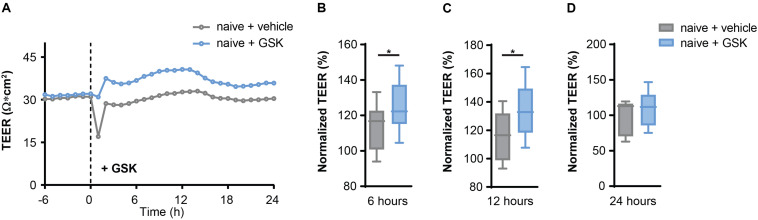
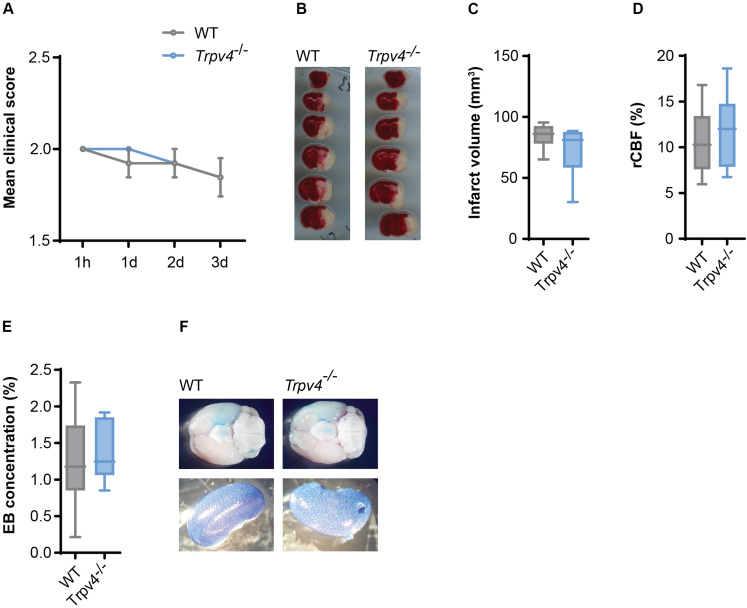
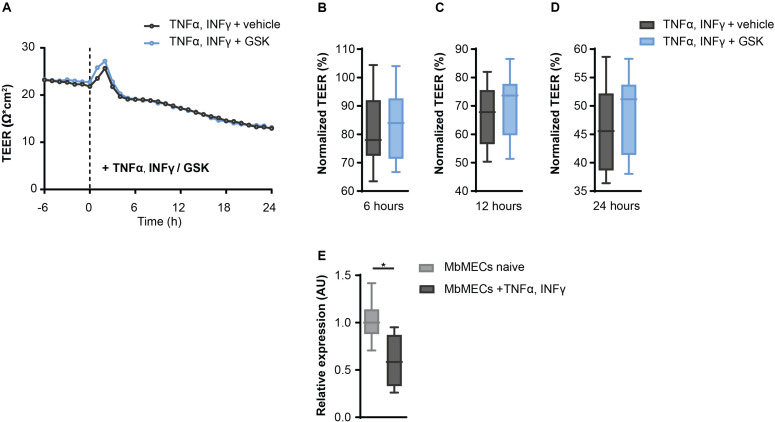
Blood-brain barrier (BBB) dysfunction is critically involved in determining the extent of several central nervous systems (CNS) pathologies and here in particular neuroinflammatory conditions. Inhibiting BBB breakdown could reduce the level of vasogenic edema and the number of immune cells invading the CNS, thereby counteracting neuronal injury. Transient receptor potential (TRP) channels have an important role as environmental sensors and constitute attractive therapeutic targets that are involved in calcium homeostasis during pathologies of the CNS. Transient receptor potential vanilloid 4 (TRPV4) is a calcium permeable, non-selective cation channel highly expressed in endothelial cells. As it is involved in the regulation of the blood brain barrier permeability and consequently cerebral edema formation, we anticipated a regulatory role of TRPV4 in CNS inflammation and subsequent neuronal damage. Here, we detected an increase in transendothelial resistance in mouse brain microvascular endothelial cells (MbMECs) after treatment with a selective TRPV4 inhibitor. However, this effect was abolished after the addition of IFNγ and TNFα indicating that inflammatory conditions override TRPV4-mediated permeability. Accordingly, we did not observe a protection of -deficient mice when compared to wildtype controls in a preclinical model of multiple sclerosis, experimental autoimmune encephalomyelitis (EAE), and no differences in infarct sizes following transient middle cerebral artery occlusion (tMCAO), the experimental stroke model, which leads to an acute postischemic inflammatory response. Furthermore, Evans Blue injections did not show differences in alterations of the blood brain barrier (BBB) permeability between genotypes in both animal models. Together, TRPV4 does not regulate brain microvascular endothelial permeability under inflammation.
血脑屏障(BBB)功能障碍在决定几种中枢神经系统(CNS)病理状况的程度方面起着关键作用,尤其是在神经炎症性疾病中。抑制血脑屏障破坏可降低血管源性水肿水平以及侵入中枢神经系统的免疫细胞数量,从而对抗神经元损伤。瞬时受体电位(TRP)通道作为环境传感器发挥着重要作用,并构成了有吸引力的治疗靶点,在中枢神经系统病理过程中参与钙稳态调节。瞬时受体电位香草酸亚型4(TRPV4)是一种钙通透性、非选择性阳离子通道,在内皮细胞中高度表达。由于其参与血脑屏障通透性的调节以及脑水肿的形成,我们推测TRPV4在中枢神经系统炎症及随后的神经元损伤中具有调节作用。在此,我们在用选择性TRPV4抑制剂处理后,检测到小鼠脑微血管内皮细胞(MbMECs)的跨内皮电阻增加。然而,添加干扰素γ(IFNγ)和肿瘤坏死因子α(TNFα)后,这种效应被消除,表明炎症状态会超过TRPV4介导的通透性。因此,在多发性硬化症的临床前模型实验性自身免疫性脑脊髓炎(EAE)中,与野生型对照相比,我们未观察到TRPV4缺陷小鼠受到保护,并且在导致急性缺血后炎症反应的实验性中风模型短暂性大脑中动脉闭塞(tMCAO)后,梗死面积也没有差异。此外,在两种动物模型中,伊文思蓝注射显示不同基因型之间血脑屏障(BBB)通透性的改变没有差异。总之,在炎症状态下,TRPV4不调节脑微血管内皮通透性。