Division of Genetics, Department of Medicine, Brigham and Women's Hospital and Harvard Medical School, Boston, MA 02115, USA.
Trends Mol Med. 2021 Jan;27(1):11-19. doi: 10.1016/j.molmed.2020.08.012. Epub 2020 Sep 23.
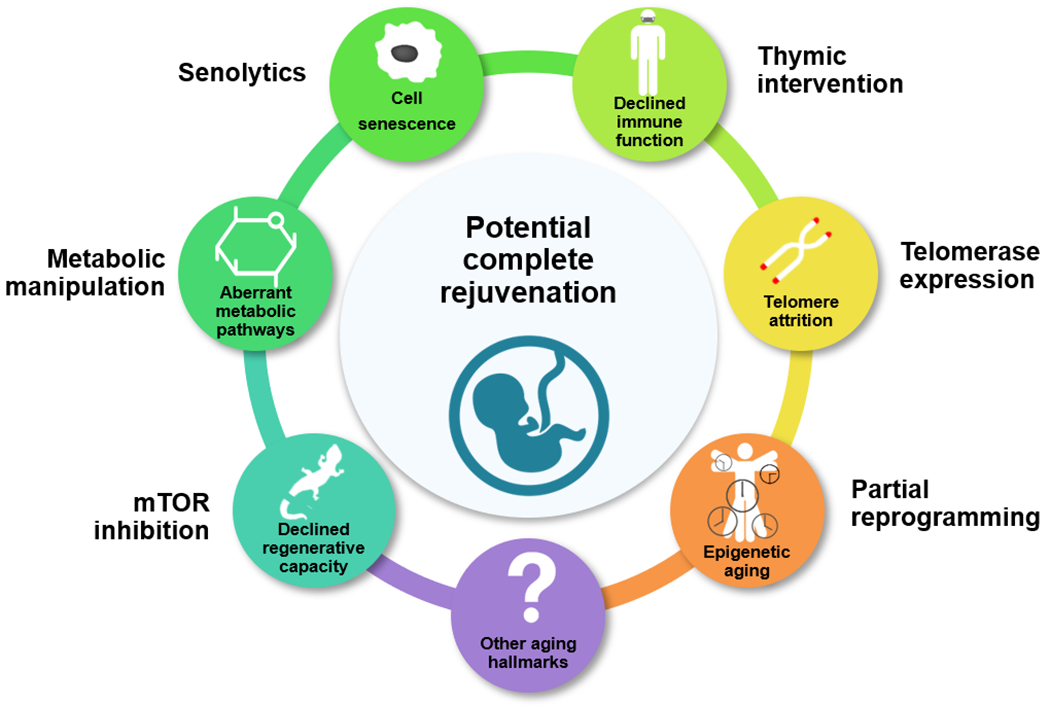
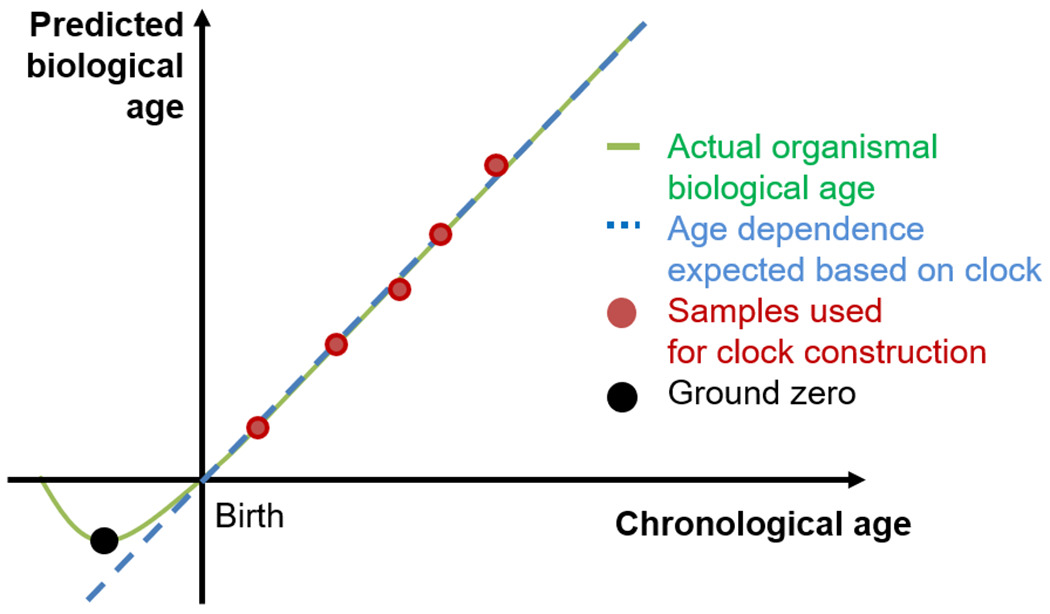
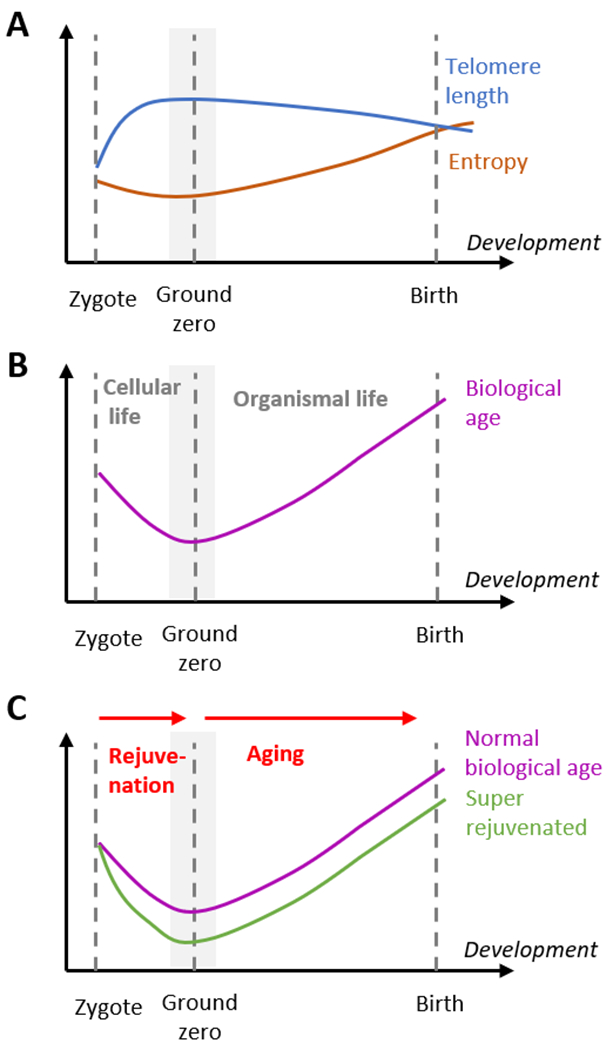
Cells may naturally proceed or be forced to transition to a state with a radically lower biological age, that is, be rejuvenated. Examples are the conversion of somatic cells to induced pluripotent stem cells and rejuvenation of the germline with each generation. We posit that these processes converge to the same 'ground zero', the mid-embryonic state characterized by the lowest biological age where both organismal life and aging begin. It may also be related to the phylotypic state. The ground zero model clarifies the relationship between aging, development, rejuvenation, and de-differentiation, which are distinct throughout life. By extending the rejuvenation phase during early embryogenesis and editing the genome, it may be possible to achieve the biological age at the ground zero lower than that achieved naturally.
细胞可能会自然地或被迫转变为生物学年龄显著降低的状态,也就是被“返老还童”。体细胞被诱导转化为多能干细胞和生殖系每一代的更新就是这样的例子。我们假设这些过程都汇聚到同一个“基准点”,即具有最低生物学年龄的中胚胎状态,在这个状态中,生物体的生命和衰老同时开始。它也可能与表型状态有关。基准点模型阐明了衰老、发育、返老还童和去分化之间的关系,这些在整个生命过程中都是不同的。通过在早期胚胎发生过程中延长返老还童阶段并编辑基因组,有可能使生物学年龄达到比自然状态更低的基准点。