Coluzzi Flaminia, Caputi Francesca Felicia, Billeci Domenico, Pastore Antonio Luigi, Candeletti Sanzio, Rocco Monica, Romualdi Patrizia
Department of Medical and Surgical Sciences and Biotechnologies, Sapienza University of Rome, Polo Pontino, Latina, Italy.
Unit of Anesthesia, Intensive Care and Pain Medicine, Sant'Andrea University Hospital, Rome, Italy.
Ther Clin Risk Manag. 2020 Sep 9;16:821-837. doi: 10.2147/TCRM.S262843. eCollection 2020.
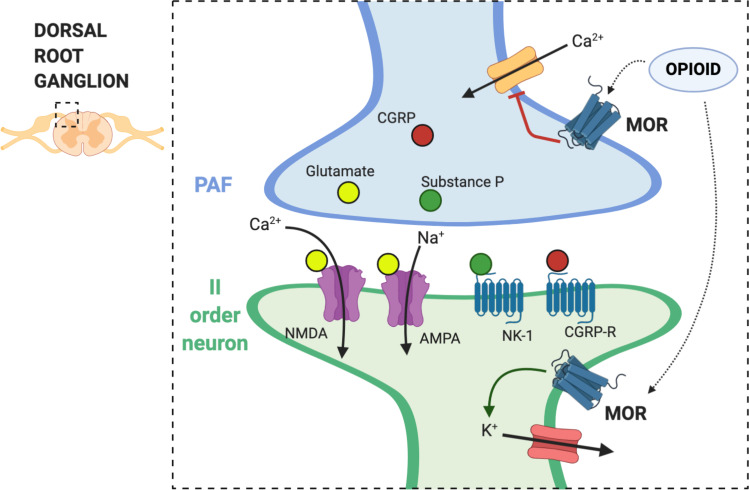
In patients suffering from moderate-to-severe chronic kidney disease (CKD) or end-stage renal disease (ESRD), subjected to hemodialysis (HD), pain is very common, but often underestimated. Opioids are still the mainstay of severe chronic pain management; however, their prescription in CKD and HD patients is still significantly low and pain is often under-treated. Altered pharmacokinetics and the lack of clinical trials on the use of opioids in patients with renal impairment increase physicians' concerns in this specific population. This narrative review focused on the correct and safe use of opioids in patients with CKD and HD. Morphine and codeine are not recommended, because the accumulation of their metabolites may cause neurotoxic symptoms. Oxycodone and hydromorphone can be safely used, but adequate dosage adjustments are required in CKD. In dialyzed patients, these opioids should be considered as second-line agents and patients should be carefully monitored. According to different studies, buprenorphine and fentanyl could be considered first-line opioids in the management of pain in CKD; however, fentanyl is not appropriate in patients undergoing HD. Tapentadol does not need dosage adjustment in mild-to-moderate renal impairment conditions; however, no data are available on its use in ESRD. Opioid-related side effects may be exacerbated by common comorbidities in CKD patients. Opioid-induced constipation can be managed with peripherally-acting-μ-opioid-receptor-antagonists (PAMORA). Unlike the other PAMORA, naldemedine does not require any dose adjustment in CKD and HD patients. Accurate pain diagnosis, opioid titration and tailoring are mandatory to minimize the risks and to improve the outcome of the analgesic therapy.
在患有中重度慢性肾脏病(CKD)或终末期肾病(ESRD)且接受血液透析(HD)的患者中,疼痛非常常见,但往往被低估。阿片类药物仍然是重度慢性疼痛管理的主要手段;然而,它们在CKD和HD患者中的处方率仍然显著较低,疼痛常常治疗不足。肾功能损害患者阿片类药物的药代动力学改变以及缺乏相关临床试验,增加了医生对这一特定人群用药的担忧。本叙述性综述聚焦于CKD和HD患者阿片类药物的正确与安全使用。不推荐使用吗啡和可待因,因为它们的代谢产物蓄积可能导致神经毒性症状。羟考酮和氢吗啡酮可以安全使用,但在CKD患者中需要进行适当的剂量调整。在接受透析的患者中,这些阿片类药物应被视为二线药物,并且应对患者进行密切监测。根据不同研究,丁丙诺啡和芬太尼可被视为CKD疼痛管理的一线阿片类药物;然而,芬太尼不适用于接受HD的患者。在轻至中度肾功能损害情况下,曲马多不需要调整剂量;然而,尚无其在ESRD患者中使用的数据。CKD患者常见的合并症可能会加重阿片类药物相关的副作用。阿片类药物引起的便秘可用外周作用的μ阿片受体拮抗剂(PAMORA)进行处理。与其他PAMORA不同,纳地美定在CKD和HD患者中不需要调整任何剂量。准确的疼痛诊断、阿片类药物滴定和个体化给药对于将风险降至最低并改善镇痛治疗效果至关重要。