Huang Ying, Zheng Wen-Jiang, Ni Yong-Shi, Li Mian-Sha, Chen Jian-Kun, Liu Xiao-Hong, Tan Xing-Hua, Li Ji-Qiang
First College of Clinical Medicine, Guangzhou University of Chinese Medicine, Guangzhou, China.
Integrative Dept.3 (Geriatrics Dept), Guangdong Provincial Hospital of Chinese Medicine, Guangzhou, China.
BioData Min. 2020 Sep 24;13:15. doi: 10.1186/s13040-020-00225-8. eCollection 2020.
Chinese medicine Toujie Quwen granule (TJQW) has proven to be effective in the treatment of mild coronavirus disease 2019 (COVID-19) cases by relieving symptoms, slowing the progression of the disease, and boosting the recovery of patients. But the bioactive compounds and potential mechanisms of TJQW for COVID-19 prevention and treatment are unclear. This study aimed to explore the potential therapeutic mechanism of TJQW in coronavirus disease 2019 (COVID-19) based on an integrated network pharmacology approach.
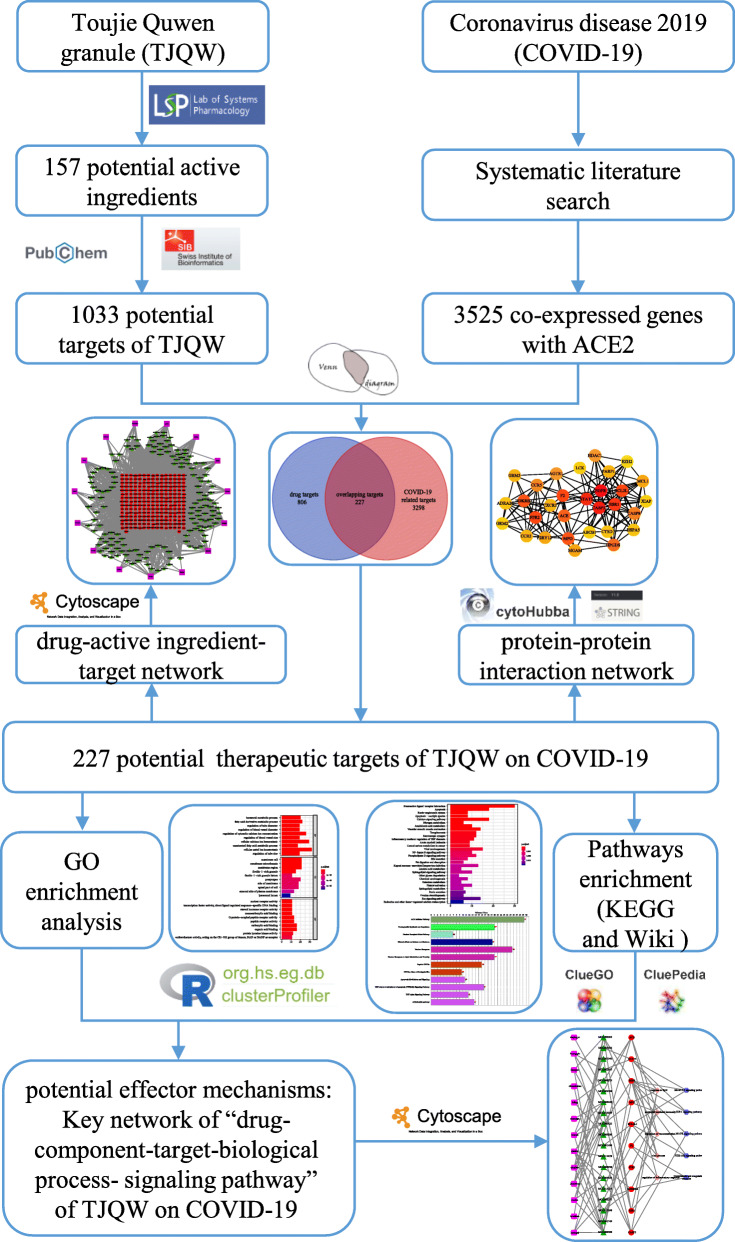
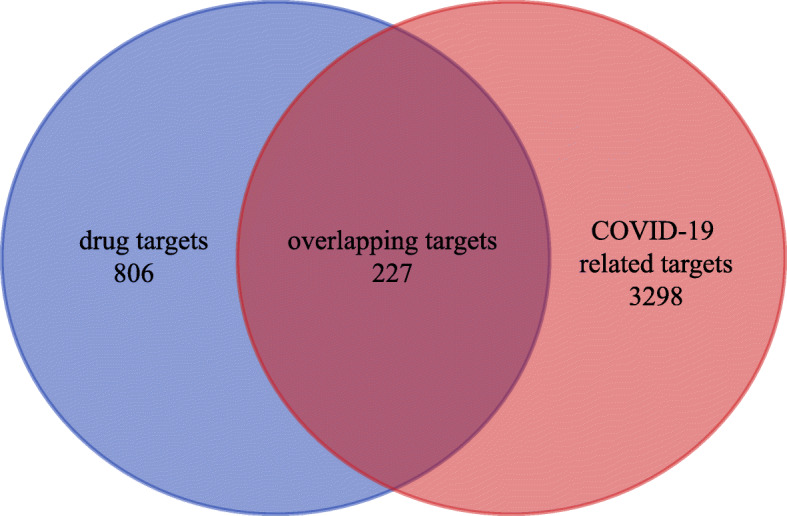
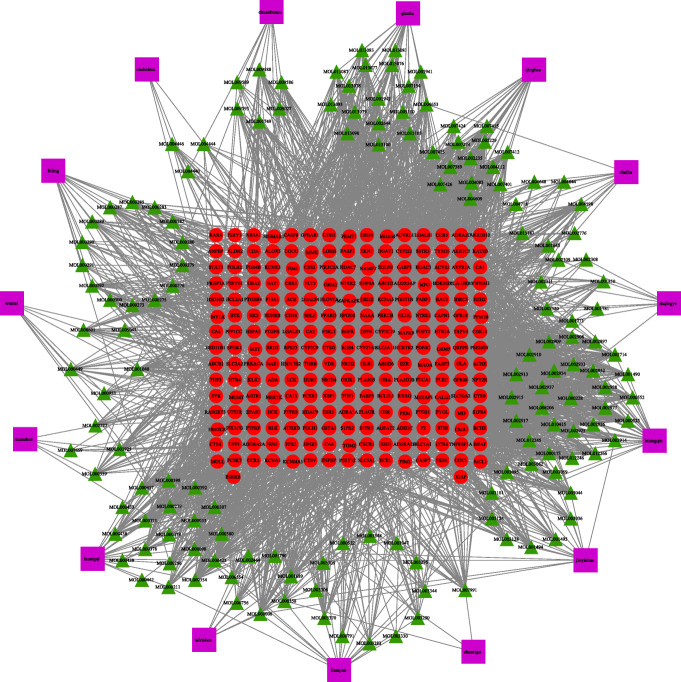
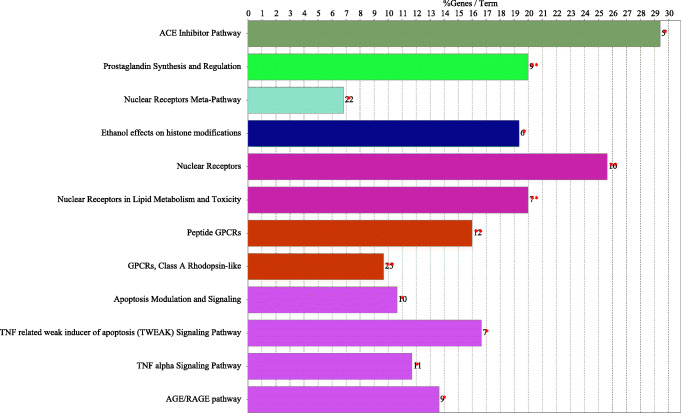
TCMSP were used to search and screen the active ingredients in TJQW. The Swiss TargetPrediction was used to predict the potential targets of active ingredients. Genes co-expressed with ACE2 were considered potential therapeutic targets on COVID-19. Venn diagram was created to show correlative targets of TJQW against COVID-19. Cytoscape was used to construct a "drug-active ingredient-potential target" network, STRING were used to construct protein-protein interaction network, and cytoHubba performed network topology analysis. Enrichment of biological functions and signaling pathways of core targets was performed by using the clusterProfiler package in R software and ClueGO with CluePedia plugins in Cytoscape.
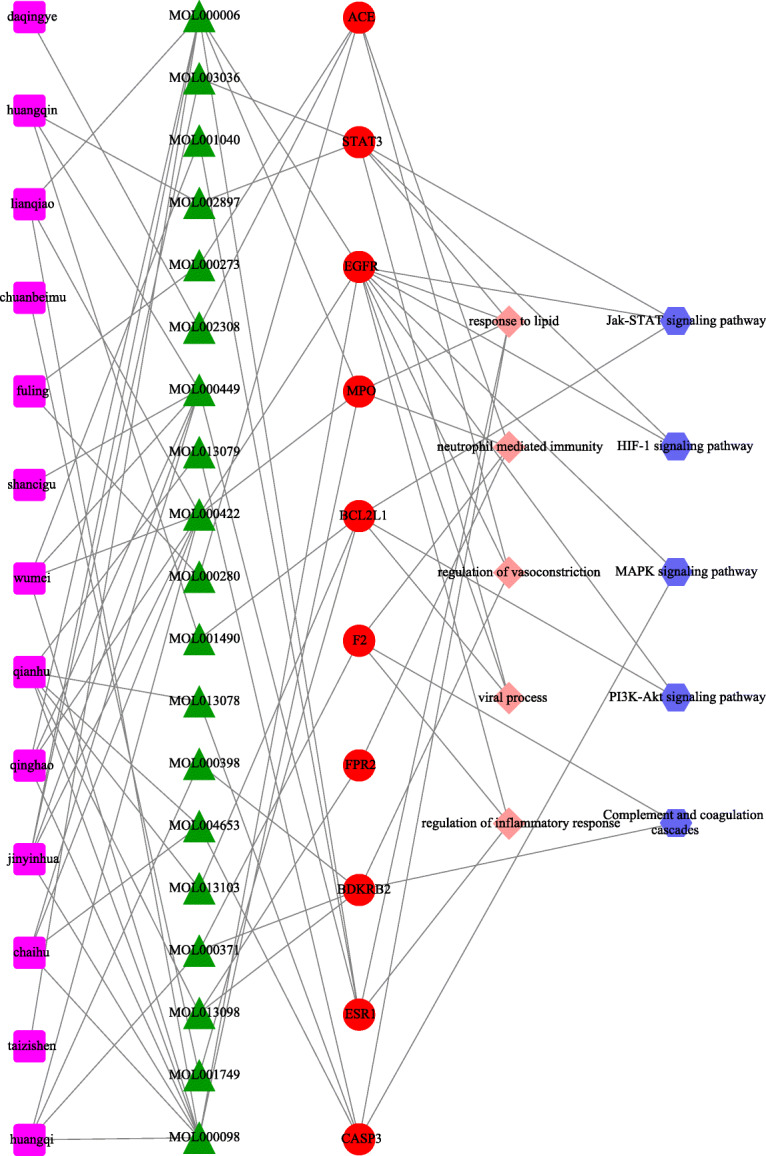
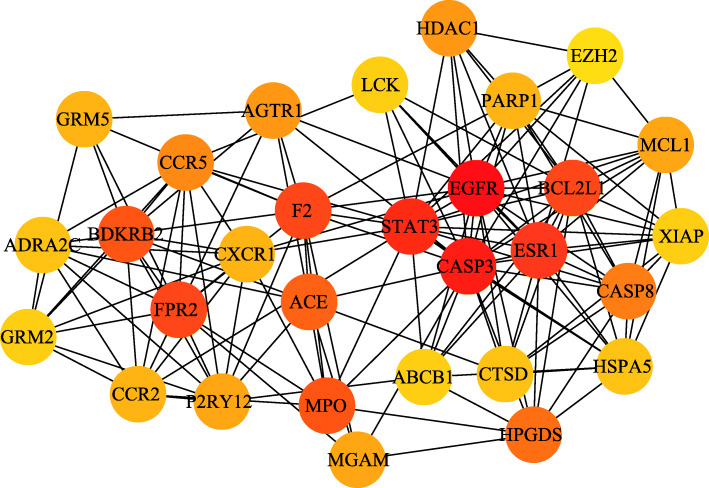
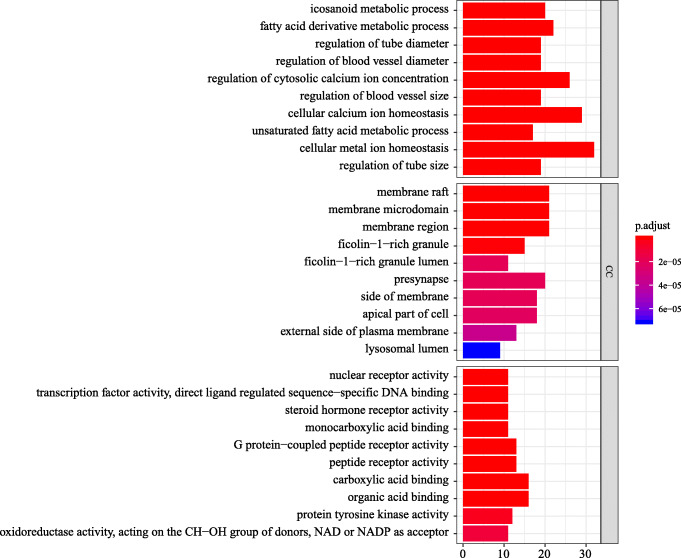
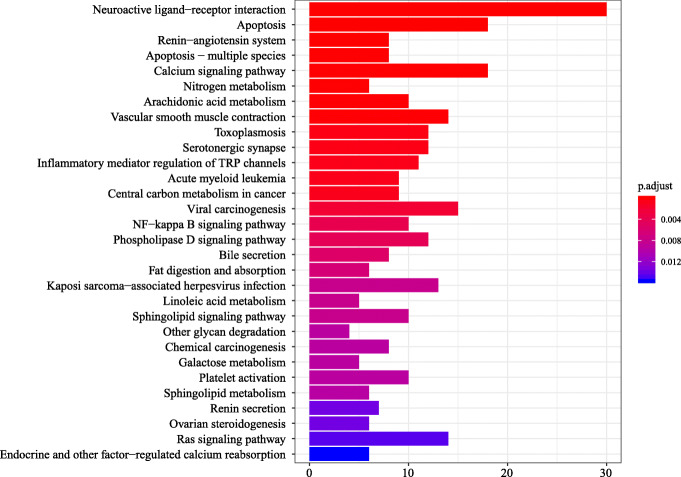
A total of 156 active ingredients were obtained through oral bioavailability and drug-likeness screenings. Two hundred twenty-seven potential targets of TJQW were related to COVID-19. The top ten core targets are EGFR, CASP3, STAT3, ESR1, FPR2, F2, BCL2L1, BDKRB2, MPO, and ACE. Based on that, we obtained 19 key active ingredients: umbelliprenin, quercetin, kaempferol, luteolin, praeruptorin E, stigmasterol, and oroxylin A. And the enrichment analysis obtained multiple related gene ontology functions and signaling pathways. Lastly, we constructed a key network of "drug-component-target-biological process-signaling pathway". Our findings suggested that TJQW treatment for COVID-19 was associated with elevation of immunity and suppression of inflammatory stress, including regulation of inflammatory response, viral process, neutrophil mediated immunity, PI3K-Akt signaling pathway, MAPK signaling pathway, Jak-STAT signaling pathway, Complement and coagulation cascades, and HIF-1 signaling pathway.
Our study uncovered the pharmacological mechanism underlying TJQW treatment for COVID-19. These results should benefit efforts for people around the world to gain more knowledge about Chinese medicine TJQW in the treatment of this vicious epidemic COVID-19, and help to address this pressing problem currently facing the world.
中药透解祛瘟颗粒(TJQW)已被证明在治疗轻度新型冠状病毒肺炎(COVID-19)病例中有效,可缓解症状、减缓疾病进展并促进患者康复。但TJQW用于COVID-19防治的生物活性成分及潜在机制尚不清楚。本研究旨在基于综合网络药理学方法探索TJQW在新型冠状病毒肺炎(COVID-19)中的潜在治疗机制。
利用中药系统药理学数据库与分析平台(TCMSP)搜索和筛选TJQW中的活性成分。使用瑞士靶点预测工具预测活性成分的潜在靶点。与血管紧张素转换酶2(ACE2)共表达的基因被视为COVID-19的潜在治疗靶点。绘制维恩图以展示TJQW针对COVID-19的相关靶点。使用Cytoscape构建“药物-活性成分-潜在靶点”网络,使用STRING构建蛋白质-蛋白质相互作用网络,并使用cytoHubba进行网络拓扑分析。利用R软件中的clusterProfiler包以及Cytoscape中带有CluePedia插件的ClueGO对核心靶点的生物学功能和信号通路进行富集分析。
通过口服生物利用度和类药性筛选共获得156种活性成分。TJQW的227个潜在靶点与COVID-19相关。前十位核心靶点为表皮生长因子受体(EGFR)、半胱天冬酶3(CASP3)、信号转导和转录激活因子3(STAT3)、雌激素受体1(ESR1)、甲酰肽受体2(FPR2)、凝血因子Ⅱ(F2)、凋亡调节蛋白Bcl-2样蛋白1(BCL2L1)、缓激肽B2受体(BDKRB2)、髓过氧化物酶(MPO)和血管紧张素转换酶(ACE)。基于此,我们获得了19种关键活性成分:异伞形花内酯、槲皮素、山奈酚、木犀草素、前胡素E、豆甾醇和木犀草素A。富集分析获得了多个相关的基因本体功能和信号通路。最后,我们构建了“药物-成分-靶点-生物学过程-信号通路”关键网络。我们的研究结果表明,TJQW治疗COVID-19与免疫力提升和炎症应激抑制有关,包括炎症反应、病毒过程、中性粒细胞介导的免疫、磷脂酰肌醇-3激酶-蛋白激酶B(PI3K-Akt)信号通路、丝裂原活化蛋白激酶(MAPK)信号通路、Janus激酶-信号转导和转录激活因子(Jak-STAT)信号通路、补体和凝血级联反应以及低氧诱导因子-1(HIF-1)信号通路的调节。
我们的研究揭示了TJQW治疗COVID-19的药理机制。这些结果应有助于全球各地的人们更多地了解中药TJQW在治疗这种恶性流行疾病COVID-19中的作用,并有助于解决目前世界面临的这一紧迫问题。