Xiong Haijun, Dong Zhaowei, Lou Guanhua, Gan Qingxia, Wang Jin, Huang Qinwan
Chengdu University of Traditional Chinese Medicine, Chengdu, China.
Eur J Integr Med. 2020 Dec;40:101241. doi: 10.1016/j.eujim.2020.101241. Epub 2020 Oct 30.
The novel coronavirus pneumonia that broke out in 2019 has become a global epidemic. According to the diagnosis and treatment plan issued in China and the existing clinical data, Shufeng Jiedu (SFJD) Capsule can be effectively used in the treatment of COVID-19 patients. This study aimed to explore its mechanism of action by network pharmacology and molecular docking technology.
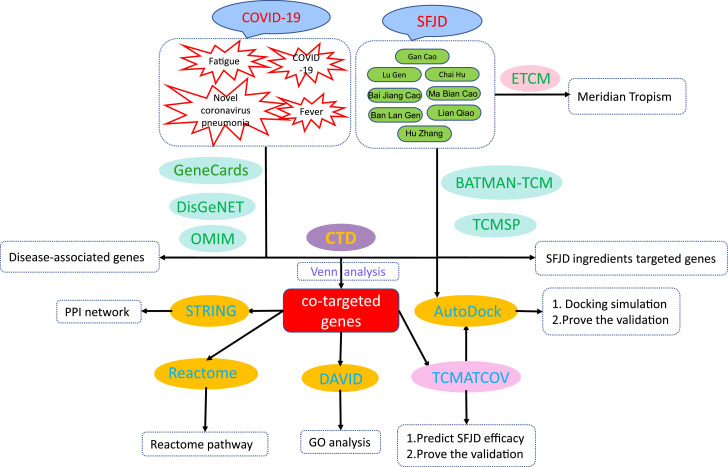
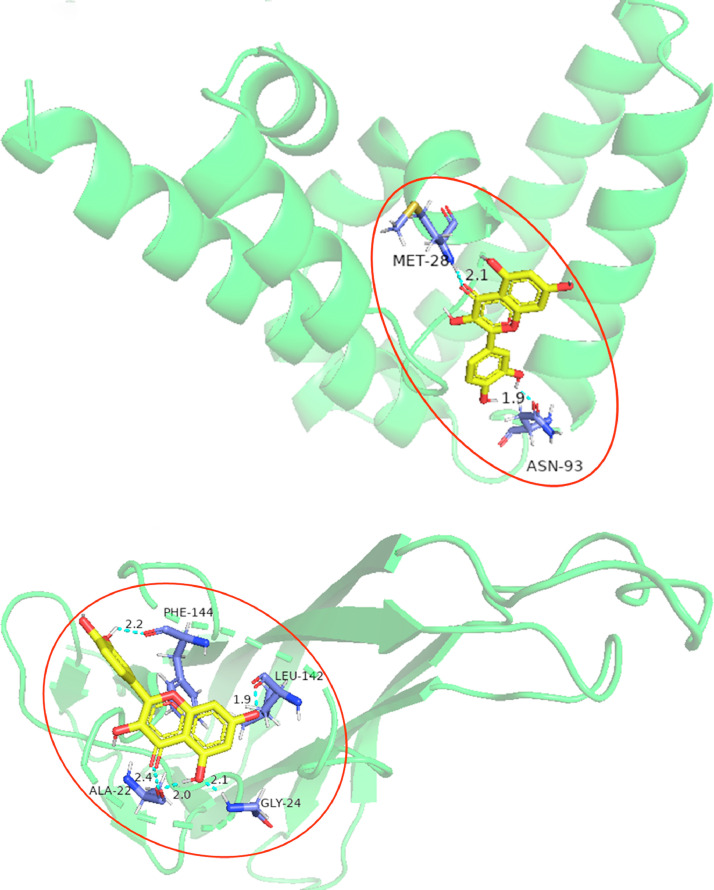
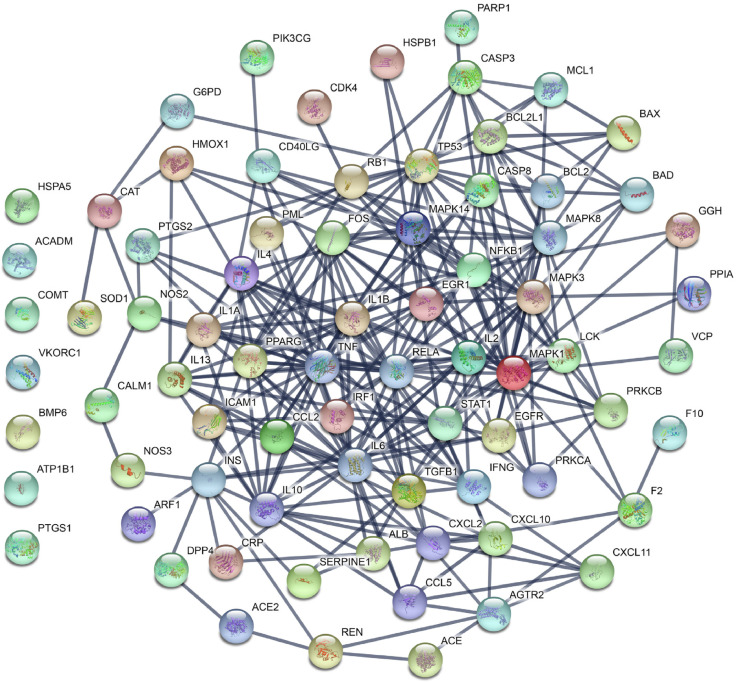
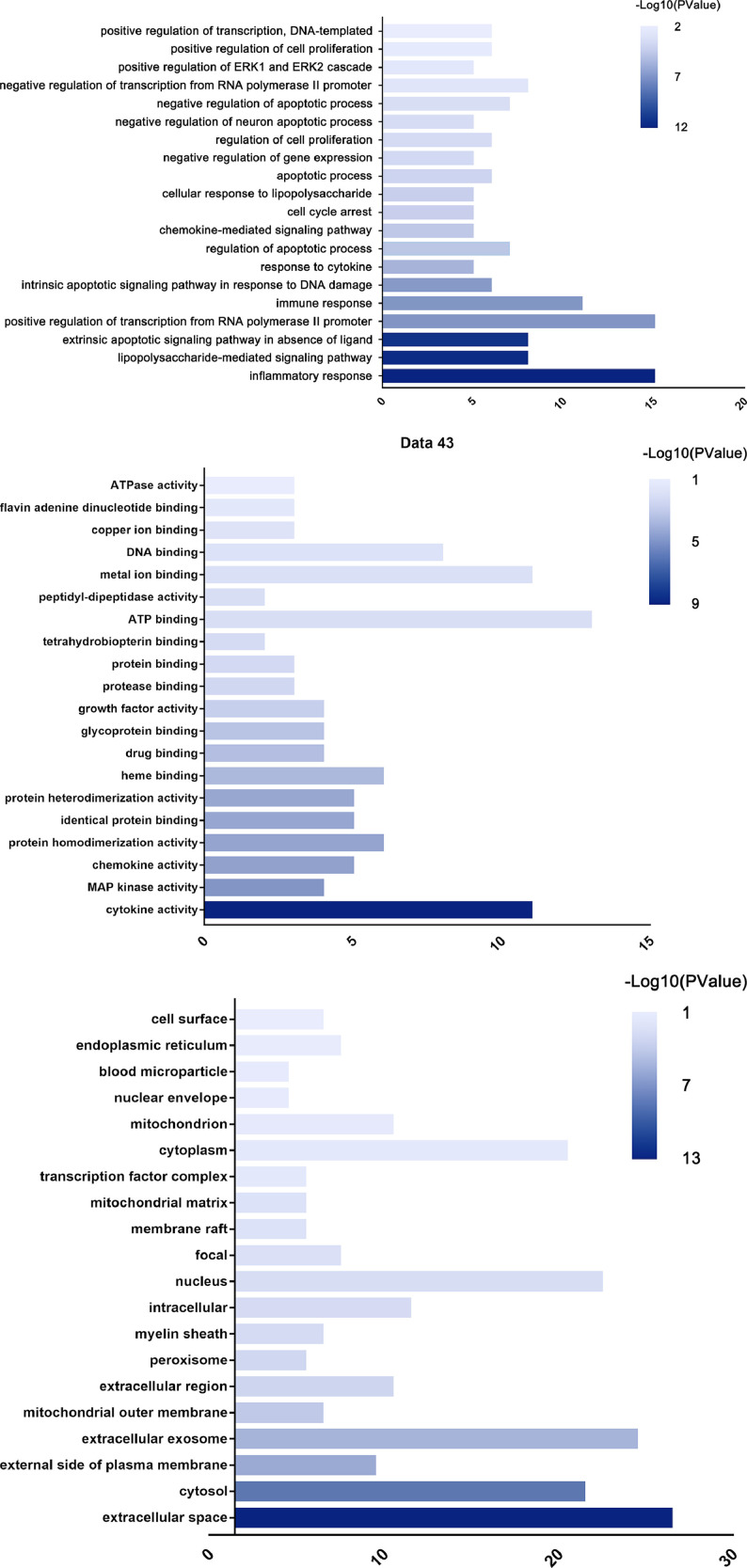
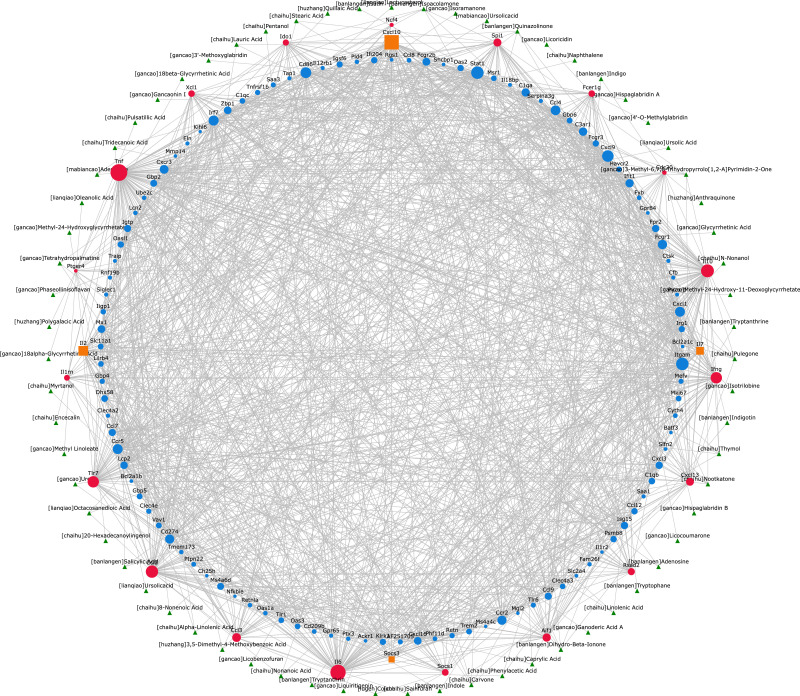
The Chinese Medicine System Pharmacology Analysis Platform (TCMSP), a Bioinformatics Analysis Tool for Molecular mechANism of Traditional Chinese Medicine (BATMAN-TCM), the Encyclopedia of Traditional Chinese Medicine (ETCM) and related literature records were used to search the composition and main active compounds of SFJD, and to screen out the targets of drug components. Disease-associated genes were obtained by the Human Gene Database (GeneCards), the Human Online Mendelian Inheritance Platform (OMIM) and the DisGeNET database, and the co-targeted genes/proteins as targets of both SFJD and COVID-19 were selected by the Comparative Toxicogenomics Database (CTD). Co-targeted genes/proteins were analyzed by STRING, the Database for Annotation, Visualization and Integrated Discovery (DAVID) and Reactome for proteins to protein interaction (PPI), pathway and GO (gene ontology) enrichment, and predicted by AutoDock for their high-precision docking simulation. In addition, the therapeutic effect for SFJD treatment on COVID-19 was validated by the Chinese medicine anti-novel coronavirus pneumonia drug effect prediction and analysis platform (TCMCOVID).
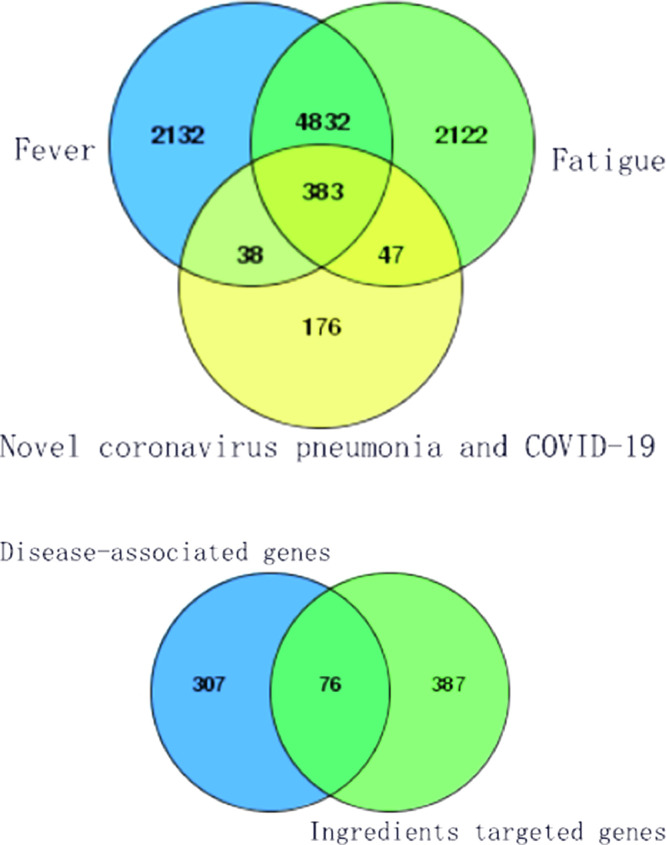
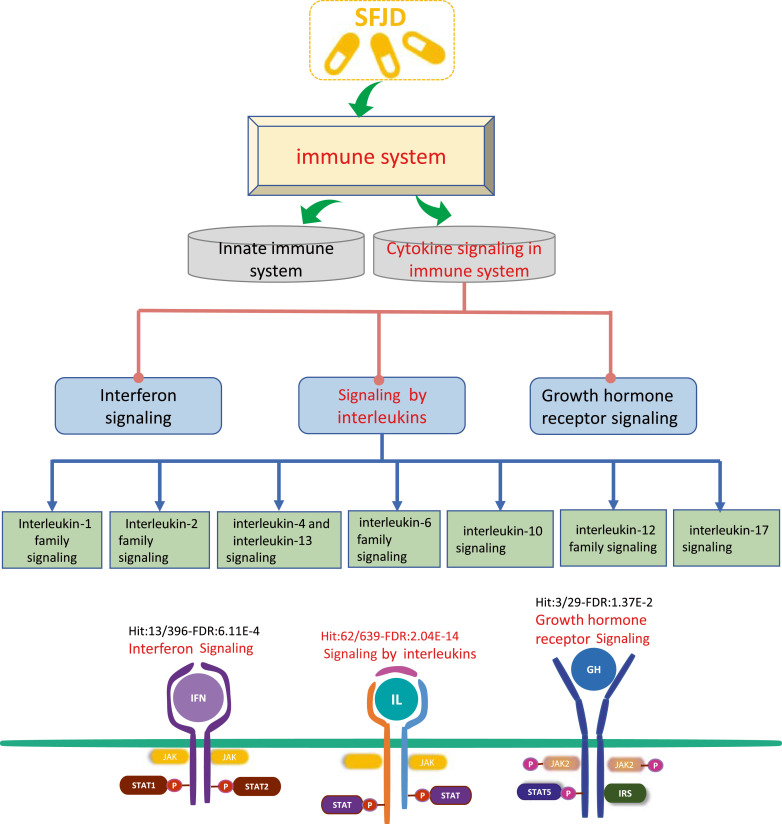
Screening resulted in 163 compounds and 463 targeted genes. The PPI core network contains 76 co-targeted proteins. The Reactome pathways were enriched in signaling by interleukins, immune system, etc. Finally, 6 key proteins of and were selected and successfully docked with 4 active ingredients of quercetin, luteolin, wogonin and kaempferol.
SFJD may play a role in the prevention and treatment of COVID-19 through multiple active compounds acting on multiple targets and then multiple pathways.
2019年爆发的新型冠状病毒肺炎已成为全球大流行疾病。根据中国发布的诊疗方案及现有临床资料,疏风解毒胶囊可有效用于治疗新型冠状病毒肺炎患者。本研究旨在通过网络药理学和分子对接技术探索其作用机制。
利用中药系统药理学分析平台(TCMSP)、中药分子机制生物信息学分析工具(BATMAN-TCM)、《中药大辞典》及相关文献记载,检索疏风解毒胶囊的组成及主要活性成分,并筛选出药物成分的靶点。通过人类基因数据库(GeneCards)、人类在线孟德尔遗传平台(OMIM)和DisGeNET数据库获取疾病相关基因,并通过比较毒理基因组学数据库(CTD)筛选出疏风解毒胶囊与新型冠状病毒肺炎的共同靶向基因/蛋白作为靶点。利用STRING、注释、可视化与整合发现数据库(DAVID)和Reactome对共同靶向基因/蛋白进行蛋白质-蛋白质相互作用(PPI)、通路和基因本体(GO)富集分析,并通过AutoDock对其进行高精度对接模拟预测。此外,通过中药抗新型冠状病毒肺炎药物疗效预测分析平台(TCMCOVID)验证疏风解毒胶囊治疗新型冠状病毒肺炎的疗效。
筛选得到163种化合物和463个靶向基因。PPI核心网络包含76个共同靶向蛋白。Reactome通路在白细胞介素信号传导、免疫系统等方面富集。最终,筛选出6种关键蛋白,并成功将槲皮素、木犀草素、汉黄芩素和山柰酚4种活性成分与之对接。
疏风解毒胶囊可能通过多种活性化合物作用于多个靶点进而作用于多条通路,在新型冠状病毒肺炎的防治中发挥作用。