School of Biological and Chemical Sciences, Queen Mary University of London, London, E1 4NS, UK.
Clinical Pharmacology, William Harvey Research Institute, Barts and The London School of Medicine and Dentistry, Queen Mary University of London, London, EC1M 6BQ, UK.
Transl Psychiatry. 2020 Sep 28;10(1):330. doi: 10.1038/s41398-020-01009-8.
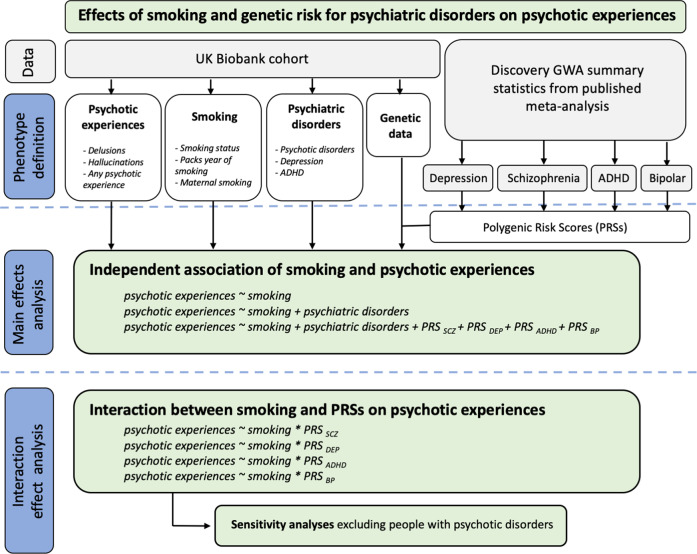
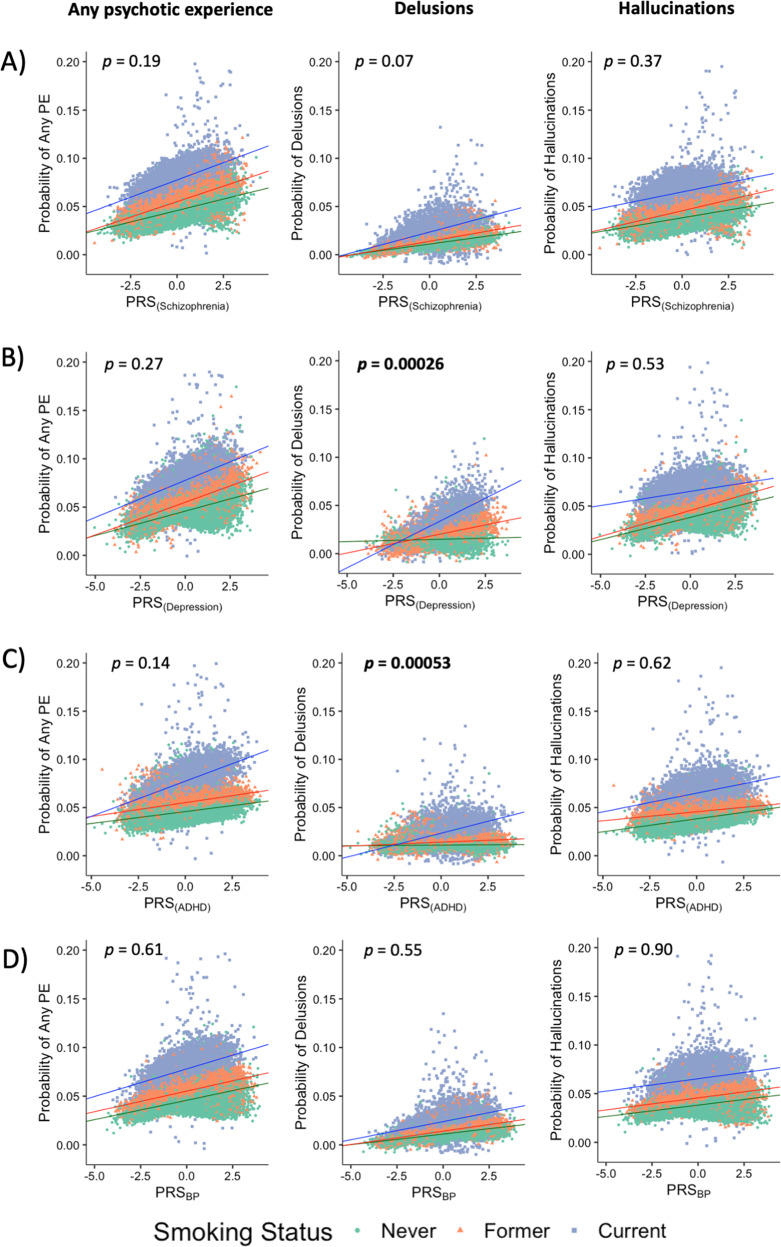
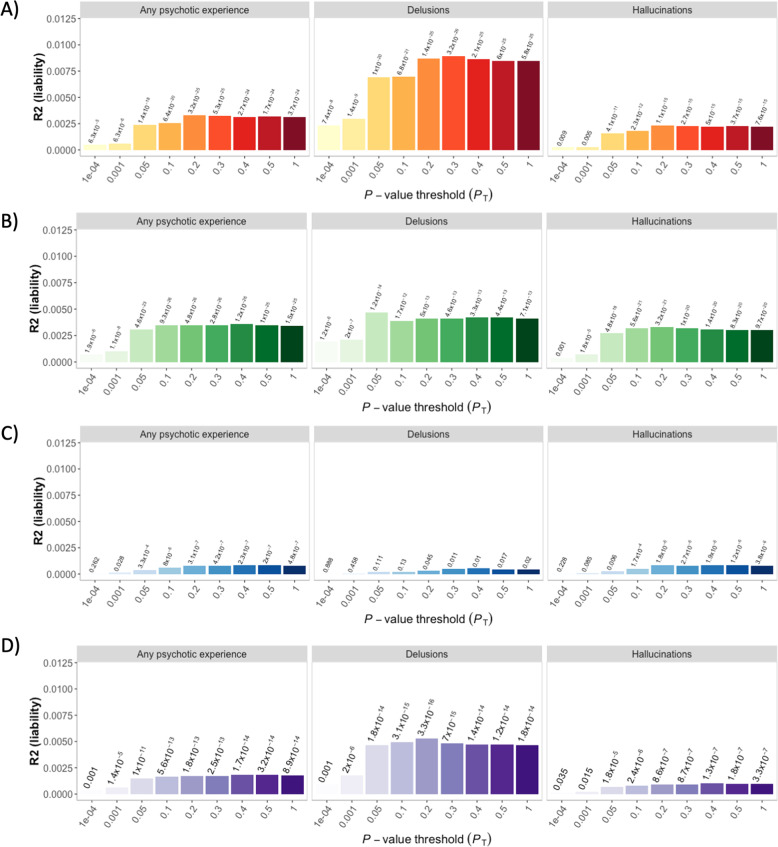
While psychotic experiences are core symptoms of mental health disorders like schizophrenia, they are also reported by 5-10% of the population. Both smoking behaviour and genetic risk for psychiatric disorders have been associated with psychotic experiences, but the interplay between these factors remains poorly understood. We tested whether smoking status, maternal smoking around birth, and number of packs smoked/year were associated with lifetime occurrence of three psychotic experiences phenotypes: delusions (n = 2067), hallucinations (n = 6689), and any psychotic experience (delusions or hallucinations; n = 7803) in 157,366 UK Biobank participants. We next calculated polygenic risk scores for schizophrenia (PRS), bipolar disorder (PRS), major depression (PRS) and attention deficit hyperactivity disorder (PRS) in 144,818 UK Biobank participants of European ancestry to assess whether association between smoking and psychotic experiences was attenuated after adjustment of diagnosis of psychiatric disorders and the PRSs. Finally, we investigated whether smoking exacerbates the effects of genetic predisposition on the psychotic phenotypes in gene-environment interaction models. Smoking status, maternal smoking, and number of packs smoked/year were associated with psychotic experiences (p < 1.77 × 10). Except for packs smoked/year, effects were attenuated but remained significant after adjustment for diagnosis of psychiatric disorders and PRSs (p < 1.99 × 10). Gene-environment interaction models showed the effects of PRS and PRS (but not PRS or PRS) on delusions (but not hallucinations) were significantly greater in current smokers compared to never smokers (p < 0.002). There were no significant gene-environment interactions for maternal smoking nor for number of packs smoked/year. Our results suggest that both genetic risk of psychiatric disorders and smoking status may have independent and synergistic effects on specific types of psychotic experiences.
虽然精神病性体验是精神障碍(如精神分裂症)的核心症状,但也有 5-10%的人群会报告出现这种症状。吸烟行为和精神障碍的遗传风险都与精神病性体验有关,但这些因素之间的相互作用仍知之甚少。我们在 157366 名英国生物库参与者中检验了吸烟状况、出生时母亲吸烟情况以及吸烟量(每年吸烟包数)是否与三种精神病性体验表型的终生发生情况有关:妄想(n=2067)、幻觉(n=6689)和任何精神病性体验(妄想或幻觉;n=7803)。接下来,我们在 144818 名具有欧洲血统的英国生物库参与者中计算了精神分裂症(PRS)、双相情感障碍(PRS)、重度抑郁症(PRS)和注意缺陷多动障碍(PRS)的多基因风险评分,以评估在调整精神障碍诊断和 PRS 后,吸烟与精神病性体验之间的关联是否减弱。最后,我们在基因-环境交互作用模型中调查了吸烟是否会加剧遗传易感性对精神病性表型的影响。吸烟状况、母亲吸烟和吸烟量(每年吸烟包数)与精神病性体验有关(p<1.77×10)。除了吸烟量(每年吸烟包数)外,在调整精神障碍诊断和 PRS 后,这些关联虽然减弱,但仍然显著(p<1.99×10)。基因-环境交互作用模型显示,与从不吸烟者相比,当前吸烟者的 PRS 和 PRS(但不是 PRS 或 PRS)对妄想的影响更大(p<0.002)。母亲吸烟和吸烟量(每年吸烟包数)均未显示出显著的基因-环境相互作用。我们的研究结果表明,精神障碍的遗传风险和吸烟状况可能对特定类型的精神病性体验具有独立和协同的影响。