Shahabi Saeed, Jalali Maryam, Lankarani Kamran Bagheri
Health Policy Research Center, Institute of Health, Shiraz University of Medical Sciences, Shiraz, Iran.
Rehabilitation Research Center, Department of Orthotics and Prosthetics, School of Rehabilitation Sciences, Iran University of Medical Sciences, Tehran, Iran.
Confl Health. 2020 Sep 24;14:66. doi: 10.1186/s13031-020-00310-z. eCollection 2020.
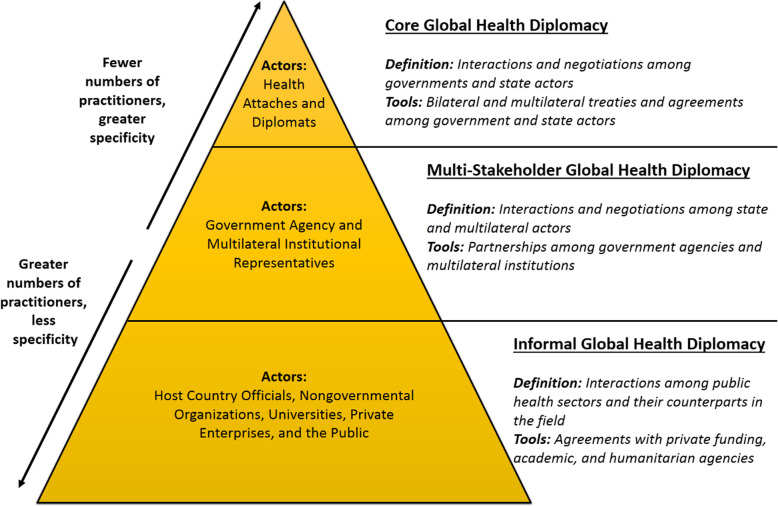
People with disabilities (PWD) are one of the most vulnerable groups in society during armed conflicts. According to the statistics, four million persons with disability live in Yemen. Lack of access and the use of rehabilitation services make PWD unable to retrieve their social and economic roles, which would have substantial negative impacts both on their families and community. The conflict escalation, an increase in the number the of displaced, COVID-19 pandemic, an increase in non-communicable diseases, and the exacerbation of poverty and malnutrition have rapidly enhanced the population at risk of disability in Yemen. Accordingly, effective and comprehensive approaches such as global health diplomacy (GHD) should be considered to meet the emerged needs. GHD seeks to address the common challenges in the global health system by involving all key stakeholders and establishing negotiations and diplomatic dialogue among official actors. Given the presence of various regional and international actors in Yemen and the examples of the successful use of GHD under conflict and post-conflict conditions in Iraq and Afghanistan, the use of diplomacy is crucial to respond to the needs of PWD in this war-torn country appropriately.
在武装冲突期间,残疾人是社会中最脆弱的群体之一。据统计,也门有400万残疾人。缺乏康复服务的获取和使用机会,使得残疾人无法恢复其社会和经济角色,这将对他们的家庭和社区产生重大负面影响。冲突升级、流离失所者数量增加、新冠疫情、非传染性疾病增多以及贫困和营养不良加剧,迅速增加了也门面临残疾风险的人口。因此,应考虑采取全球卫生外交(GHD)等有效和全面的方法来满足新出现的需求。全球卫生外交旨在通过让所有关键利益攸关方参与,并在官方行为体之间建立谈判和外交对话,来应对全球卫生系统中的共同挑战。鉴于也门有各种区域和国际行为体存在,以及在伊拉克和阿富汗冲突及冲突后条件下成功运用全球卫生外交的例子,运用外交手段对于妥善应对这个饱受战争蹂躏国家中残疾人的需求至关重要。