Vaccine and Diagnostic Development Programme, Onderstepoort Veterinary Institute, Agricultural Research Council, Onderstepoort, South Africa.
Department of Biochemistry, Genetics and Microbiology, Faculty of Natural and Agricultural Sciences, University of Pretoria, Pretoria, South Africa.
PLoS Pathog. 2020 Sep 29;16(9):e1008828. doi: 10.1371/journal.ppat.1008828. eCollection 2020 Sep.
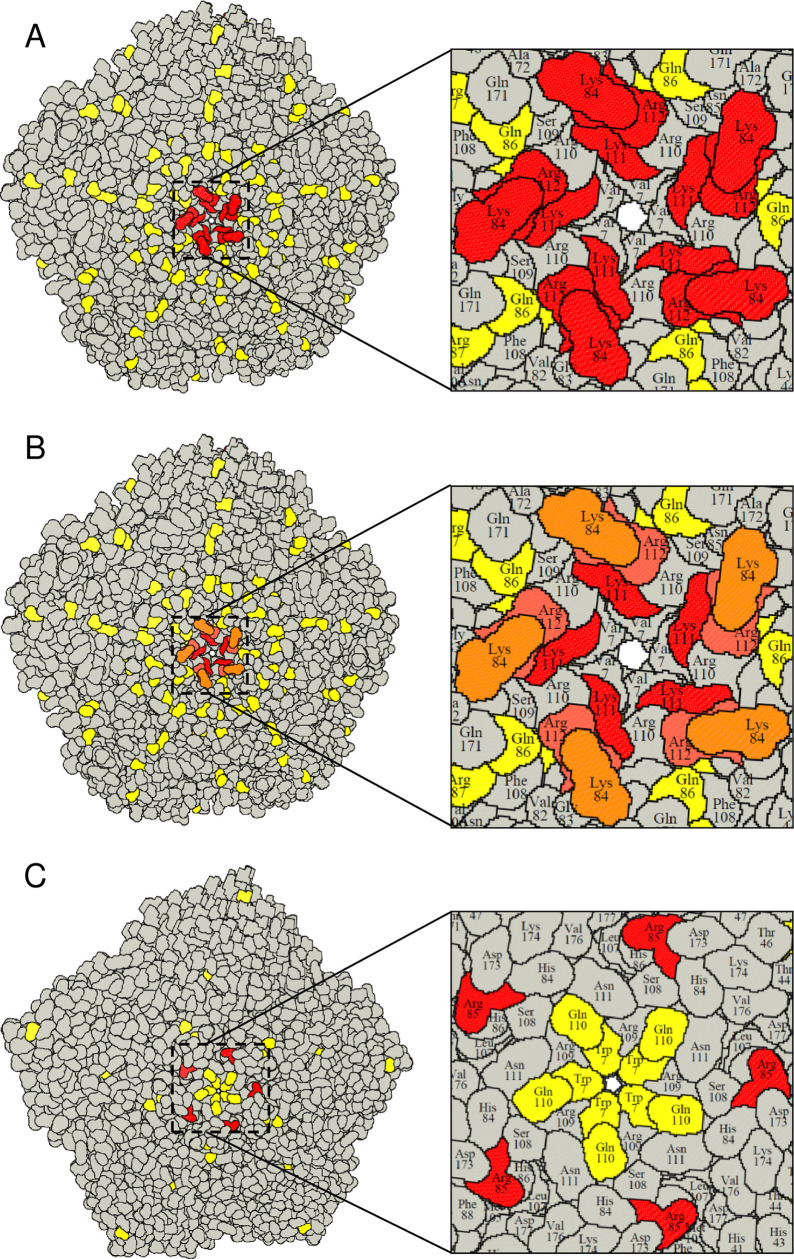
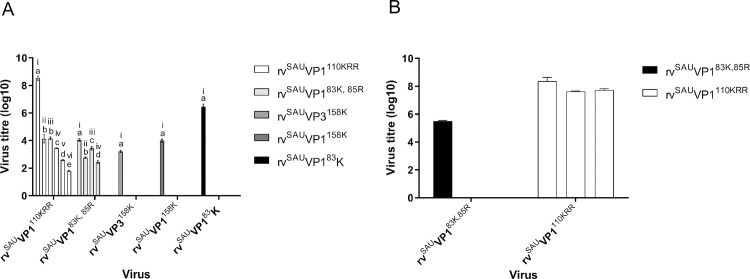
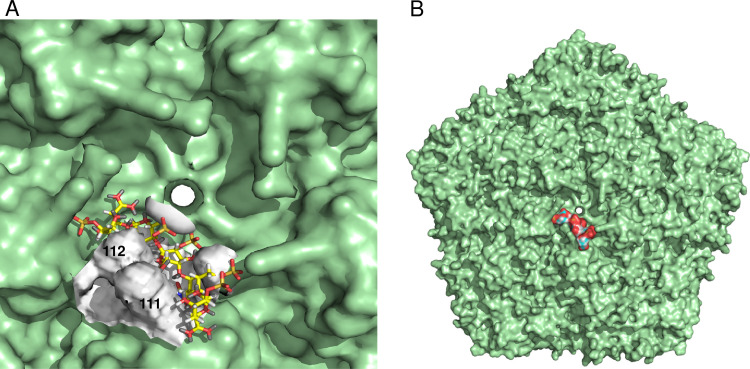
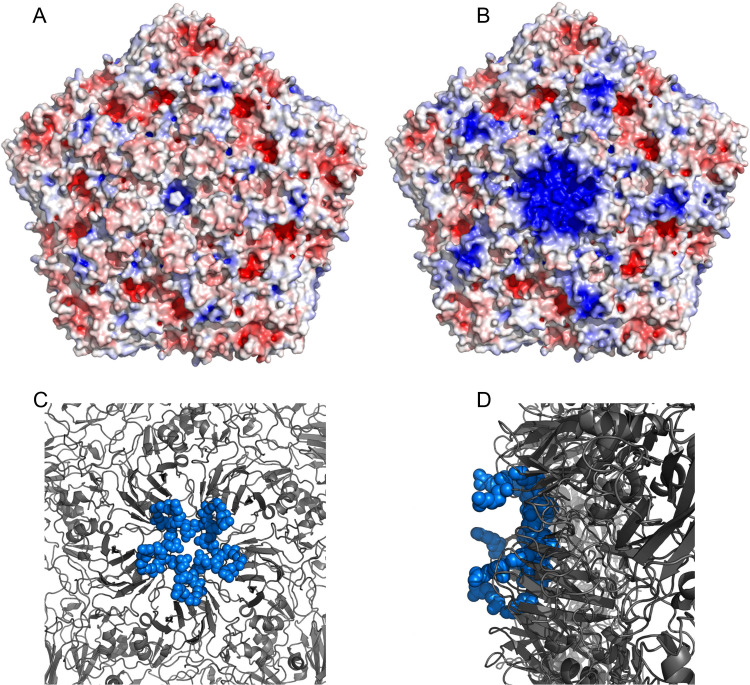
Field isolates of foot-and-mouth disease viruses (FMDVs) utilize integrin-mediated cell entry but many, including Southern African Territories (SAT) viruses, are difficult to adapt to BHK-21 cells, thus hampering large-scale propagation of vaccine antigen. However, FMDVs acquire the ability to bind to cell surface heparan sulphate proteoglycans, following serial cytolytic infections in cell culture, likely by the selection of rapidly replicating FMDV variants. In this study, fourteen SAT1 and SAT2 viruses, serially passaged in BHK-21 cells, were virulent in CHO-K1 cells and displayed enhanced affinity for heparan, as opposed to their low-passage counterparts. Comparative sequence analysis revealed the fixation of positively charged residues clustered close to the icosahedral 5-fold axes of the virus, at amino acid positions 83-85 in the βD-βE loop and 110-112 in the βF-βG loop of VP1 upon adaptation to cultured cells. Molecular docking simulations confirmed enhanced binding of heparan sulphate to a model of the adapted SAT1 virus, with the region around VP1 arginine 112 contributing the most to binding. Using this information, eight chimeric field strain mutant viruses were constructed with additional positive charges in repeated clusters on the virion surface. Five of these bound heparan sulphate with expanded cell tropism, which should facilitate large-scale propagation. However, only positively charged residues at position 110-112 of VP1 enhanced infectivity of BHK-21 cells. The symmetrical arrangement of even a single amino acid residue in the FMD virion is a powerful strategy enabling the virus to generate novel receptor binding and alternative host-cell interactions.
口蹄疫病毒(FMDV)的田间分离株利用整合素介导的细胞进入,但包括南部非洲领土(SAT)病毒在内的许多病毒难以适应 BHK-21 细胞,从而阻碍了疫苗抗原的大规模繁殖。然而,FMDV 在细胞培养中经历连续的细胞溶解释放后,获得了与细胞表面硫酸乙酰肝素蛋白聚糖结合的能力,可能是通过选择快速复制的 FMDV 变体。在这项研究中,14 种 SAT1 和 SAT2 病毒在 BHK-21 细胞中连续传代,在 CHO-K1 细胞中具有毒力,并显示出对肝素的亲和力增强,而与其低传代对应物相比则较低。比较序列分析表明,在适应细胞培养后,VP1 的βD-βE 环中氨基酸位置 83-85 处和βF-βG 环中 110-112 处的正电荷残基簇靠近病毒的二十面体 5 倍轴被固定。分子对接模拟证实了肝素硫酸盐与适应的 SAT1 病毒模型的结合增强,VP1 精氨酸 112 周围的区域对结合贡献最大。利用这些信息,构建了八个带有额外正电荷簇的嵌合田间菌株突变病毒,这些病毒在病毒表面的重复簇上。其中五个与肝素硫酸盐结合,具有扩展的细胞嗜性,这应该有助于大规模繁殖。然而,只有 VP1 位置 110-112 的正电荷残基增强了 BHK-21 细胞的感染性。口蹄疫病毒衣壳中甚至单个氨基酸残基的对称排列是一种强大的策略,使病毒能够产生新的受体结合和替代宿主细胞相互作用。