Department of Advanced Sciences and Technologies in Medicine, School of Medicine, North Khorasan University of Medical Sciences, Bojnurd, Iran; Natural Products and Medicinal Plants Research Center, North Khorasan University of Medical Sciences, Bojnurd, Iran.
Department of Pediatrics, School of Medicine, North Khorasan University of Medical Sciences, Bojnurd, Iran; Natural Products and Medicinal Plants Research Center, North Khorasan University of Medical Sciences, Bojnurd, Iran.
Int J Biol Macromol. 2020 Dec 15;165(Pt A):18-43. doi: 10.1016/j.ijbiomac.2020.09.204. Epub 2020 Sep 28.
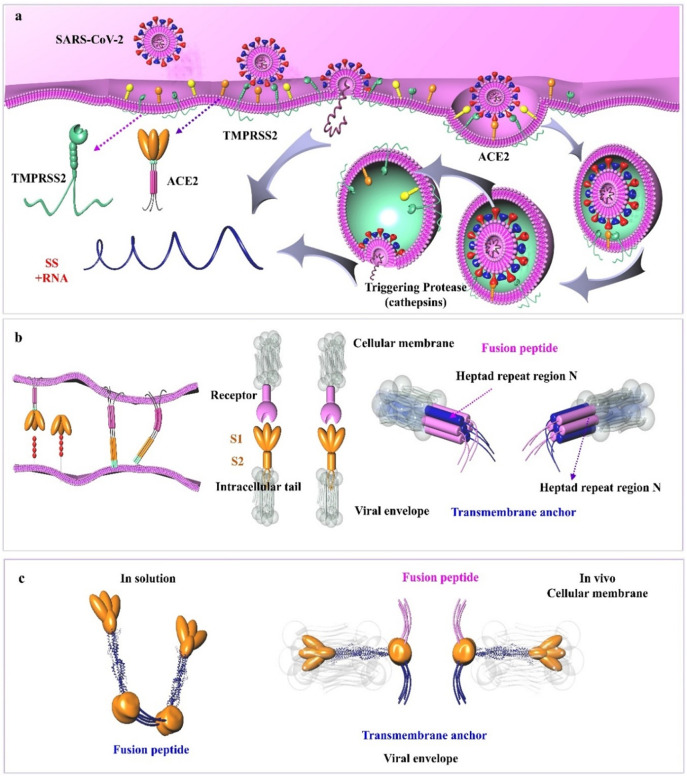
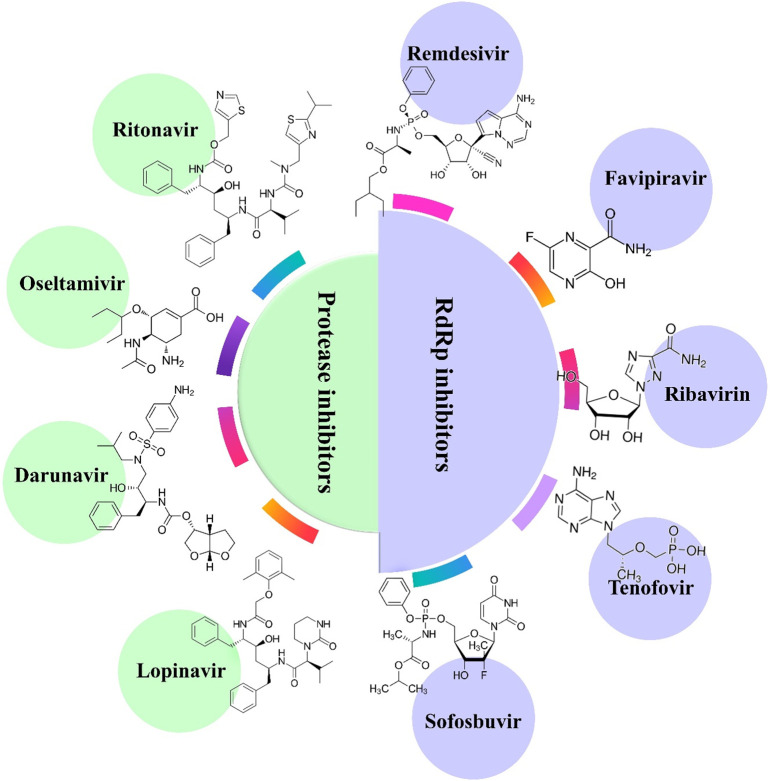
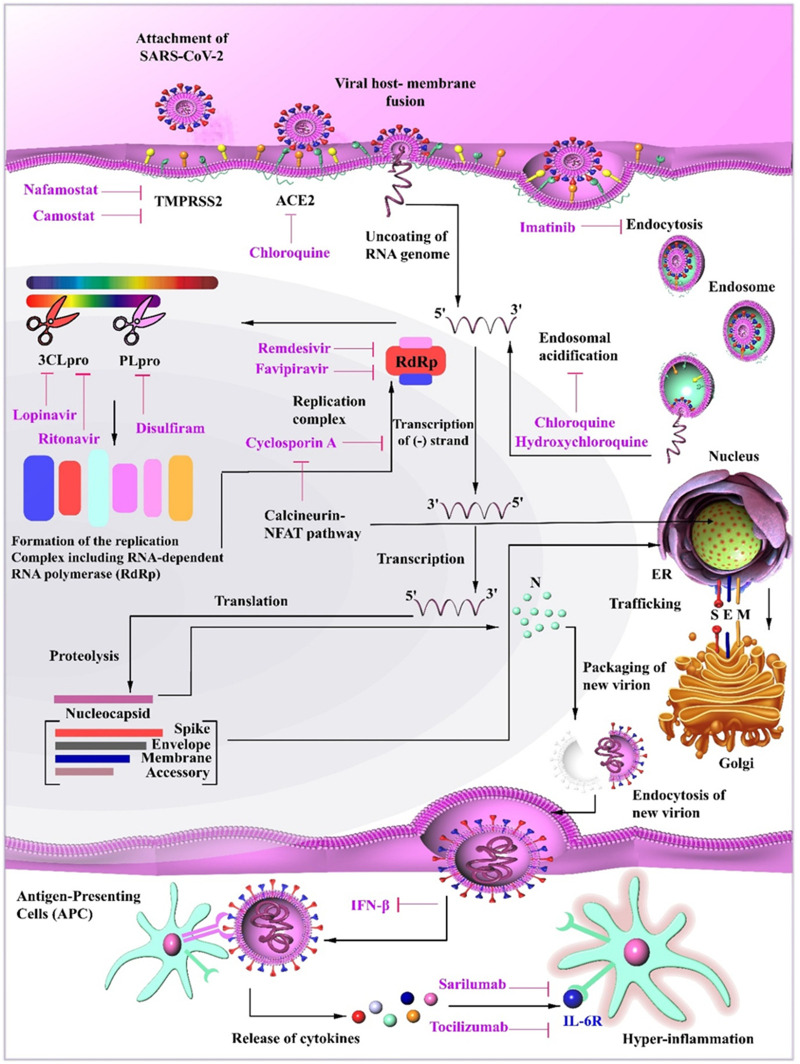
The emergence of the global pandemic caused by the novel SARS-CoV-2 virus has motivated scientists to find a definitive treatment or a vaccine against it in the shortest possible time. Current efforts towards this goal remain fruitless without a full understanding of the behavior of the virus and its adaptor proteins. This review provides an overview of the biological properties, functional mechanisms, and molecular components of SARS-CoV-2, along with investigational therapeutic and preventive approaches for this virus. Since the proteolytic cleavage of the S protein is critical for virus penetration into cells, a set of drugs, such as chloroquine, hydroxychloroquine, camostat mesylate have been tested in clinical trials to suppress this event. In addition to angiotensin-converting enzyme 2, the role of CD147 in the viral entrance has also been proposed. Mepolizumab has shown to be effective in blocking the virus's cellular entrance. Antiviral drugs, such as remdesivir, ritonavir, oseltamivir, darunavir, lopinavir, zanamivir, peramivir, and oseltamivir, have also been tested as treatments for COVID-19. Regarding preventive vaccines, the whole virus, vectors, nucleic acids, and structural subunits have been suggested for vaccine development. Mesenchymal stem cells and natural killer cells could also be used against SARS-CoV-2. All the above-mentioned strategies, as well as the role of nanomedicine for the diagnosis and treatment of SARS-CoV-2 infection, have been discussed in this review.
新型严重急性呼吸综合征冠状病毒 2 型(SARS-CoV-2)引发的全球大流行促使科学家们在尽可能短的时间内寻找针对该病毒的明确治疗方法或疫苗。如果不能充分了解病毒及其适配蛋白的行为,目前针对这一目标的努力仍将无果而终。本综述概述了 SARS-CoV-2 的生物学特性、功能机制和分子成分,以及针对该病毒的研究性治疗和预防方法。由于 S 蛋白的蛋白水解切割对于病毒进入细胞至关重要,因此已在临床试验中测试了一组药物,如氯喹、羟氯喹、甲磺酸卡莫司他,以抑制该事件。除了血管紧张素转换酶 2 之外,CD147 在病毒进入中的作用也已被提出。美泊利珠单抗已被证明可有效阻断病毒的细胞进入。抗病毒药物,如瑞德西韦、利托那韦、奥司他韦、达芦那韦、洛匹那韦、扎那米韦、帕拉米韦和奥司他韦,也已被测试用于治疗 COVID-19。关于预防疫苗,已提出使用整个病毒、载体、核酸和结构亚单位来开发疫苗。间充质干细胞和自然杀伤细胞也可用于对抗 SARS-CoV-2。本综述讨论了所有上述策略,以及纳米医学在 SARS-CoV-2 感染的诊断和治疗中的作用。