Department of Molecular Biology, Dankook University, Cheonan 31116, Korea.
Department of Nanobiomedical science, Dankook University, Cheonan 31116, Korea.
Cells. 2020 Sep 27;9(10):2176. doi: 10.3390/cells9102176.
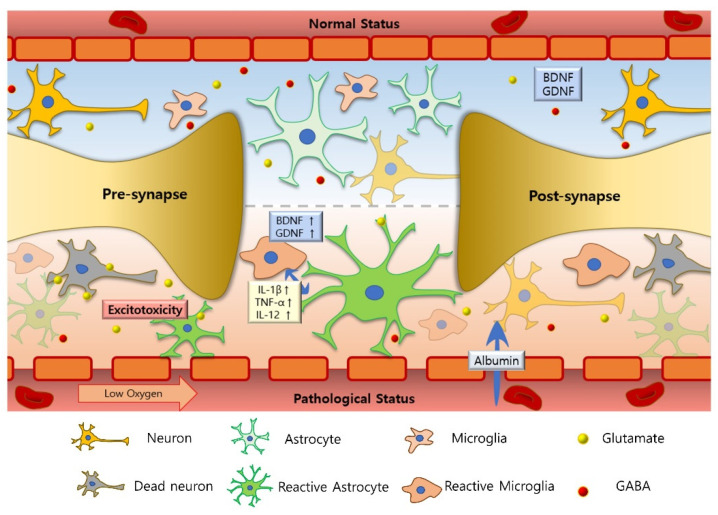
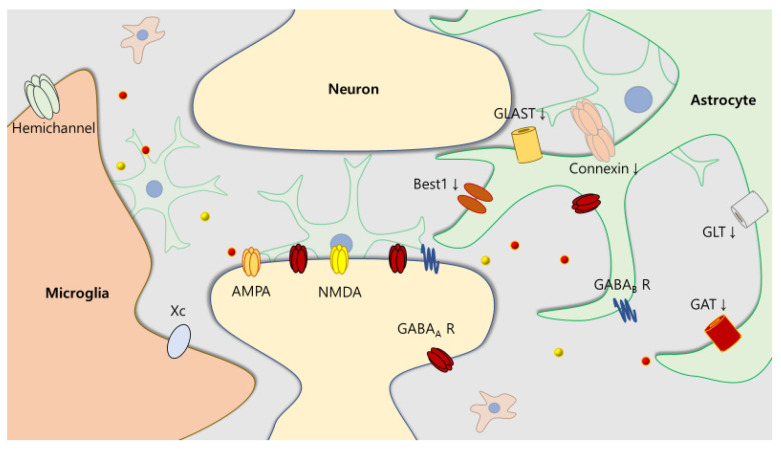
Recent studies have revealed synaptic dysfunction to be a hallmark of various psychiatric diseases, and that glial cells participate in synapse formation, development, and plasticity. Glial cells contribute to neuroinflammation and synaptic homeostasis, the latter being essential for maintaining the physiological function of the central nervous system (CNS). In particular, glial cells undergo gliotransmission and regulate neuronal activity in tripartite synapses via ion channels (gap junction hemichannel, volume regulated anion channel, and bestrophin-1), receptors (for neurotransmitters and cytokines), or transporters (GLT-1, GLAST, and GATs) that are expressed on glial cell membranes. In this review, we propose that dysfunction in neuron-glia interactions may contribute to the pathogenesis of neurodevelopmental disorders. Understanding the mechanisms of neuron-glia interaction for synapse formation and maturation will contribute to the development of novel therapeutic targets of neurodevelopmental disorders.
最近的研究表明,突触功能障碍是各种精神疾病的标志,神经胶质细胞参与突触的形成、发育和可塑性。神经胶质细胞有助于神经炎症和突触稳态,后者对于维持中枢神经系统(CNS)的生理功能至关重要。特别是,神经胶质细胞通过离子通道(缝隙连接半通道、体积调节阴离子通道和 Bestrophin-1)、受体(神经递质和细胞因子)或转运体(GLT-1、GLAST 和 GATs)进行Gliotransmission,并调节三突触中的神经元活性,这些通道和受体都表达在神经胶质细胞膜上。在这篇综述中,我们提出神经元-神经胶质相互作用的功能障碍可能有助于神经发育障碍的发病机制。了解神经元-神经胶质相互作用对于突触形成和成熟的机制将有助于开发神经发育障碍的新治疗靶点。