Department of Postharvest Science, Institute of Postharvest and Food Sciences, the Volcani Center, Agricultural Research Organization, Bet Dagan 50250, Israel.
Key Laboratory of Agro-Products Quality and Safety Control in Storage and Transport Process, Ministry of Agriculture and Rural Affairs, Institute of Food Science and Technology, Chinese Academy of Agricultural Sciences, Beijing 100193, China.
Sensors (Basel). 2020 Sep 25;20(19):5486. doi: 10.3390/s20195486.
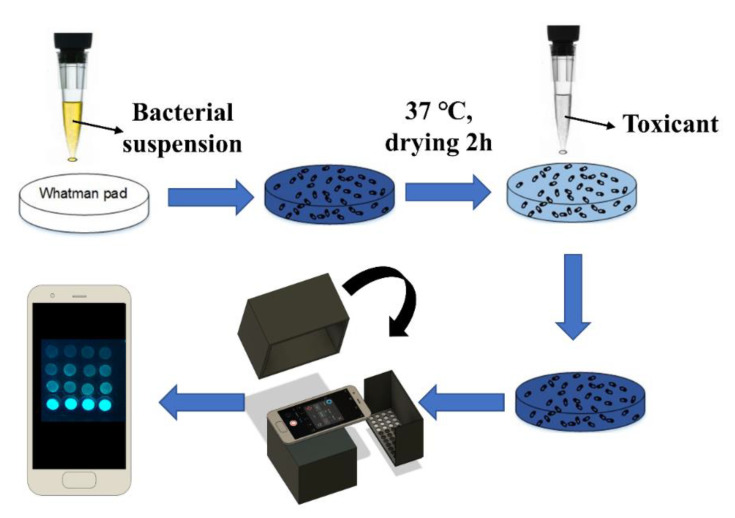
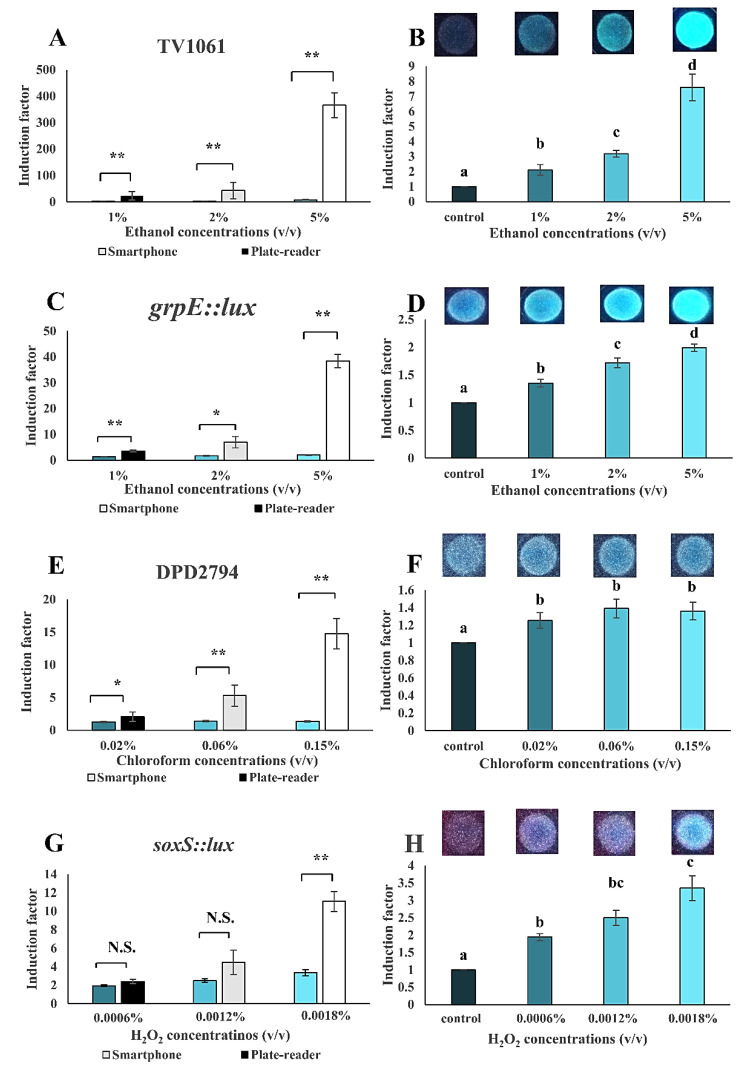
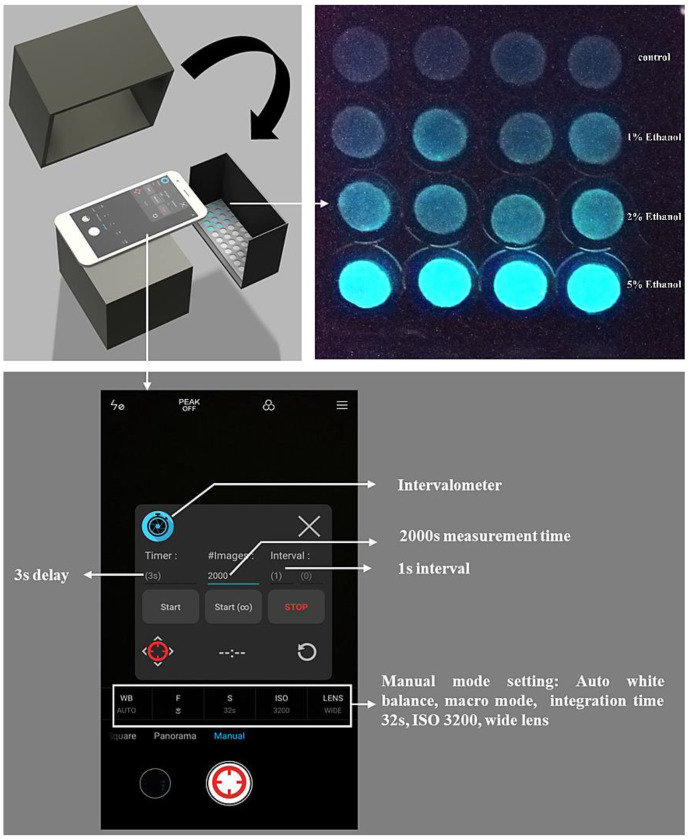
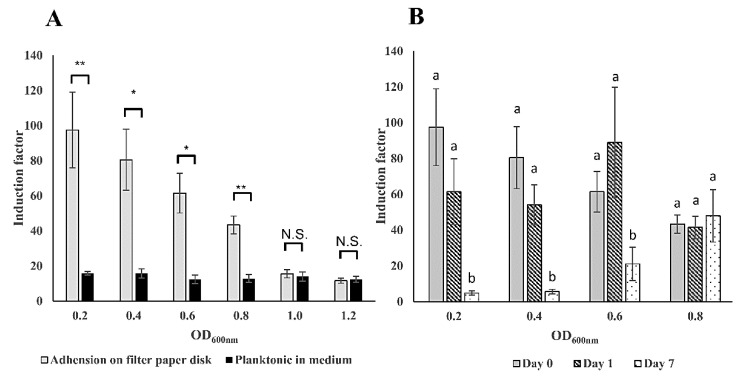
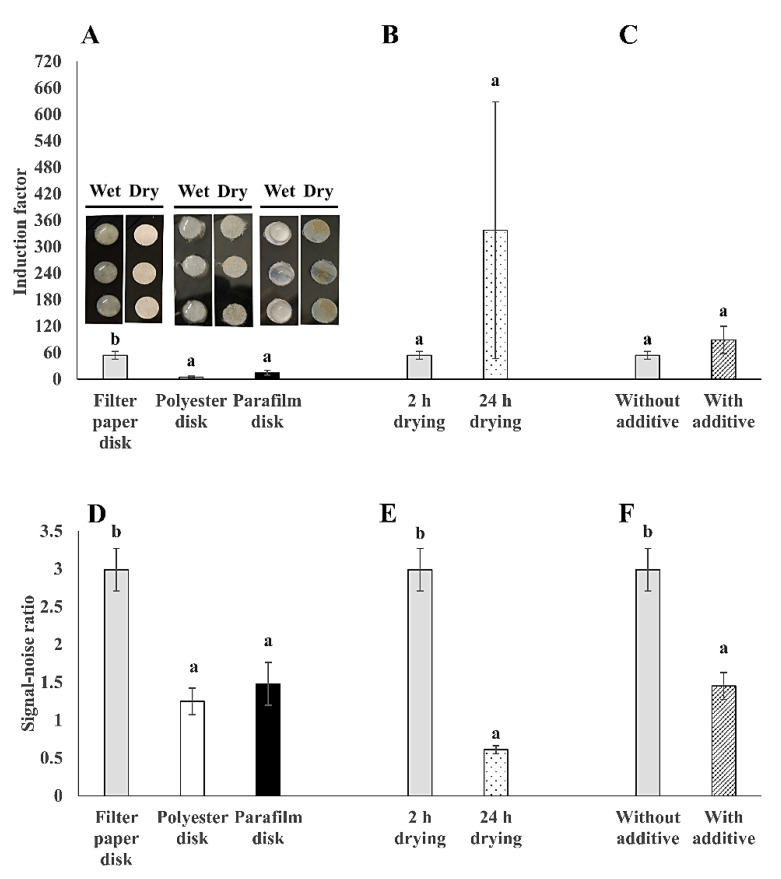
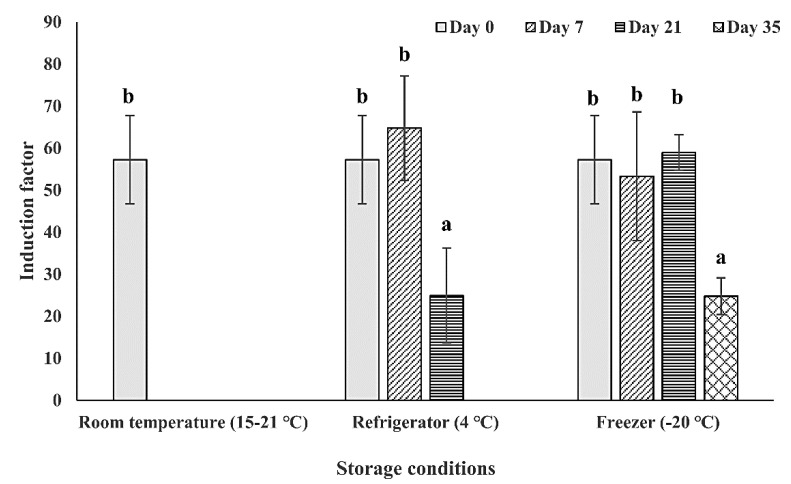
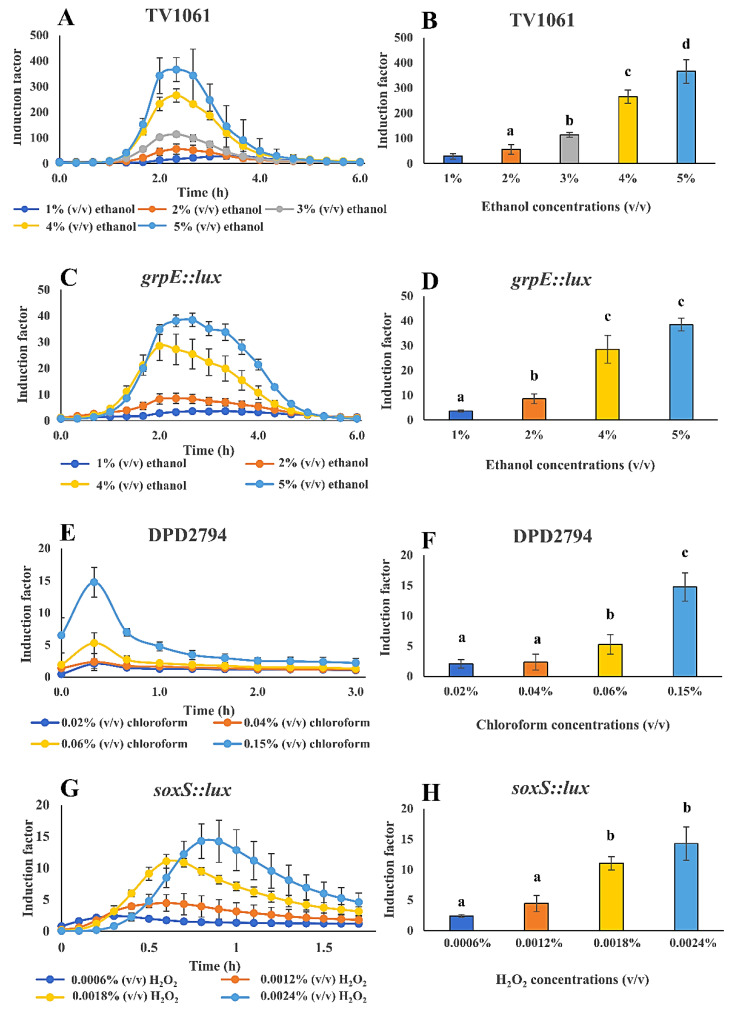
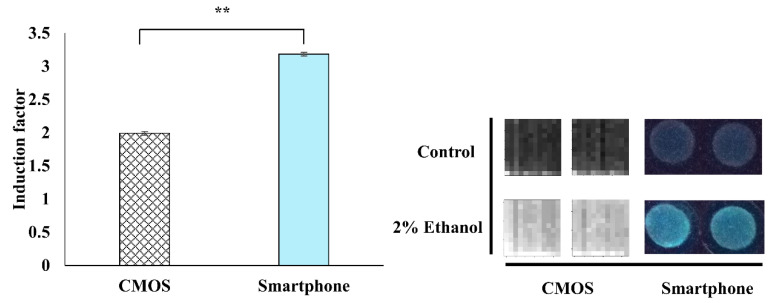
Bioluminescent bacteria whole-cell biosensors (WCBs) have been widely used in a range of sensing applications in environmental monitoring and medical diagnostics. However, most of them use planktonic bacteria cells that require complicated signal measurement processes and therefore limit the portability of the biosensor device. In this study, a simple and low-cost immobilization method was examined. The bioluminescent bioreporter bacteria was absorbed on a filter membrane disk. Further optimization of the immobilization process was conducted by comparing different surface materials (polyester and parafilm) or by adding glucose and ampicillin. The filter membrane disks with immobilized bacteria cells were stored at -20 °C for three weeks without a compromise in the stability of its biosensing functionality for water toxicants monitoring. Also, the bacterial immobilized disks were integrated with smartphones-based signal detection. Then, they were exposed to water samples with ethanol, chloroform, and HO, as common toxicants. The sensitivity of the smartphone-based WCB for the detection of ethanol, chloroform, and HO was 1% (/), 0.02% (/), and 0.0006% (/), respectively. To conclude, this bacterial immobilization approach demonstrated higher sensitivity, portability, and improved storability than the planktonic counterpart. The developed smartphone-based WCB establishes a model for future applications in the detection of environmental water toxicants.
生物发光细菌全细胞生物传感器(WCB)已广泛应用于环境监测和医学诊断等多种传感应用中。然而,它们大多使用浮游细菌细胞,这需要复杂的信号测量过程,因此限制了生物传感器设备的便携性。在本研究中,我们研究了一种简单且低成本的固定化方法。将生物发光生物报告菌吸收在滤膜圆盘上。通过比较不同的表面材料(聚酯和聚四氟乙烯)或添加葡萄糖和氨苄青霉素,对固定化过程进行了进一步优化。将固定化细菌细胞的滤膜圆盘储存在-20°C 下长达三周,而其对水毒性物质监测的生物传感功能的稳定性没有受到影响。此外,还将细菌固定化圆盘与基于智能手机的信号检测集成在一起。然后,将其暴露于含有乙醇、氯仿和 HO 的水样中,这些都是常见的有毒物质。基于智能手机的 WCB 对乙醇、氯仿和 HO 的检测灵敏度分别为 1%(/)、0.02%(/)和 0.0006%(/)。总之,与浮游细菌相比,这种细菌固定化方法具有更高的灵敏度、便携性和改进的存储稳定性。基于智能手机的 WCB 的开发为未来环境水样中有毒物质的检测奠定了模型基础。