Coronado-Cáceres Luis Jorge, Rabadán-Chávez Griselda, Mojica Luis, Hernández-Ledesma Blanca, Quevedo-Corona Lucía, Lugo Cervantes Eugenia
Unidad de Tecnología Alimentaria, Centro de Investigación y Asistencia en Tecnología y Diseño del Estado de Jalisco, Guadalajara CP 44270, Mexico.
Instituto de Investigación en Ciencias de la Alimentación (CIAL, CSIC-UAM, CEI UAM+CSIC), Nicolás Cabrera, 28049 Madrid, Spain.
Foods. 2020 Sep 25;9(10):1359. doi: 10.3390/foods9101359.
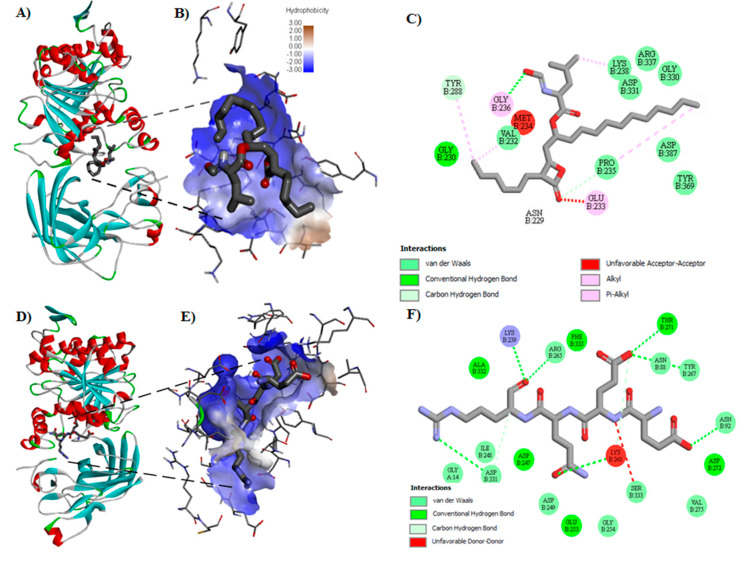
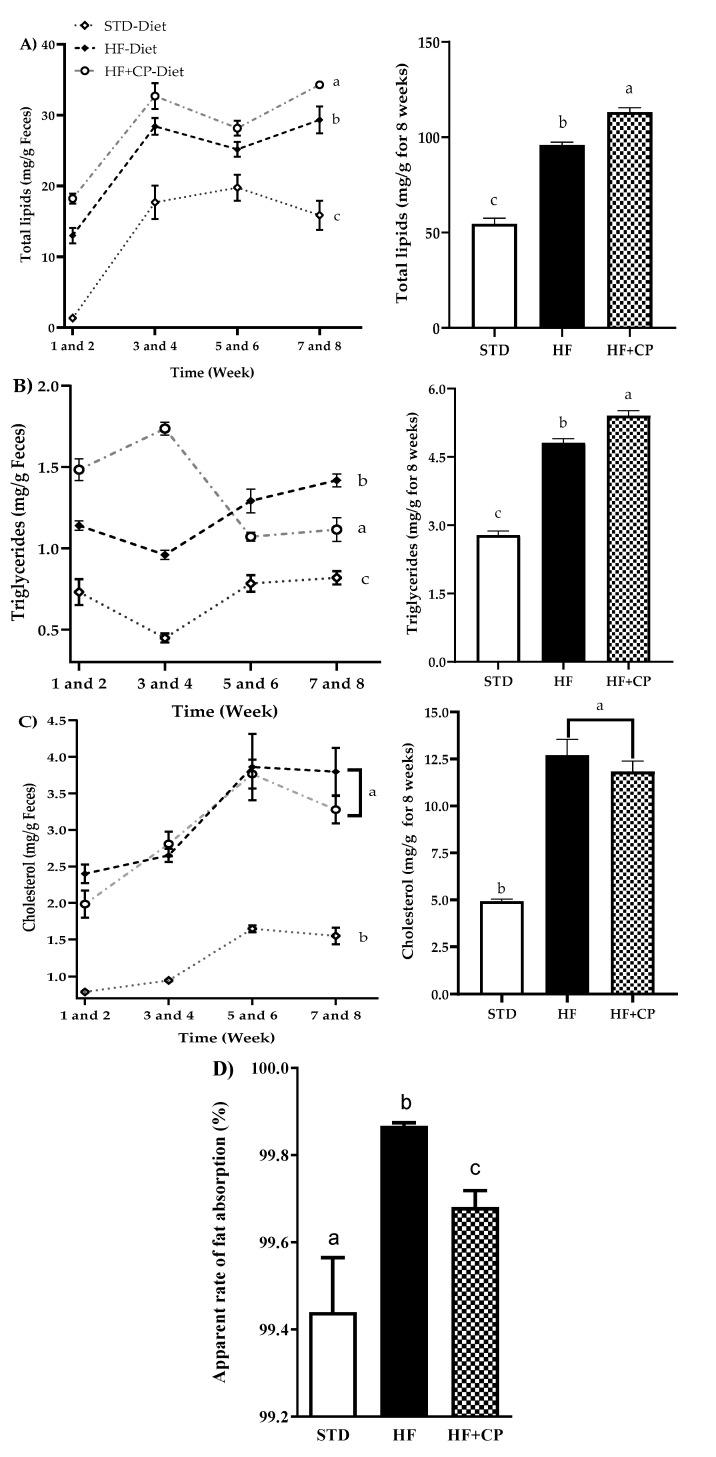
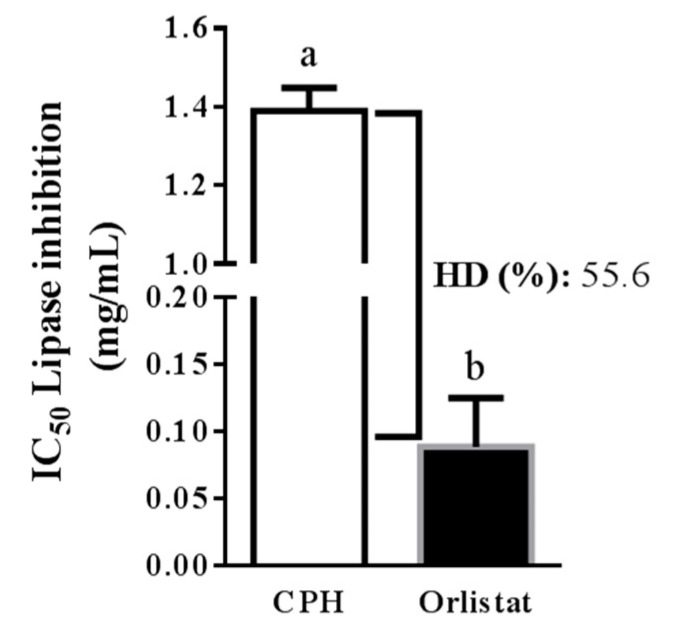
The aim of this study was to determine the pancreatic lipase (PL) inhibitory effect of cocoa protein (CP) hydrolysates (CPH) using in silico and in vitro approaches, and an in vivo high-fat diet (HF) obese rat model. The results showed better theoretical affinity on PL for cocoa peptides EEQR, GGER, QTGVQ, and VSTDVNIE released from vicilin and albumins (-6.5, -6.3, -6.2, and -6.1 kcal/mol, respectively). Absorption, distribution, metabolism, and excretion (ADMET) prediction showed the human intestinal absorption (HIA) capacity of orlistat and eight cocoa peptides, demonstrating that they presented a low probability of toxicity with values lower than 0.6, while the orlistat has a high probability of hepatotoxicity with a mean value of 0.9. CPH (degree of hydrolysis of 55%) inhibited PL with an IC (concentration needed to inhibit 50% of enzyme activity) value of 1.38 mg/mL. The intragastric administration of 150 mg CP/kg/day to rats increased total lipids and triglycerides excretion in feces, ranging from 11% to 15% compared to the HF-diet. The HF + CP-diet also significantly decreased ( < 0.05) the apparent rate of fat absorption compared with the HF group. These results suggest that CP has anti-obesity potential by inhibiting PL, thus helping to prevent the development of non-communicable diseases.
本研究旨在通过计算机模拟和体外实验方法,以及体内高脂饮食(HF)肥胖大鼠模型,确定可可蛋白(CP)水解物(CPH)对胰脂肪酶(PL)的抑制作用。结果表明,豌豆球蛋白和白蛋白释放的可可肽EEQR、GGER、QTGVQ和VSTDVNIE对PL具有更好的理论亲和力(分别为-6.5、-6.3、-6.2和-6.1 kcal/mol)。吸收、分布、代谢和排泄(ADMET)预测显示了奥利司他和八种可可肽的人体肠道吸收(HIA)能力,表明它们的毒性概率较低,值低于0.6,而奥利司他具有较高的肝毒性概率,平均值为0.9。CPH(水解度为55%)对PL的抑制作用的IC(抑制50%酶活性所需的浓度)值为1.38 mg/mL。以150 mg CP/kg/天的剂量对大鼠进行胃内给药,可使粪便中的总脂质和甘油三酯排泄量增加,与高脂饮食组相比,增加幅度为11%至15%。与HF组相比,HF + CP饮食组的脂肪表观吸收率也显著降低(<0.05)。这些结果表明,CP通过抑制PL具有抗肥胖潜力,从而有助于预防非传染性疾病的发生。