Romero-Acosta Kelly, Marbán-Castro Elena, Arroyo Katy, Arrieta Germán, Mattar Salim
Faculty of Humanities and Education, Corporación Universitaria del Caribe CECAR, Sincelejo 700001, Colombia.
Department of Maternal, Child, and Reproductive health, ISGlobal, Hospital Clínic-Universitat de Barcelona, 08036 Barcelona, Spain.
Behav Sci (Basel). 2020 Sep 25;10(10):147. doi: 10.3390/bs10100147.
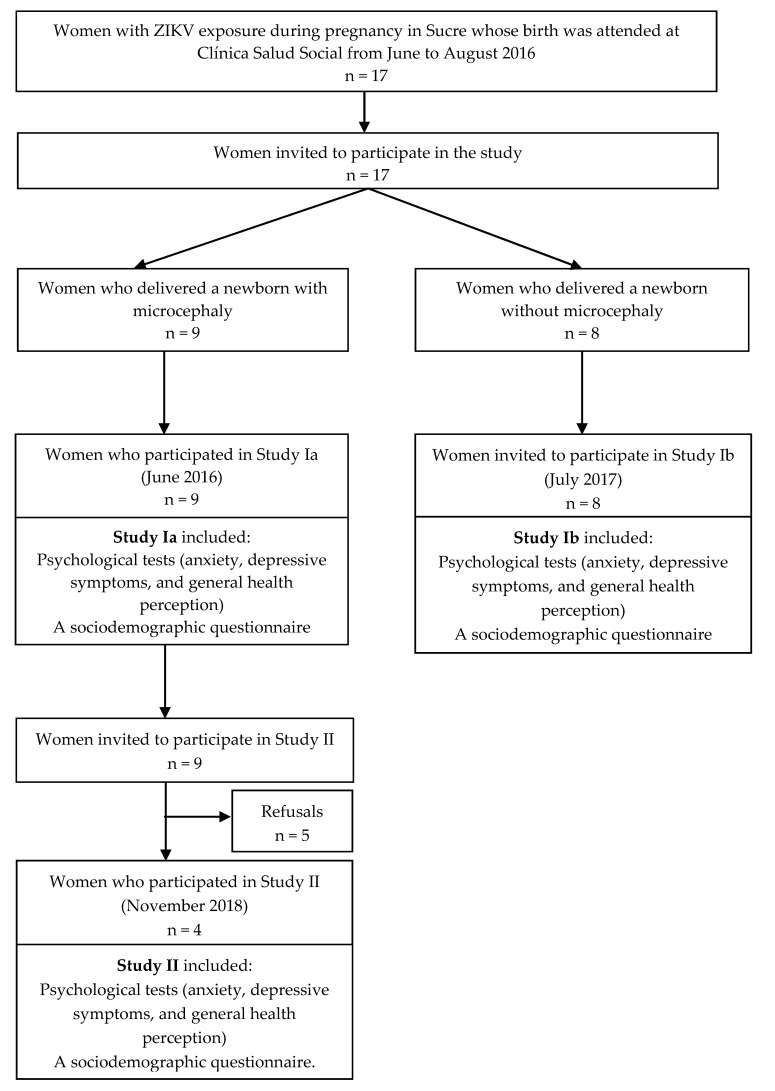
Zika virus (ZIKV) infection during pregnancy can cause neurological manifestations such as microcephaly. The aim of this study was to explore perceptions of ZIKV and mental health in women exposed to ZIKV during pregnancy in Colombia. This was a mixed-methods study based on structured interviews and psychological tests. Structured interviews were transcribed and analysed with Atlas Ti software. A grounded theory approach was applied. Quantitative analysis was performed with Statistical Package for Social Science, SPSS, V. 20. The study was approved by the Ethics Committee of the Universidad de Córdoba, Montería. Seventeen women participated in the study; nine of them were mothers of children with microcephaly. Maternal age ranged from 16 to 41 years old. The main themes discussed during interviews were: feelings, support, sources of information, and consequences on children's health. Women with children affected by microcephaly showed worse mental health compared to women with normocephalic children. Maternal mental health worsened after 24 months from giving birth. Perceptions regarding disease severity and lack of knowledge were considered to affect maternal mental health. Social support and spirituality were key determinants for caregivers. Future research is needed to further study coping mechanisms and mental health outcomes over time by affected populations.
孕期感染寨卡病毒(ZIKV)可导致小头畸形等神经学表现。本研究旨在探讨哥伦比亚孕期接触寨卡病毒的女性对寨卡病毒的认知以及她们的心理健康状况。这是一项基于结构化访谈和心理测试的混合方法研究。结构化访谈内容经转录后使用Atlas Ti软件进行分析。采用了扎根理论方法。使用社会科学统计软件包(SPSS)V. 20进行定量分析。该研究获得了科尔多瓦大学蒙特里亚分校伦理委员会的批准。17名女性参与了研究;其中9名是小头畸形患儿的母亲。产妇年龄在16至41岁之间。访谈中讨论的主要主题包括:感受、支持、信息来源以及对儿童健康的影响。与头围正常儿童的母亲相比,孩子患有小头畸形的女性心理健康状况更差。产后24个月后,产妇心理健康状况恶化。对疾病严重程度的认知和知识的缺乏被认为会影响产妇心理健康。社会支持和精神信仰是照顾者的关键决定因素。未来需要进一步研究受影响人群随时间推移的应对机制和心理健康结果。