• 文献检索
  • 文档翻译
  • 深度研究
  • 学术资讯
  • Suppr Zotero 插件Zotero 插件
  • 邀请有礼
  • 套餐&价格
  • 历史记录
应用&插件
Suppr Zotero 插件Zotero 插件浏览器插件Mac 客户端Windows 客户端微信小程序
定价
高级版会员购买积分包购买API积分包
服务
文献检索文档翻译深度研究API 文档MCP 服务
关于我们
关于 Suppr公司介绍联系我们用户协议隐私条款
关注我们

Suppr 超能文献

核心技术专利:CN118964589B侵权必究
粤ICP备2023148730 号-1Suppr @ 2026

文献检索

告别复杂PubMed语法,用中文像聊天一样搜索,搜遍4000万医学文献。AI智能推荐,让科研检索更轻松。

立即免费搜索

文件翻译

保留排版,准确专业,支持PDF/Word/PPT等文件格式,支持 12+语言互译。

免费翻译文档

深度研究

AI帮你快速写综述,25分钟生成高质量综述,智能提取关键信息,辅助科研写作。

立即免费体验

我的孩子在成长,现在呢?根据照顾者的认知,探索先天性寨卡综合征儿童的环境需求。

My child is growing and now? Exploring the environmental needs of children with congenital Zika syndrome according to their caregivers' perceptions.

机构信息

Faculty of Health Science of Trairi, Federal University of Rio Grande do Norte, Santa Cruz, Brazil.

出版信息

Health Expect. 2022 Dec;25(6):2828-2836. doi: 10.1111/hex.13587. Epub 2022 Oct 25.

DOI:10.1111/hex.13587
PMID:36281641
原文链接:https://pmc.ncbi.nlm.nih.gov/articles/PMC9700161/
Abstract

INTRODUCTION

Promoting social inclusion of children with congenital Zika virus syndrome (CZS) is challenging, mostly, when there is a transport problem, low access to information and a long distance between the house and health services. Participation can be understood as involvement in a life situation and is strongly influenced by physical, social and attitudinal environmental factors; however, was still little explored in the case of children with CZS. In this sense, this study aimed to explore the perception of caregivers about the environmental needs of children with CZS, differentiating barriers and facilitators.

METHODS

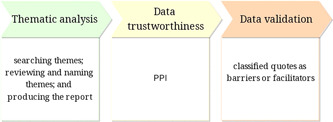
This is qualitative research. Thematic analysis was used to identify the environmental needs perceived by caregivers of children with CZS. The patient public involvement (PPI) approach was incorporated with the purpose of validating the data analysis performed by the researchers. After this step, the data were categorized in terms of barriers and facilitators and validated by the group of researchers.

RESULTS

A relevant environmental need reported by caregivers as a barrier was social support for children with CZS. Ableism was also evidenced as an important attitudinal barrier. Health services were essential for the lives of children with CZS and the availability of auxiliary devices as facilitators of participation. Environmental factors related to medication and food routines were, for the most part, facilitators.

CONCLUSION

This study contributes to critical approaches to the impacts linked to environmental factors of children with CZS, recognition of these children is an evolving process and fundamental to basic rights for adequate living in society. The data point to the need to implement public policies aimed at children with CZS, as well as the availability of qualified professionals to apply family-centred care and skills-focused management. Building friendly environments that promote broad social participation will contribute to the healthy growth of children with CZS.

PATIENT OR PUBLIC CONTRIBUTION

Six caregivers (20% of the caregivers) as part of the PPI approach were contacted and participated in individual virtual meetings to discuss the results of the thematic analysis regarding the environmental needs of children with CZS.

摘要

引言

促进先天性寨卡病毒综合征(CZS)患儿的社会包容具有挑战性,尤其是在存在交通问题、信息获取途径有限以及家庭与卫生服务机构之间距离较远的情况下。参与可以被理解为参与生活状况,受到身体、社会和态度环境因素的强烈影响;然而,在 CZS 患儿的情况下,这方面的研究还很少。从这个意义上说,本研究旨在探讨照顾者对 CZS 患儿环境需求的看法,区分障碍和促进因素。

方法

这是一项定性研究。使用主题分析来确定 CZS 患儿照顾者感知到的环境需求。患者公众参与(PPI)方法被纳入其中,目的是验证研究人员进行的数据分析。在这一步之后,数据根据障碍和促进因素进行分类,并由研究人员小组进行验证。

结果

照顾者报告的一个重要环境需求障碍是为 CZS 患儿提供社会支持。能力歧视也被证明是一个重要的态度障碍。卫生服务对 CZS 患儿的生活至关重要,辅助设备的可用性是促进参与的因素。与药物和饮食常规相关的环境因素在很大程度上是促进因素。

结论

本研究有助于对 CZS 患儿环境因素相关影响进行批判性研究,对这些患儿的认识是一个不断发展的过程,是基本人权的一部分,有利于他们在社会中获得适当的生活。这些数据表明,需要为 CZS 患儿实施公共政策,并提供合格的专业人员,以实施以家庭为中心的护理和以技能为重点的管理。建立促进广泛社会参与的友好环境将有助于 CZS 患儿的健康成长。

患者或公众的贡献

作为 PPI 方法的一部分,联系了六名照顾者(占照顾者的 20%),并与他们进行了单独的虚拟会议,讨论关于 CZS 患儿环境需求的主题分析结果。
https://cdn.ncbi.nlm.nih.gov/pmc/blobs/2046/9700161/d9c5dde152ac/HEX-25--g002.jpg
https://cdn.ncbi.nlm.nih.gov/pmc/blobs/2046/9700161/5b06c4e708f6/HEX-25--g001.jpg
https://cdn.ncbi.nlm.nih.gov/pmc/blobs/2046/9700161/9357aa2e9dae/HEX-25--g003.jpg
https://cdn.ncbi.nlm.nih.gov/pmc/blobs/2046/9700161/d9c5dde152ac/HEX-25--g002.jpg
https://cdn.ncbi.nlm.nih.gov/pmc/blobs/2046/9700161/5b06c4e708f6/HEX-25--g001.jpg
https://cdn.ncbi.nlm.nih.gov/pmc/blobs/2046/9700161/9357aa2e9dae/HEX-25--g003.jpg
https://cdn.ncbi.nlm.nih.gov/pmc/blobs/2046/9700161/d9c5dde152ac/HEX-25--g002.jpg

相似文献

1
My child is growing and now? Exploring the environmental needs of children with congenital Zika syndrome according to their caregivers' perceptions.我的孩子在成长,现在呢?根据照顾者的认知,探索先天性寨卡综合征儿童的环境需求。
Health Expect. 2022 Dec;25(6):2828-2836. doi: 10.1111/hex.13587. Epub 2022 Oct 25.
2
The burden of global outbreaks: Photos of the daily lives of children with congenital Zika syndrome during the COVID-19 pandemic.全球疫情爆发带来的负担:COVID-19 大流行期间患有先天性寨卡综合征的儿童日常生活照片。
Health Expect. 2023 Dec;26(6):2500-2513. doi: 10.1111/hex.13717. Epub 2023 Aug 18.
3
Mothers as facilitators for a parent group intervention for children with Congenital Zika Syndrome: Qualitative findings from a feasibility study in Brazil.母亲作为先天性寨卡综合征儿童家长小组干预的促进者:巴西一项可行性研究的定性发现。
PLoS One. 2020 Sep 10;15(9):e0238850. doi: 10.1371/journal.pone.0238850. eCollection 2020.
4
How congenital Zika virus impacted my child's functioning and disability: a Brazilian qualitative study guided by the ICF.先天性寨卡病毒如何影响我孩子的功能和残疾:一项基于国际功能、残疾和健康分类的巴西定性研究。
BMJ Open. 2020 Dec 2;10(12):e038228. doi: 10.1136/bmjopen-2020-038228.
5
The association of depression, anxiety, and stress with caring for a child with Congenital Zika Syndrome in Brazil; Results of a cross-sectional study.巴西照顾先天性寨卡综合征患儿的人群中抑郁、焦虑和压力与照顾者的关联性:一项横断面研究的结果。
PLoS Negl Trop Dis. 2019 Sep 30;13(9):e0007768. doi: 10.1371/journal.pntd.0007768. eCollection 2019 Sep.
6
Anxiety and depression among caregivers of young children with Congenital Zika Syndrome in Brazil.巴西先天性寨卡综合征幼儿照顾者的焦虑和抑郁。
Disabil Rehabil. 2021 Jul;43(15):2100-2109. doi: 10.1080/09638288.2019.1692252. Epub 2019 Nov 23.
7
Experiences of children with congenital Zika syndrome while using motorized mobility: a qualitative study using the photovoice method.先天性寨卡综合征儿童使用机动移动工具的体验:使用摄影法的定性研究。
Disabil Rehabil Assist Technol. 2024 Nov;19(8):3089-3099. doi: 10.1080/17483107.2024.2348071. Epub 2024 May 7.
8
Caring for children with Congenital Zika Syndrome: The unmet needs of mothers in Southern Colombia.照顾先天性寨卡综合征患儿:哥伦比亚南部母亲未满足的需求。
Glob Public Health. 2022 Nov;17(11):2752-2763. doi: 10.1080/17441692.2021.1987500. Epub 2021 Oct 11.
9
Qualitative evaluation of a support group for women with children with Zika congenital syndrome in Southern Colombia.对哥伦比亚南部患有先天性寨卡综合征儿童的妇女支持小组的定性评估。
Disabil Rehabil. 2022 Oct;44(20):6009-6016. doi: 10.1080/09638288.2021.1955308. Epub 2021 Aug 6.
10
Congenital Zika Syndrome-Assessing the Need for a Family Support Programme in Brazil.先天性寨卡综合征-评估巴西建立家庭支持计划的必要性。
Int J Environ Res Public Health. 2020 May 19;17(10):3559. doi: 10.3390/ijerph17103559.

引用本文的文献

1
The lingering crisis: gaps in long-term care for children with congenital Zika syndrome and their families in Brazil.持续的危机:巴西先天性寨卡综合征患儿及其家庭长期护理方面的差距。
Rev Inst Med Trop Sao Paulo. 2025 Jun 9;67:e36. doi: 10.1590/S1678-9946202567036. eCollection 2025.
2
The burden of global outbreaks: Photos of the daily lives of children with congenital Zika syndrome during the COVID-19 pandemic.全球疫情爆发带来的负担:COVID-19 大流行期间患有先天性寨卡综合征的儿童日常生活照片。
Health Expect. 2023 Dec;26(6):2500-2513. doi: 10.1111/hex.13717. Epub 2023 Aug 18.

本文引用的文献

1
Critically Examining the Person-Environment Relationship and Implications of Intersectionality for Participation in Children's Rehabilitation Services.批判性审视儿童康复服务中个人与环境的关系以及交叉性对参与的影响。
Front Rehabil Sci. 2021 Sep 14;2:709977. doi: 10.3389/fresc.2021.709977. eCollection 2021.
2
"One feels anger to know there is no one to help us!". Perceptions of mothers of children with Zika virus-associated microcephaly in Caribbean Colombia: A qualitative study.“一想到没有人可以帮助我们,就感到愤怒!”加勒比哥伦比亚寨卡病毒相关小头畸形患儿母亲的看法:一项定性研究。
PLoS Negl Trop Dis. 2022 Apr 18;16(4):e0010328. doi: 10.1371/journal.pntd.0010328. eCollection 2022 Apr.
3
Impact of congenital Zika virus and COVID-19 on childhood disability in Latin America.
先天性 Zika 病毒和 COVID-19 对拉丁美洲儿童残疾的影响。
Dev Med Child Neurol. 2021 Nov;63(11):1241. doi: 10.1111/dmcn.14998.
4
Congenital Zika Virus Syndrome: care in light of the Brazilian Unified Health System principles.先天性寨卡病毒综合征:基于巴西统一卫生系统原则的护理。
Rev Bras Enferm. 2021 Oct 1;75(2):e20210146. doi: 10.1590/0034-7167-2021-0146. eCollection 2021.
5
Introduction to the Special Issue on Early Child Development: From Measurement to Optimal Functioning and Evidence-Based Policy.幼儿早期发展特刊引言:从测量到最佳功能与循证政策
Int J Environ Res Public Health. 2021 May 13;18(10):5154. doi: 10.3390/ijerph18105154.
6
Patient and public involvement in care home research: Reflections on the how and why of involving patient and public involvement partners in qualitative data analysis and interpretation.患者和公众参与养老院研究:关于如何以及为何让患者和公众参与合作伙伴参与定性数据分析和解释的思考。
Health Expect. 2021 Aug;24(4):1349-1356. doi: 10.1111/hex.13269. Epub 2021 May 11.
7
Spatiotemporal Distribution of Zika Virus and Its Spatially Heterogeneous Relationship with the Environment.寨卡病毒的时空分布及其与环境的空间异质性关系。
Int J Environ Res Public Health. 2021 Jan 2;18(1):290. doi: 10.3390/ijerph18010290.
8
Factors influencing access to early intervention for families of children with developmental disabilities: A narrative review.影响发展障碍儿童家庭获得早期干预服务的因素:叙事性综述。
J Appl Res Intellect Disabil. 2021 May;34(3):695-711. doi: 10.1111/jar.12852. Epub 2020 Dec 22.
9
How congenital Zika virus impacted my child's functioning and disability: a Brazilian qualitative study guided by the ICF.先天性寨卡病毒如何影响我孩子的功能和残疾:一项基于国际功能、残疾和健康分类的巴西定性研究。
BMJ Open. 2020 Dec 2;10(12):e038228. doi: 10.1136/bmjopen-2020-038228.
10
The psychosocial and economic impacts on female caregivers and families caring for children with a disability in Belu District, Indonesia.印度尼西亚贝卢区残疾儿童女性照顾者及其家庭的心理社会和经济影响。
PLoS One. 2020 Nov 4;15(11):e0240921. doi: 10.1371/journal.pone.0240921. eCollection 2020.