Institute of Pharmacy/Pharmacognosy, Center for Molecular Biosciences Innsbruck (CMBI), University of Innsbruck, Innrain 80/82, 6020 Innsbruck, Austria.
Research Unit Molecular Endocrinology and Metabolism, Helmholtz Zentrum München, Ingolstädter Landstraße 1, 85764 Neuherberg, Germany.
Int J Mol Sci. 2020 Sep 26;21(19):7102. doi: 10.3390/ijms21197102.
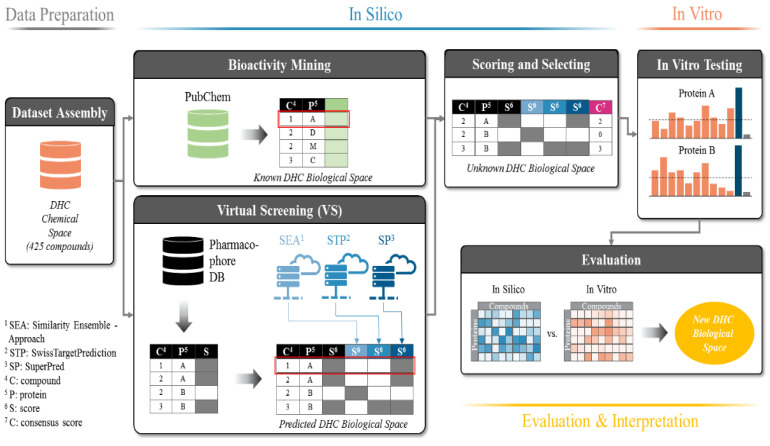
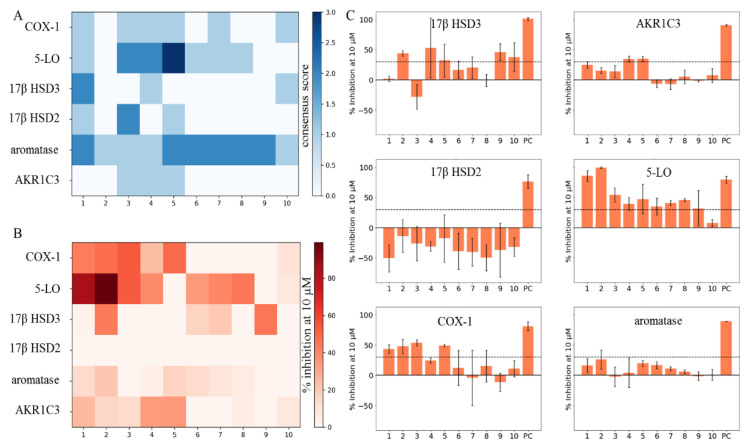
Natural products comprise a rich reservoir for innovative drug leads and are a constant source of bioactive compounds. To find pharmacological targets for new or already known natural products using modern computer-aided methods is a current endeavor in drug discovery. Nature's treasures, however, could be used more effectively. Yet, reliable pipelines for the large-scale target prediction of natural products are still rare. We developed an in silico workflow consisting of four independent, stand-alone target prediction tools and evaluated its performance on dihydrochalcones (DHCs)-a well-known class of natural products. Thereby, we revealed four previously unreported protein targets for DHCs, namely 5-lipoxygenase, cyclooxygenase-1, 17β-hydroxysteroid dehydrogenase 3, and aldo-keto reductase 1C3. Moreover, we provide a thorough strategy on how to perform computational target predictions and guidance on using the respective tools.
天然产物是创新药物先导的丰富资源库,也是生物活性化合物的不断来源。使用现代计算机辅助方法为新的或已知的天然产物寻找药理靶点是药物发现的当前努力方向。然而,天然产物可以更有效地利用。然而,用于大规模预测天然产物靶点的可靠管道仍然很少。我们开发了一种由四个独立的、独立的目标预测工具组成的计算工作流程,并在二氢查耳酮(DHC)上评估了其性能,DHC 是一类众所周知的天然产物。由此,我们揭示了 DHC 的四个以前未报道的蛋白质靶标,即 5-脂氧合酶、环加氧酶-1、17β-羟甾脱氢酶 3 和醛酮还原酶 1C3。此外,我们提供了关于如何执行计算靶标预测的全面策略以及关于使用相应工具的指导。