Department of Microbiology, School of Medicine, University of Alabama at Birmingham, Birmingham, Alabama, USA.
Department of Molecular and Cell Biology, University of Connecticut, Storrs, Connecticut, USA.
mBio. 2020 Sep 29;11(5):e01905-20. doi: 10.1128/mBio.01905-20.
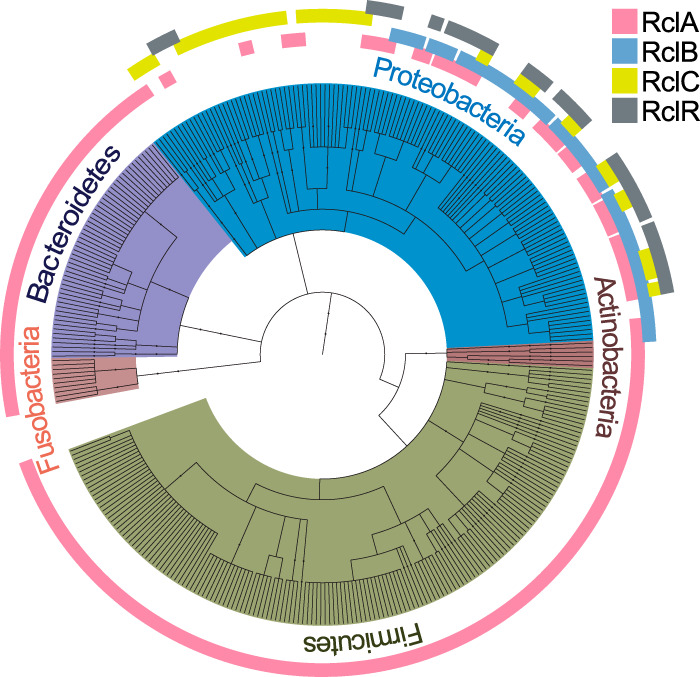
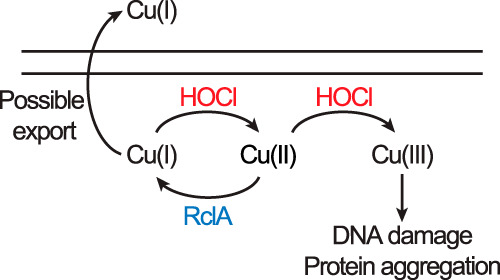
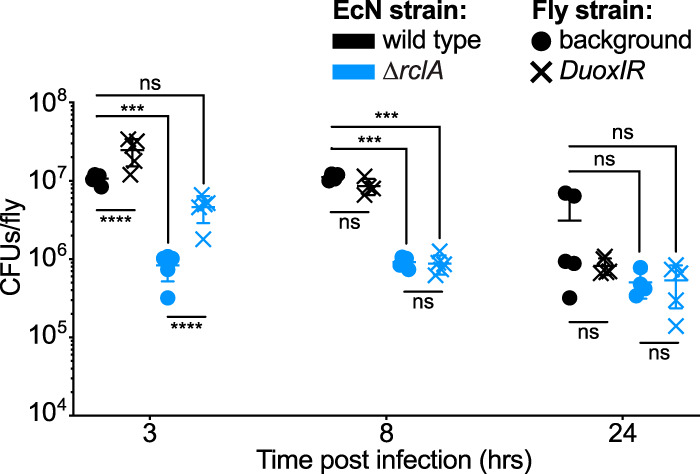
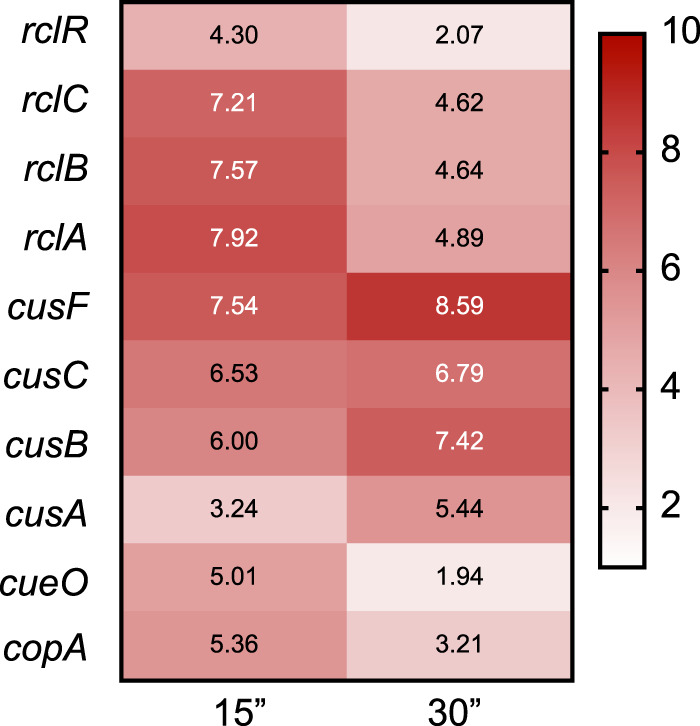
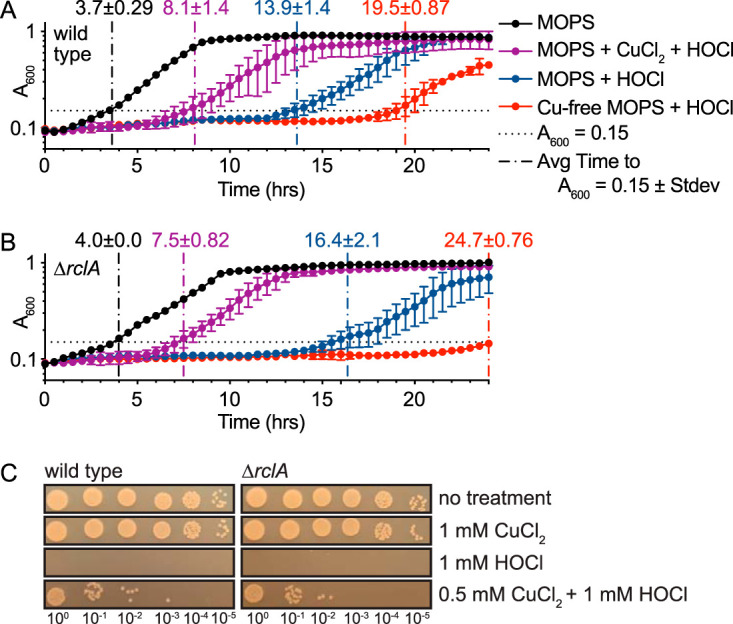
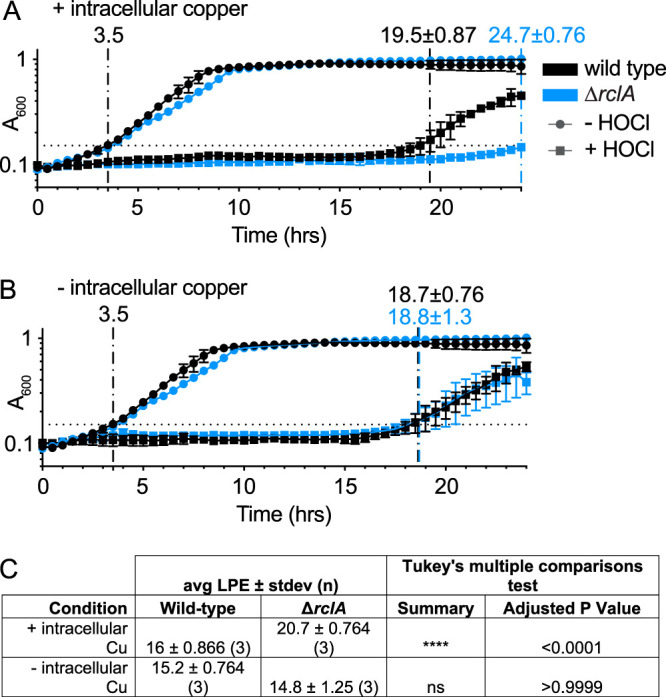
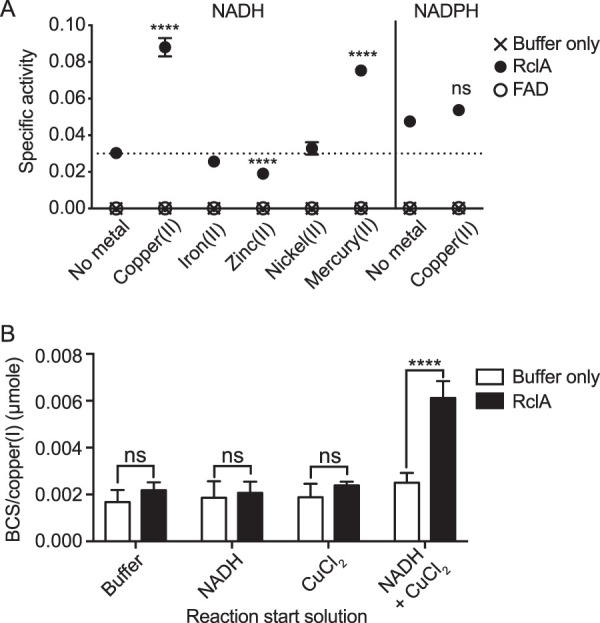
Enterobacteria, including , bloom to high levels in the gut during inflammation and strongly contribute to the pathology of inflammatory bowel diseases. To survive in the inflamed gut, must tolerate high levels of antimicrobial compounds produced by the immune system, including toxic metals like copper and reactive chlorine oxidants such as hypochlorous acid (HOCl). Here, we show that extracellular copper is a potent detoxifier of HOCl and that the widely conserved bacterial HOCl resistance enzyme RclA, which catalyzes the reduction of copper(II) to copper(I), specifically protects against damage caused by the combination of HOCl and intracellular copper. lacking RclA was highly sensitive to HOCl when grown in the presence of copper and was defective in colonizing an animal host. Our results indicate that there is unexpected complexity in the interactions between antimicrobial toxins produced by innate immune cells and that bacterial copper status is a key determinant of HOCl resistance and suggest an important and previously unsuspected role for copper redox reactions during inflammation. During infection and inflammation, the innate immune system uses antimicrobial compounds to control bacterial populations. These include toxic metals, like copper, and reactive oxidants, including hypochlorous acid (HOCl). We have now found that RclA, a copper(II) reductase strongly induced by HOCl in proinflammatory and found in many bacteria inhabiting epithelial surfaces, is required for bacteria to resist killing by the combination of intracellular copper and HOCl and plays an important role in colonization of an animal host. This finding indicates that copper redox chemistry plays a critical and previously underappreciated role in bacterial interactions with the innate immune system.
肠杆菌,包括 ,在炎症期间在肠道中大量繁殖,并强烈促进炎症性肠病的病理学发展。为了在发炎的肠道中生存, 必须耐受免疫系统产生的高水平抗菌化合物,包括铜等有毒金属和次氯酸(HOCl)等活性氯氧化剂。在这里,我们表明细胞外铜是 HOCl 的有效解毒剂,并且广泛保守的细菌 HOCl 抗性酶 RclA 催化铜(II)还原为铜(I),特别保护 免受 HOCl 和细胞内铜结合造成的损伤。缺乏 RclA 的 在存在铜的情况下对 HOCl 非常敏感,并且在定植动物宿主方面存在缺陷。我们的结果表明,先天免疫细胞产生的抗菌毒素之间的相互作用存在出乎意料的复杂性,并且细菌的铜状态是 HOCl 抗性的关键决定因素,并表明铜氧化还原反应在炎症期间具有重要且以前未被怀疑的作用。在感染和炎症期间,先天免疫系统使用抗菌化合物来控制细菌种群。这些包括有毒金属,如铜,和活性氧化剂,包括次氯酸(HOCl)。我们现在发现,RclA 是一种铜(II)还原酶,强烈诱导 HOCl 在促炎 中,并存在于许多栖息在上皮表面的细菌中,是细菌抵抗细胞内铜和 HOCl 组合杀伤所必需的,并在动物宿主定植中发挥重要作用。这一发现表明,铜氧化还原化学在细菌与先天免疫系统相互作用中起着关键的、以前未被充分认识的作用。