Preclinical PET-CT Facility, Edinburgh Imaging, Queen's Medical Research Institute, The University of Edinburgh, 47 Little France Crescent, Edinburgh, EH16 4TJ, UK.
University/BHF Centre for Cardiovascular Science, Queen's Medical Research Institute, Edinburgh, EH16 4TJ, UK.
Sci Rep. 2020 Sep 29;10(1):15985. doi: 10.1038/s41598-020-72830-w.
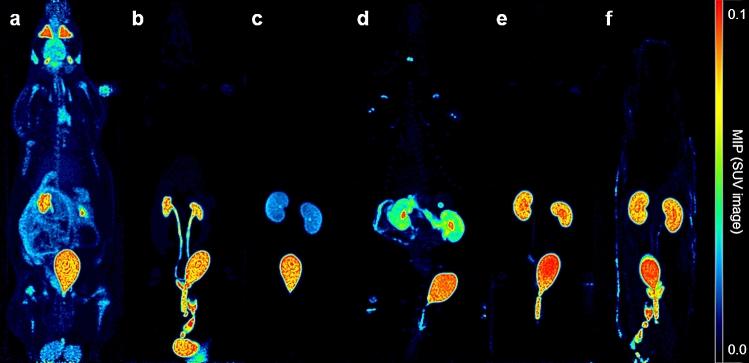
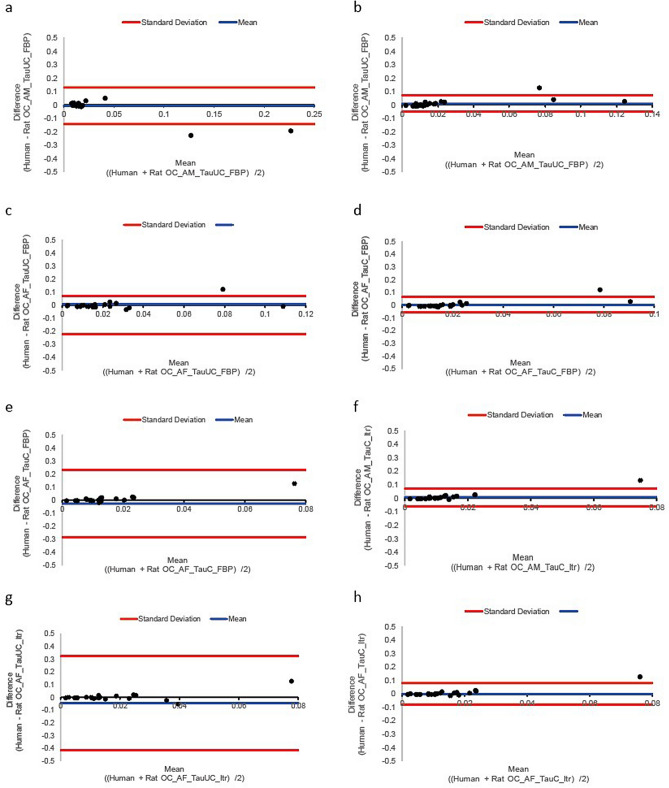
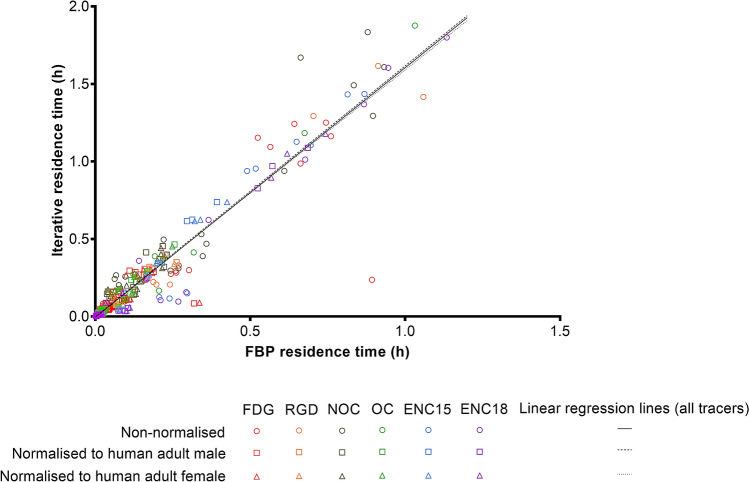
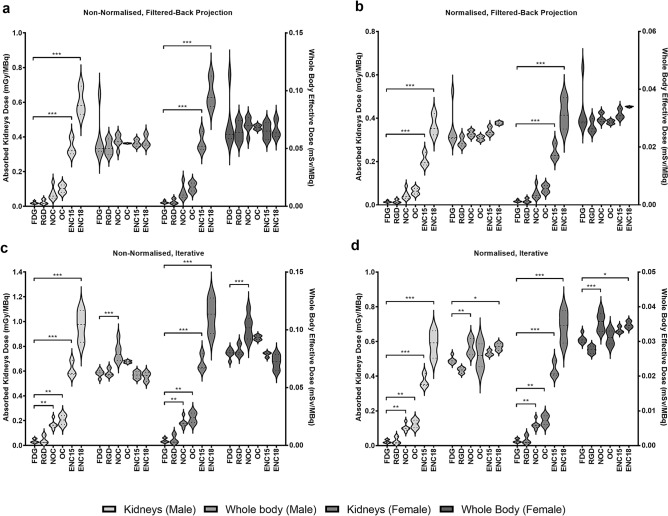
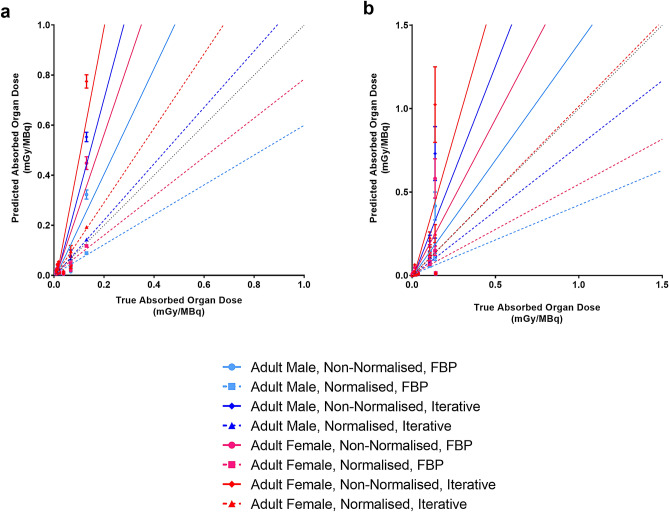
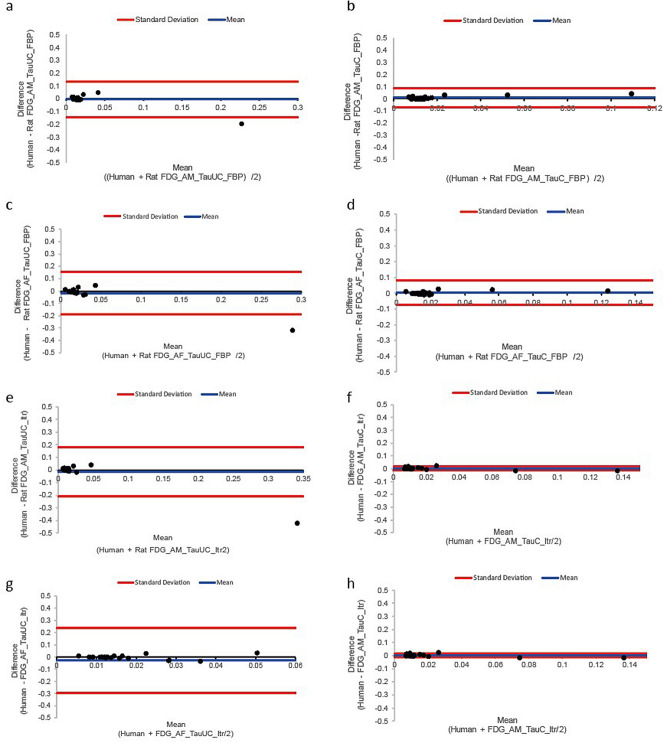
Dosimetry models using preclinical positron emission tomography (PET) data are commonly employed to predict the clinical radiological safety of novel radiotracers. However, unbiased clinical safety profiling remains difficult during the translational exercise from preclinical research to first-in-human studies for novel PET radiotracers. In this study, we assessed PET dosimetry data of six F-labelled radiotracers using preclinical dosimetry models, different reconstruction methods and quantified the biases of these predictions relative to measured clinical doses to ease translation of new PET radiotracers to first-in-human studies. Whole-body PET images were taken from rats over 240 min after intravenous radiotracer bolus injection. Four existing and two novel PET radiotracers were investigated: [F]FDG, [F]AlF-NOTA-RGDfK, [F]AlF-NOTA-octreotide ([F]AlF-NOTA-OC), [F]AlF-NOTA-NOC, [F]ENC2015 and [F]ENC2018. Filtered-back projection (FBP) and iterative methods were used for reconstruction of PET data. Predicted and true clinical absorbed doses for [F]FDG and [F]AlF-NOTA-OC were then used to quantify bias of preclinical model predictions versus clinical measurements. Our results show that most dosimetry models were biased in their predicted clinical dosimetry compared to empirical values. Therefore, normalization of rat:human organ sizes and correction for reconstruction method biases are required to achieve higher precision of dosimetry estimates.
使用临床前正电子发射断层扫描(PET)数据的剂量学模型通常用于预测新型放射性示踪剂的临床放射安全性。然而,在从临床前研究到新型 PET 放射性示踪剂的首次人体研究的转化过程中,仍然难以进行无偏的临床安全性分析。在这项研究中,我们使用临床前剂量学模型、不同的重建方法评估了六种 F 标记放射性示踪剂的 PET 剂量学数据,并量化了这些预测相对于测量的临床剂量的偏差,以促进新型 PET 放射性示踪剂向首次人体研究的转化。在静脉注射放射性示踪剂后 240 分钟内,对大鼠进行全身 PET 成像。研究了四种现有和两种新型 PET 放射性示踪剂:[F]FDG、[F]AlF-NOTA-RGDfK、[F]AlF-NOTA-octreotide([F]AlF-NOTA-OC)、[F]AlF-NOTA-NOC、[F]ENC2015 和 [F]ENC2018。使用滤波反投影(FBP)和迭代方法对 PET 数据进行重建。然后使用 [F]FDG 和 [F]AlF-NOTA-OC 的预测和真实临床吸收剂量来量化临床前模型预测与临床测量的偏差。我们的结果表明,与经验值相比,大多数剂量学模型在预测临床剂量时存在偏差。因此,需要归一化大鼠与人类器官的大小,并纠正重建方法的偏差,以提高剂量学估计的精度。