Werner Siemens Imaging Center, Department of Preclinical Imaging and Radiopharmacy, Eberhard Karls University Tuebingen, Germany.
Department of Nuclear Medicine and Clinical Molecular Imaging, Eberhard Karls University Tuebingen, Germany.
Theranostics. 2022 Jul 18;12(13):5615-5630. doi: 10.7150/thno.56736. eCollection 2022.
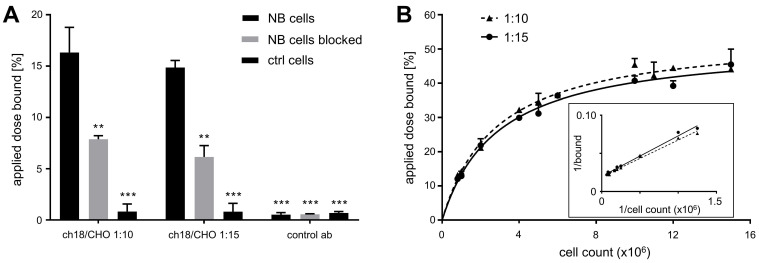
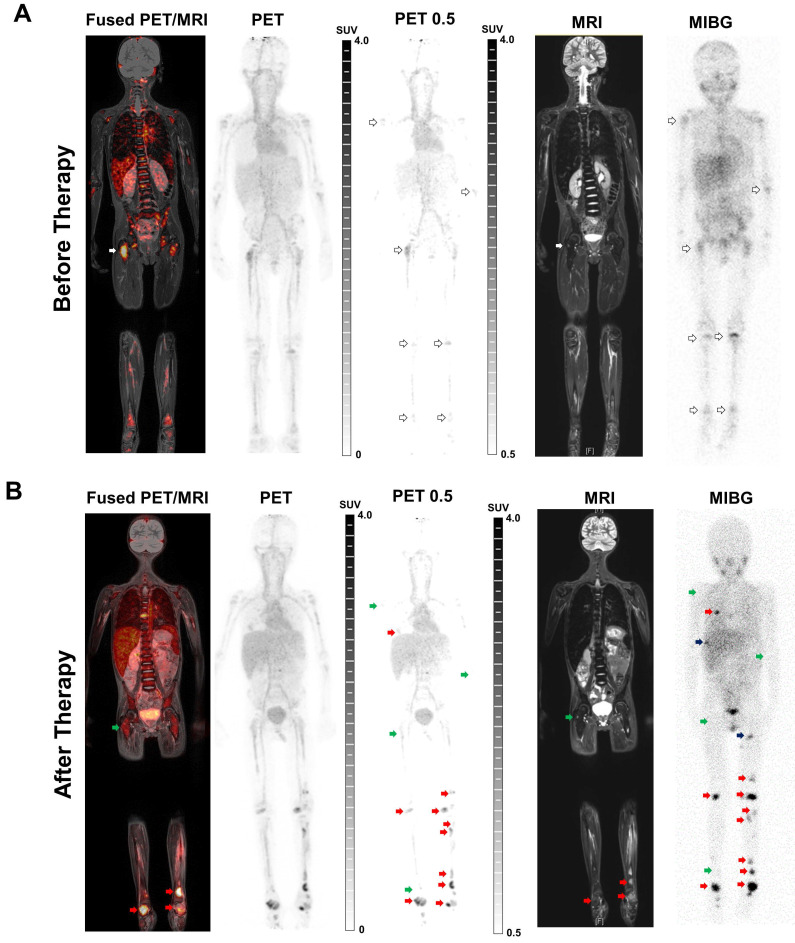
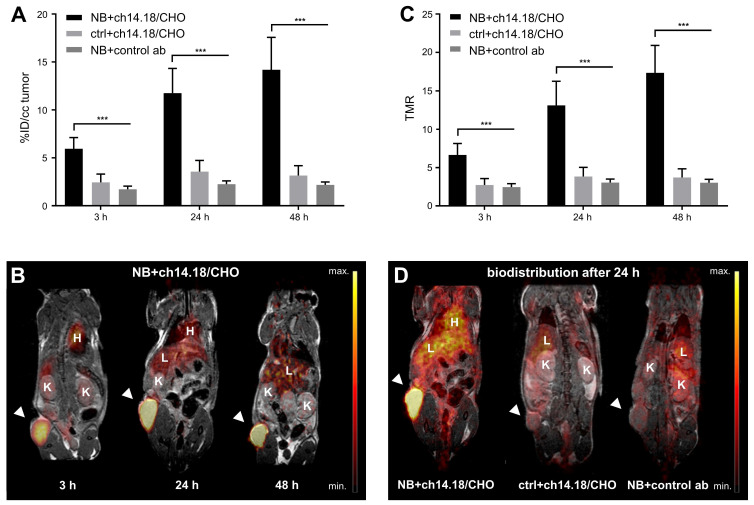
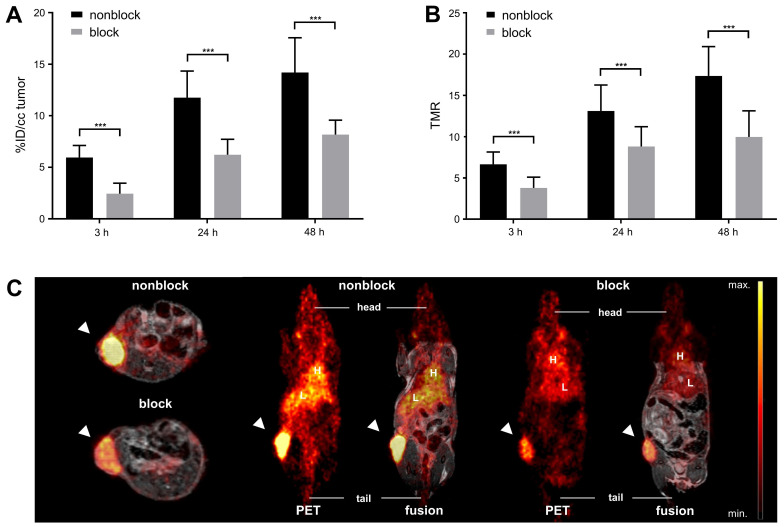
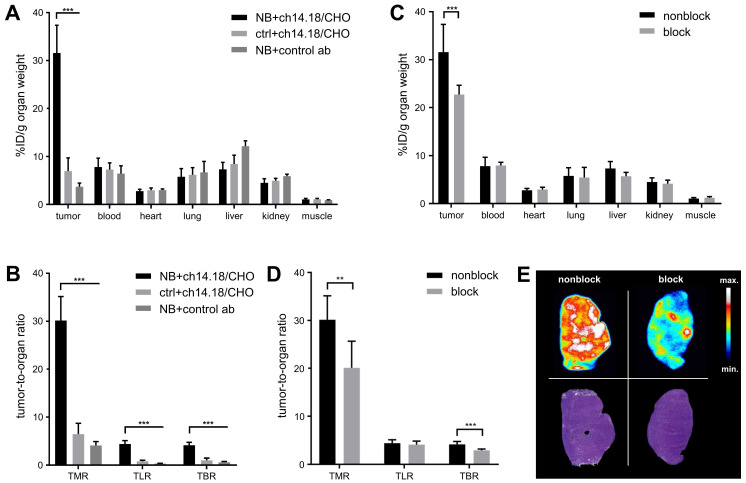
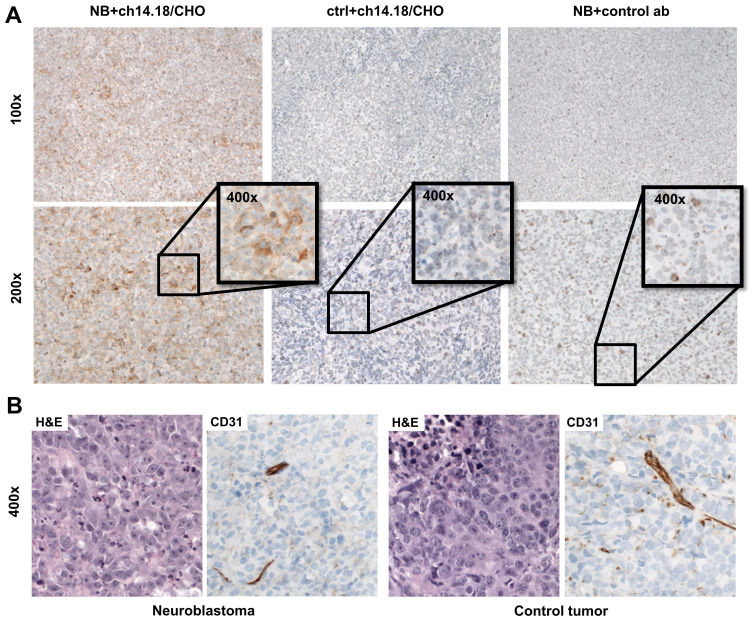
Antibodies targeting surface expressed disialoganglioside GD2 are increasingly used in neuroblastoma immunotherapy and might also have potential for use in radioimmunotherapy. As such targeted treatments might benefit from a dedicated theranostic approach, we studied the influence of radiolabeling on the binding characteristics of ch14.18 antibodies produced by Chinese hamster ovary (CHO) cells and evaluated the benefit of GD2-ImmunoPET as a potential tool for therapy planning. Cu was used to reduce radiation burden, which is of high importance especially in a pediatric patient population. Cu-labeling was accomplished using the chelators NOTA- or DOTAGA-NCS. Radiolabeled antibodies were characterized . [Cu]Cu-DOTAGA-ch14.18/CHO was studied in a neuroblastoma mouse model (subcutaneous CHP-134 xenografts). PET and MR images were acquired at 3 h, 24 h, and 48 h p.i. The specificity of binding was verified using GD2-negative tumors (HEK-293 xenografts), a control antibody and blocking. A first translational application was performed by PET/MRI in a patient with metastasized neuroblastoma. Radiolabeling at an antibody-to-chelator ratio ≥1:10 yielded a product with a radiochemical purity of ≥90% and a specific activity of 0.2-1.0 MBq/µg. Radiochelation was stable over 48 h in PBS, mouse serum or EDTA, and 50.8 ± 3.5% and 50.8 ± 2.0% of the radiolabeled conjugates, prepared at antibody-to-chelator ratios of 1:10 or 1:15, were immunoreactive. highly specific accumulation (31.6 ± 5.8% ID/g) in neuroblastoma was shown preclinically. Clinical PET/MR scans using [Cu]Cu-NOTA-ch14.18/CHO (NOTA used for safety reasons) could visualize neuroblastoma metastases. Cu-labeled ch14.18/CHO is suitable for specific identification of neuroblastoma in PET. A first patient PET indicated the feasibility of the method for clinical translation and the potential utility in image-guided therapy.
针对表面表达的二唾液酸神经节苷脂 GD2 的抗体越来越多地用于神经母细胞瘤免疫治疗,并且也可能对放射免疫治疗有潜在的作用。由于这些靶向治疗可能受益于专门的治疗诊断方法,我们研究了放射性标记对中国仓鼠卵巢(CHO)细胞产生的 ch14.18 抗体结合特性的影响,并评估了 GD2-ImmunoPET 作为治疗计划潜在工具的益处。Cu 用于降低辐射负担,这在儿科患者群体中尤为重要。Cu 标记是使用螯合剂 NOTA 或 DOTAGA-NCS 完成的。对放射性标记的抗体进行了表征。[Cu]Cu-DOTAGA-ch14.18/CHO 在神经母细胞瘤小鼠模型(皮下 CHP-134 异种移植物)中进行了研究。在注射后 3 h、24 h 和 48 h 采集 PET 和 MR 图像。使用 GD2 阴性肿瘤(HEK-293 异种移植物)、对照抗体和阻断来验证结合的特异性。通过 PET/MRI 在转移性神经母细胞瘤患者中进行了首次转化应用。在抗体-螯合剂比≥1:10 时进行放射性标记,可得到放射化学纯度≥90%且比活度为 0.2-1.0 MBq/µg 的产物。在 PBS、鼠血清或 EDTA 中,放射性螯合物在 48 h 内稳定,在抗体-螯合剂比为 1:10 或 1:15 时制备的放射性标记缀合物中,有 50.8±3.5%和 50.8±2.0%保持免疫反应性。在临床前研究中显示出针对神经母细胞瘤的高度特异性积累(31.6±5.8%ID/g)。使用[Cu]Cu-NOTA-ch14.18/CHO(出于安全原因使用 NOTA)进行的临床 PET/MR 扫描可可视化神经母细胞瘤转移。Cu 标记的 ch14.18/CHO 适合于 PET 中神经母细胞瘤的特异性识别。首例患者的 PET 表明该方法具有临床转化的可行性,并且在图像引导治疗中有潜在的应用。