Jang Andrew, Brown Chris, Lamoury Gillian, Morgia Marita, Boyle Frances, Marr Isobel, Clarke Stephen, Back Michael, Oh Byeongsang
Royal North Shore Hospital, St Leonards, New South Wales, Australia.
University of Sydney, Sydney, New South Wales, Australia.
Integr Cancer Ther. 2020 Jan-Dec;19:1534735420949679. doi: 10.1177/1534735420949679.
Several studies have identified fatigue as one of the major symptoms experienced during and after cancer treatment. However, there are limited options to manage cancer related fatigue (CRF) with pharmacological interventions. Several acupuncture studies suggested that acupuncture has a positive impact on CRF. This review aims to assess the evidence of acupuncture for the treatment of CRF.
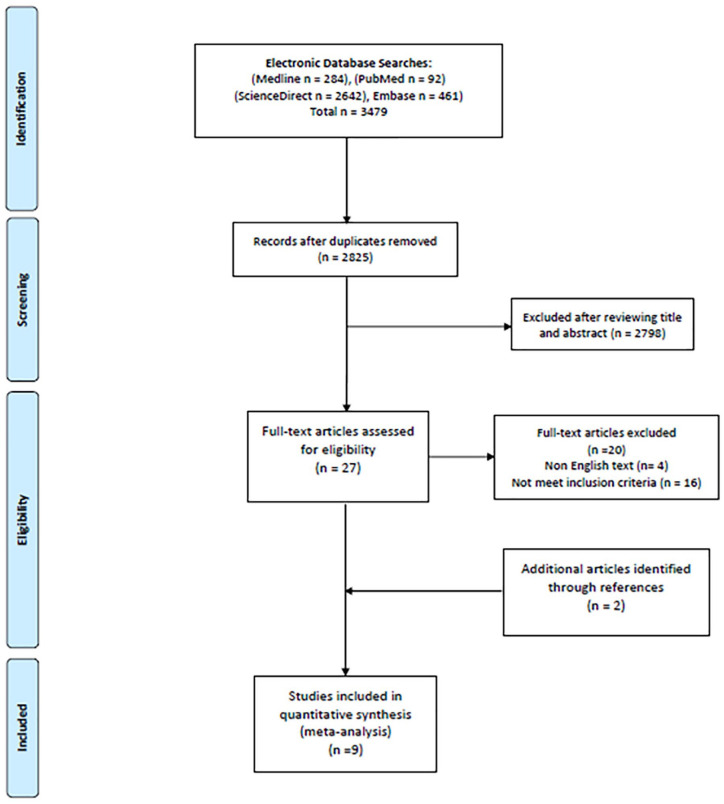
Electronic database searches were conducted on 4 English databases (Medline, PubMed, Embase, and ScienceDirect). Search keywords were; "acupuncture" and "cancer," or "cancer related fatigue." Studies published as full text randomized controlled trials (RCTs) in English were included. Estimates of change in fatigue cores were pooled using a random effects meta-analysis where randomized comparisons were available for true acupuncture versus sham acupuncture and true acupuncture versus usual care. The quality of original papers were assessed using the Cochrane Collaboration's tool for assessing risk of bias (ROB).
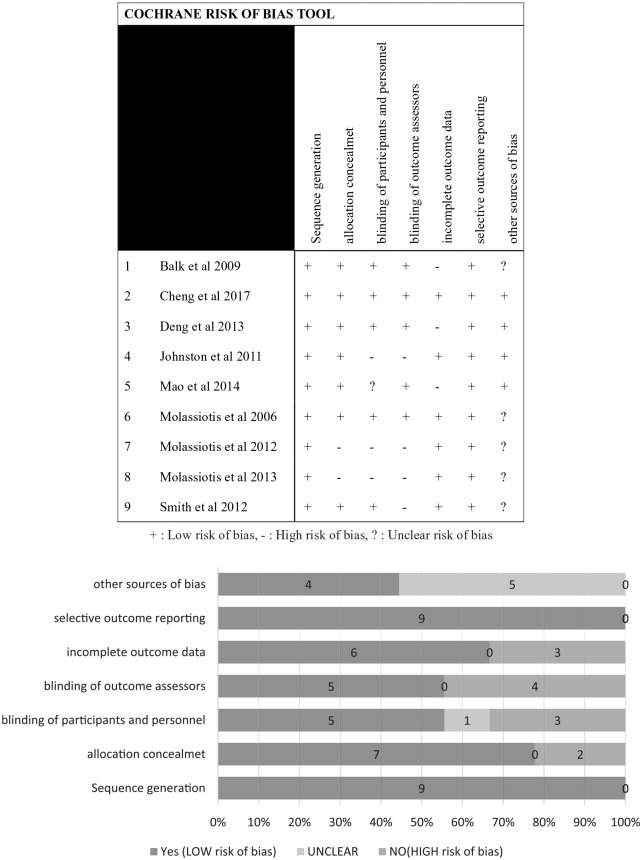
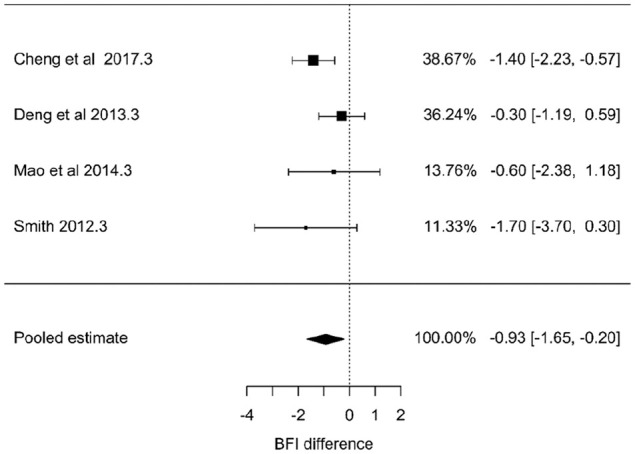
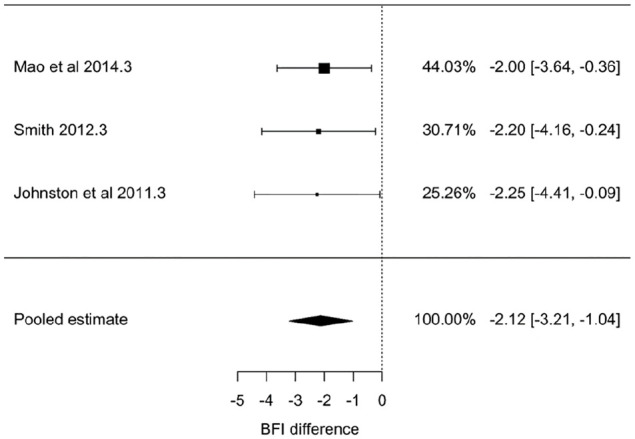
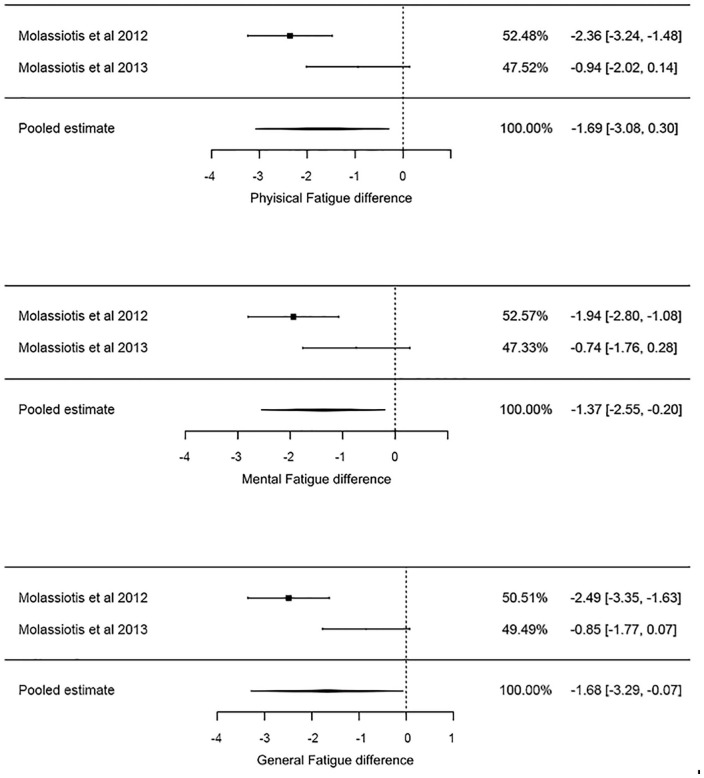
Nine RCTs were selected for review with a total of 809 participants and a range of 13 to 302 participants within the studies. Six RCTs reported significant improvement of CRF for the acupuncture intervention compared to the control groups. Pooled estimates suggest Brief Fatigue Inventory scores are 0.93 points lower 95% CI (-1.65, -0.20) in true acupuncture versus sham acupuncture and 2.12 points lower 95% C (-3.21, -1.04) in true acupuncture versus usual care. Six studies had low risk of bias (ROB) and 3 studies had a moderate ROB predominantly in blinding of participants, blinding of assessors and incomplete data outcomes. Among the 9 RCTs, 2 studies have reported the occurrence of minor adverse effects (spot bleeding and bruising) related to acupuncture treatment. No serious adverse reactions related to acupuncture were reported.
The current literature review suggests that acupuncture has therapeutic potential in management of CRF for cancer survivors. Promotion of acupuncture in cancer care to manage CRF may improve the quality of life of cancer survivors.
多项研究已将疲劳确定为癌症治疗期间及之后出现的主要症状之一。然而,通过药物干预来管理癌症相关疲劳(CRF)的选择有限。多项针灸研究表明,针灸对CRF有积极影响。本综述旨在评估针灸治疗CRF的证据。
对4个英文数据库(Medline、PubMed、Embase和ScienceDirect)进行电子数据库检索。检索关键词为;“针灸”和“癌症”,或“癌症相关疲劳”。纳入以英文发表的全文随机对照试验(RCT)。在有随机对照比较真针灸与假针灸以及真针灸与常规护理的情况下,使用随机效应荟萃分析汇总疲劳核心变化的估计值。使用Cochrane协作网评估偏倚风险(ROB)的工具评估原始论文的质量。
选择9项RCT进行综述,共有809名参与者,各研究中的参与者数量在13至302名之间变动。6项RCT报告称,与对照组相比,针灸干预使CRF有显著改善。汇总估计表明,在真针灸与假针灸的比较中,简明疲劳量表得分低0.93分,95%置信区间为(-1.65,-0.20);在真针灸与常规护理的比较中,得分低2.12分,95%置信区间为(-3.21,-1.04)。6项研究的偏倚风险(ROB)较低,3项研究的ROB为中等,主要体现在参与者盲法不足、评估者盲法不足和数据结果不完整方面。在这9项RCT中,有2项研究报告了与针灸治疗相关的轻微不良反应(局部出血和瘀伤)。未报告与针灸相关的严重不良反应。
当前的文献综述表明,针灸在管理癌症幸存者的CRF方面具有治疗潜力。在癌症护理中推广针灸以管理CRF可能会改善癌症幸存者的生活质量。