Cardiovascular Genetics Centre, University of Girona-IDIBGI, 17190 Girona, Spain.
Medical Science Department, School of Medicine, University of Girona, 17003 Girona, Spain.
Int J Mol Sci. 2020 Sep 28;21(19):7155. doi: 10.3390/ijms21197155.
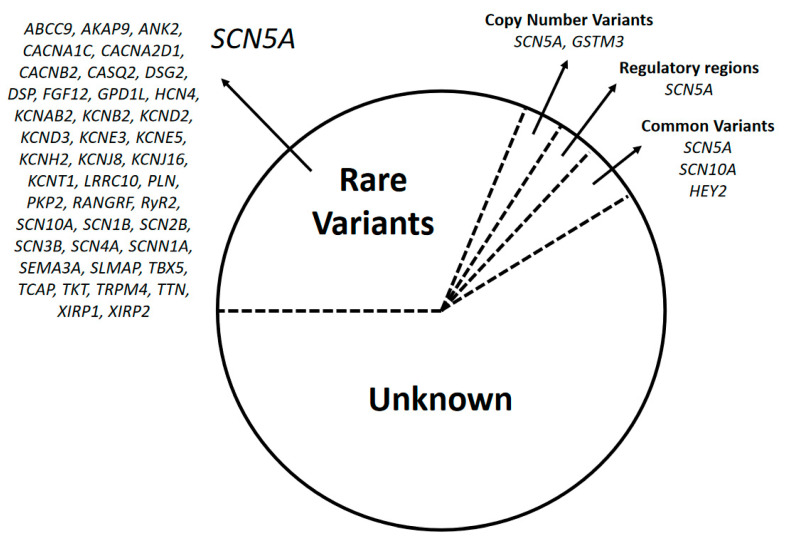
Brugada syndrome is a rare inherited arrhythmogenic disease leading to ventricular fibrillation and high risk of sudden death. In 1998, this syndrome was linked with a genetic variant with an autosomal dominant pattern of inheritance. To date, rare variants identified in more than 40 genes have been potentially associated with this disease. Variants in regulatory regions, combinations of common variants and other genetic alterations are also proposed as potential origins of Brugada syndrome, suggesting a polygenic or oligogenic inheritance pattern. However, most of these genetic alterations remain of questionable causality; indeed, rare pathogenic variants in the gene are the only established cause of Brugada syndrome. Comprehensive analysis of all reported genetic alterations identified the origin of disease in no more than 40% of diagnosed cases. Therefore, identifying the cause of this rare arrhythmogenic disease in the many families without a genetic diagnosis is a major current challenge in Brugada syndrome. Additional challenges are interpretation/classification of variants and translation of genetic data into clinical practice. Further studies focused on unraveling the pathophysiological mechanisms underlying the disease are needed. Here we provide an update on the genetic basis of Brugada syndrome.
Brugada 综合征是一种罕见的遗传性心律失常性疾病,可导致心室颤动和猝死风险增加。1998 年,该综合征与一种常染色体显性遗传的遗传变异体相关联。迄今为止,已经在 40 多个基因中发现了罕见的变异体,这些变异体可能与该疾病相关。调节区域的变异体、常见变异体的组合和其他遗传改变也被认为是 Brugada 综合征的潜在起源,表明存在多基因或寡基因遗传模式。然而,这些遗传改变中的大多数仍然存在因果关系问题;事实上, 基因中的罕见致病性变异体是 Brugada 综合征的唯一确定病因。对所有报道的遗传改变的综合分析,在诊断出的病例中,不到 40%可以确定病因。因此,在许多没有遗传诊断的家族中,确定这种罕见心律失常性疾病的病因是 Brugada 综合征目前面临的主要挑战。其他挑战包括变异体的解读/分类以及将遗传数据转化为临床实践。需要进一步的研究来阐明该疾病的病理生理机制。本文就 Brugada 综合征的遗传基础进行综述。