Albert Vega Chloé, Oriol Guy, Bartolo François, Lopez Jonathan, Pachot Alexandre, Rimmelé Thomas, Venet Fabienne, Leray Véronique, Monneret Guillaume, Delwarde Benjamin, Brengel-Pesce Karen, Textoris Julien, Mallet François, Trouillet-Assant Sophie
Laboratoire Commun de Recherche Hospices Civils de Lyon-bioMérieux, Joint Research Unit Hospices Civils de Lyon-bioMérieux, Hospices Civils de Lyon, Centre Hospitalier Lyon Sud, Bâtiment 3F, Pierre-Bénite, 69495, Lyon, France.
Open Innovation and Partnerships Department, bioMérieux S.A., Marcy l'Étoile, France.
Sci Rep. 2020 Sep 30;10(1):16136. doi: 10.1038/s41598-020-73014-2.
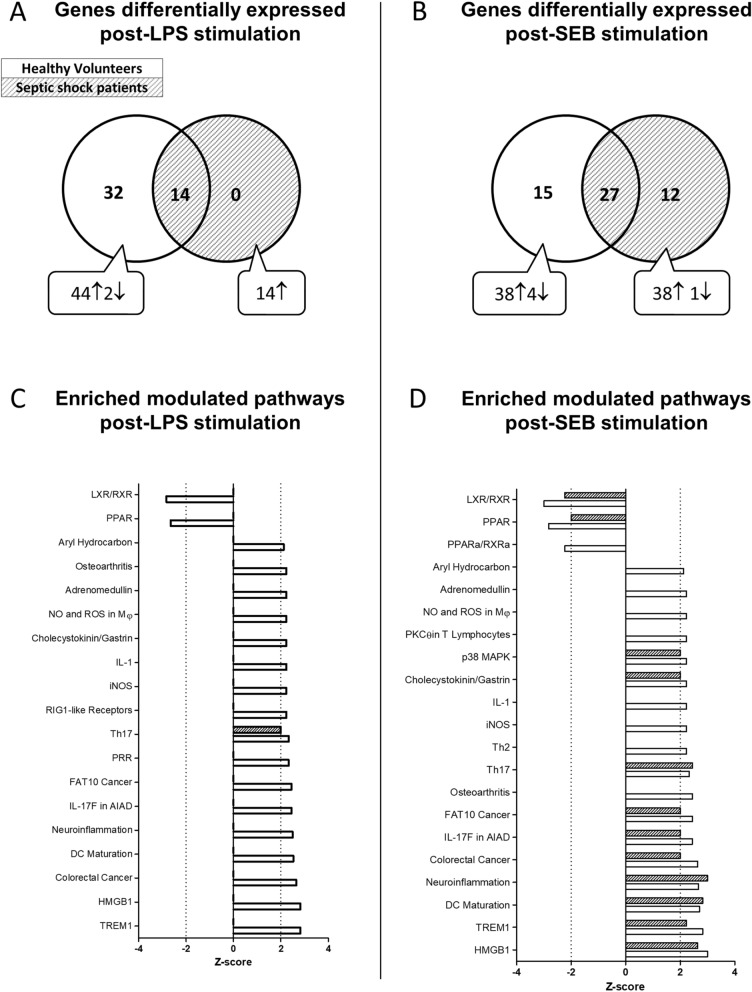
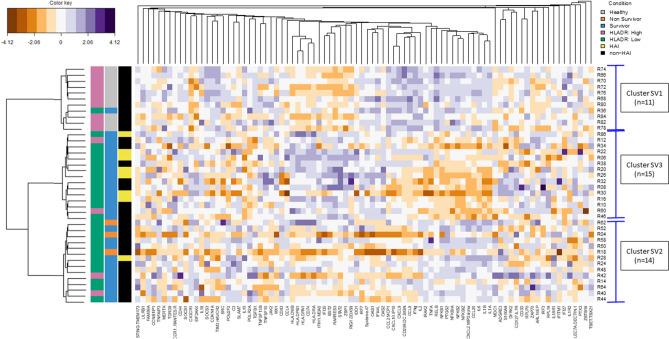
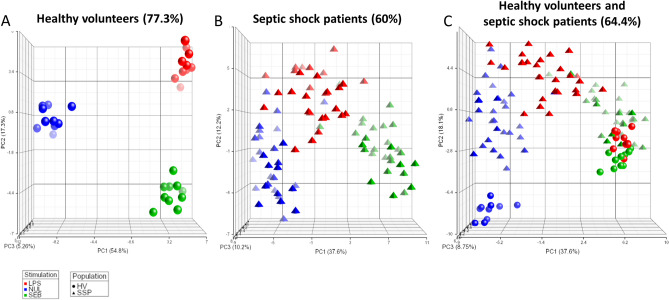
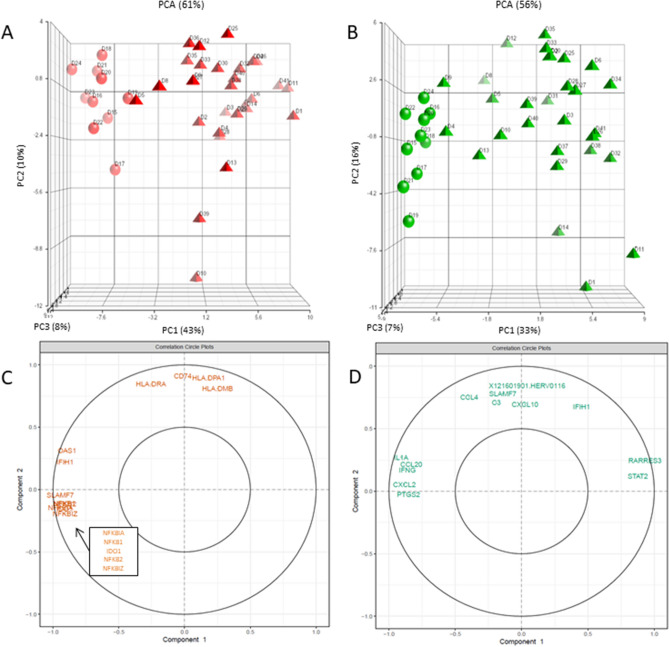
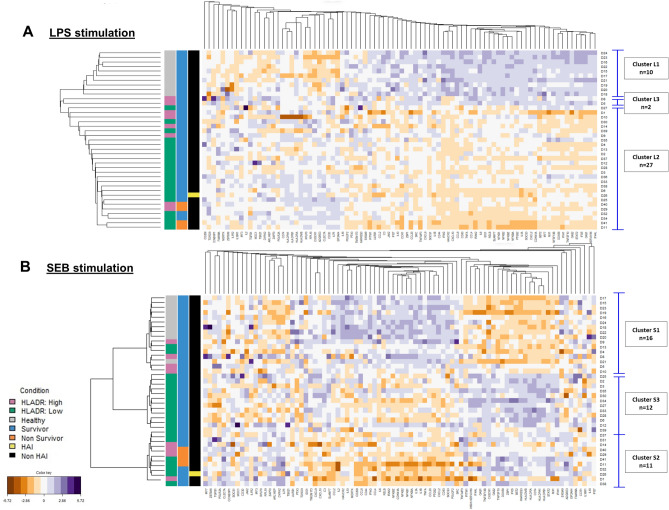
The complexity of sepsis pathophysiology hinders patient management and therapeutic decisions. In this proof-of-concept study we characterised the underlying host immune response alterations using a standardised immune functional assay (IFA) in order to stratify a sepsis population. In septic shock patients, ex vivo LPS and SEB stimulations modulated, respectively, 5.3% (1/19) and 57.1% (12/21) of the pathways modulated in healthy volunteers (HV), highlighting deeper alterations induced by LPS than by SEB. SEB-based clustering, identified 3 severity-based groups of septic patients significantly different regarding mHLA-DR expression and TNFα level post-LPS, as well as 28-day mortality, and nosocomial infections. Combining the results from two independent cohorts gathering 20 HV and 60 patients, 1 cluster grouped all HV with 12% of patients. The second cluster grouped 42% of patients and contained all non-survivors. The third cluster grouped 46% of patients, including 78% of those with nosocomial infections. The molecular features of these clusters indicated a distinctive contribution of previously described genes defining a "healthy-immune response" and a "sepsis-related host response". The third cluster was characterised by potential immune recovery that underlines the possible added value of SEB-based IFA to capture the sepsis immune response and contribute to personalised management.
脓毒症病理生理学的复杂性阻碍了患者管理和治疗决策。在这项概念验证研究中,我们使用标准化免疫功能测定(IFA)来表征潜在的宿主免疫反应改变,以便对脓毒症患者群体进行分层。在感染性休克患者中,体外脂多糖(LPS)和葡萄球菌肠毒素B(SEB)刺激分别调节了健康志愿者(HV)中5.3%(1/19)和57.1%(12/21)的通路,这突出表明LPS诱导的改变比SEB更深。基于SEB的聚类分析确定了3个基于严重程度的脓毒症患者组,这些组在LPS刺激后的mHLA-DR表达、TNFα水平以及28天死亡率和医院感染方面存在显著差异。结合来自两个独立队列(共纳入20名HV和60名患者)的结果,1个聚类将所有HV与12%的患者归为一组。第二个聚类包含42%的患者,且所有非幸存者都在该组。第三个聚类包含46%的患者,其中78%的患者发生医院感染。这些聚类的分子特征表明,先前描述的定义“健康免疫反应”和“脓毒症相关宿主反应”的基因具有独特作用。第三个聚类的特征是具有潜在的免疫恢复,这突出了基于SEB的IFA在捕捉脓毒症免疫反应和助力个性化管理方面可能具有的附加价值。