Research Management Department, The Sixth Affiliated Hospital, Kunming Medical University, Yuxi, Yunnan 653100, P.R. China.
Psychiatric Ward, Honghe Second People's Hospital, Honghe, Yunnan 654399, P.R. China.
Mol Med Rep. 2020 Nov;22(5):4340-4350. doi: 10.3892/mmr.2020.11513. Epub 2020 Sep 15.
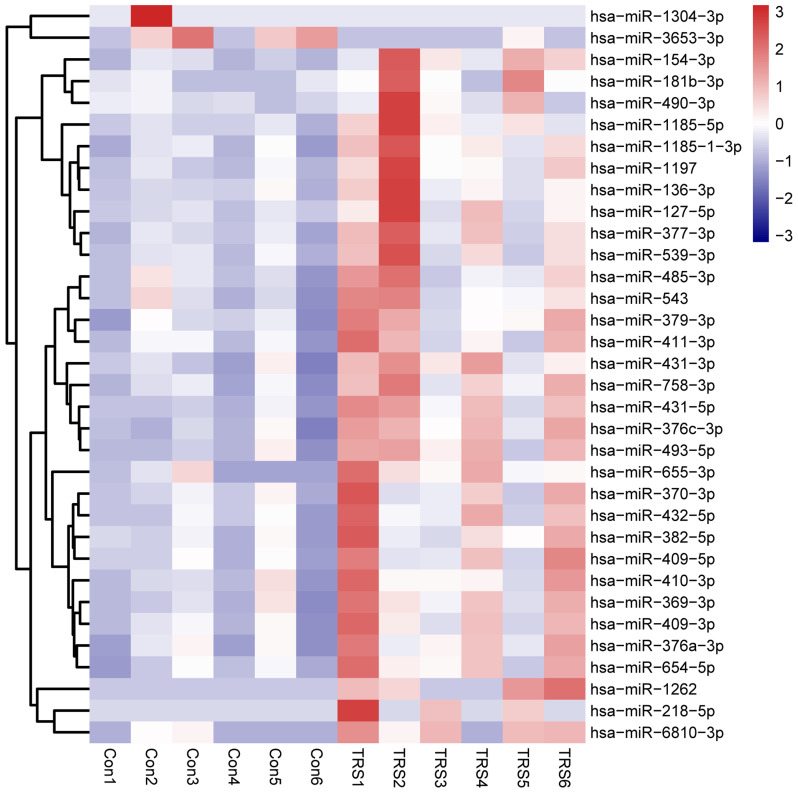
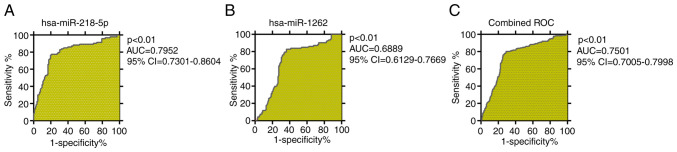
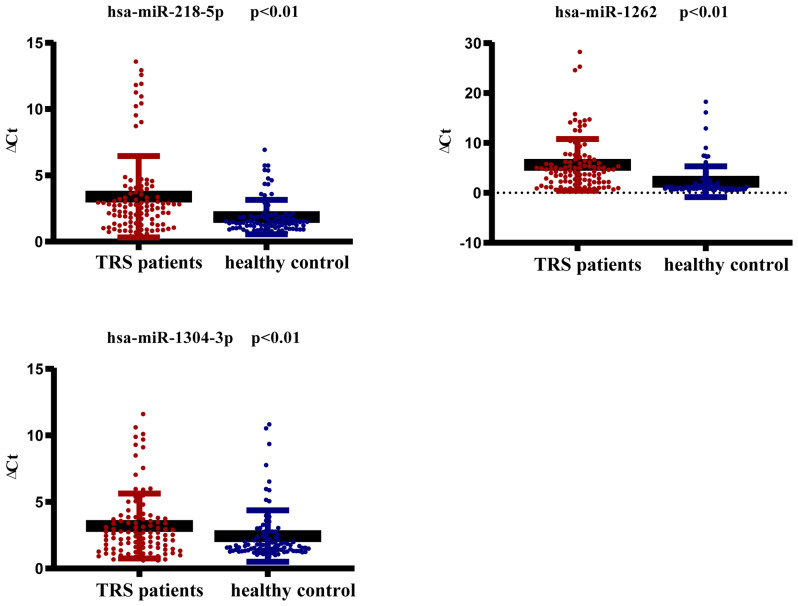
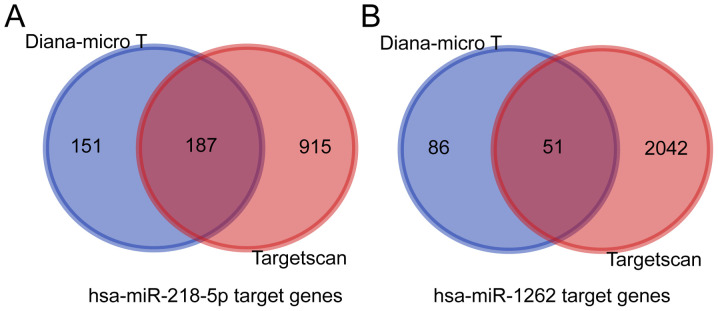
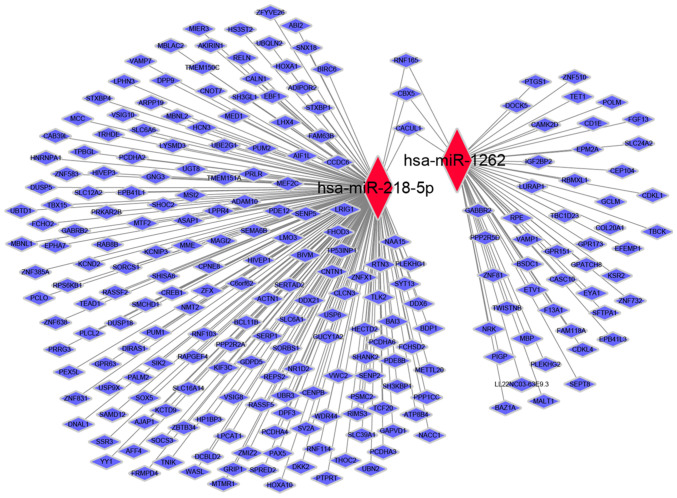
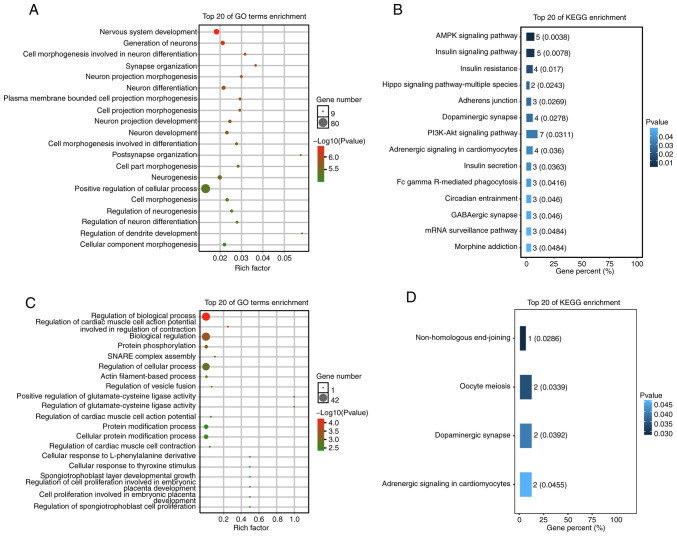
Treatment‑resistant schizophrenia (TRS) is a common phenotype of schizophrenia that places a considerable burden on patients as well as on society. TRS is known for its tendency to relapse and uncontrollable nature, with a poor response to antipsychotics other than clozapine. Therefore, it is urgent to identify objective biological markers, so as to guide its treatment and associated clinical work. In the present study, the peripheral blood mononuclear cells (PBMCs) of patients with TRS and a healthy control group, which were gender‑, age‑ and ethnicity‑matched, were subjected to microRNA (miRNA/miR) sequencing to screen out the top three miRNAs with the highest fold change values. These were then validated in the TRS (n=34) and healthy control (n=31) groups by reverse transcription‑quantitative PCR. For two of the top three miRNAs, the PCR results were in accordance with the sequencing result (P<0.01), while the third miRNA exhibited the opposite trend (P<0.01). To elucidate the functions of these two miRNAs, Homo sapiens (hsa)‑miR‑218‑5p and hsa‑miR‑1262 and their regulatory network, target gene prediction was first performed using online TargetScan and Diana‑micro T software. Bioinformatics analysis was then performed using functional enrichment analysis to determine the Gene Ontology terms in the category biological process and the Kyoto Encyclopedia of Genes and Genomes pathways. It was revealed that these target genes were markedly associated with the nervous system and brain function, and it was obvious that the differentially expressed miRNAs most likely participated in the pathogenesis of TRS. A receiver operating characteristic curve was generated to confirm the distinct diagnostic value of these two miRNAs. It was concluded that aberrantly expressed miRNAs in PMBCs may be implicated in the pathogenesis of TRS and may serve as specific peripheral blood‑based biomarkers for the early diagnosis of TRS.
治疗抵抗性精神分裂症(TRS)是精神分裂症的一种常见表型,它给患者和社会带来了相当大的负担。TRS 以其复发倾向和不可控性为特征,对氯氮平以外的抗精神病药物反应不佳。因此,迫切需要识别客观的生物标志物,以指导其治疗和相关的临床工作。在本研究中,对 TRS 患者和性别、年龄和种族匹配的健康对照组的外周血单核细胞(PBMC)进行 microRNA(miRNA/miR)测序,以筛选出折叠变化值最高的前三种 miRNA。然后通过逆转录-定量 PCR 在 TRS(n=34)和健康对照组(n=31)中验证这三种 miRNA。对于前三种 miRNA 中的两种,PCR 结果与测序结果一致(P<0.01),而第三种 miRNA 则呈现相反的趋势(P<0.01)。为了阐明这两种 miRNA 的功能,首先使用在线 TargetScan 和 Diana-micro-T 软件对 Homo sapiens(hsa)-miR-218-5p 和 hsa-miR-1262 及其调控网络进行靶基因预测。然后通过功能富集分析进行生物信息学分析,确定生物学过程类别中的基因本体术语和京都基因与基因组百科全书通路。结果表明,这些靶基因与神经系统和大脑功能显著相关,差异表达的 miRNA 很可能参与了 TRS 的发病机制。生成Receiver Operating Characteristic 曲线以确认这两种 miRNA 的独特诊断价值。结论是,PMBC 中异常表达的 miRNA 可能与 TRS 的发病机制有关,可能作为 TRS 早期诊断的特异性外周血生物标志物。