de Lima Jefferson Muniz, Bonan Paulo Rogerio, da Cruz Perez Danyel Elias, Hier Michael, Alaoui-Jamali Moulay A, da Silva Sabrina Daniela
Department of Otolaryngology Head and Neck Surgery, Sir Mortimer B. Davis-Jewish General Hospital, McGill University, Montreal, QC H3T 1E2, Canada.
Segal Cancer Centre and Lady Davis Institute for Medical Research, Sir Mortimer B. Davis-Jewish General Hospital, Departments of Medicine, Oncology, and Pharmacology and Therapeutics, Faculty of Medicine, McGill University, Montreal, QC H3T 1E2, Canada.
Nanomaterials (Basel). 2020 Sep 29;10(10):1938. doi: 10.3390/nano10101938.
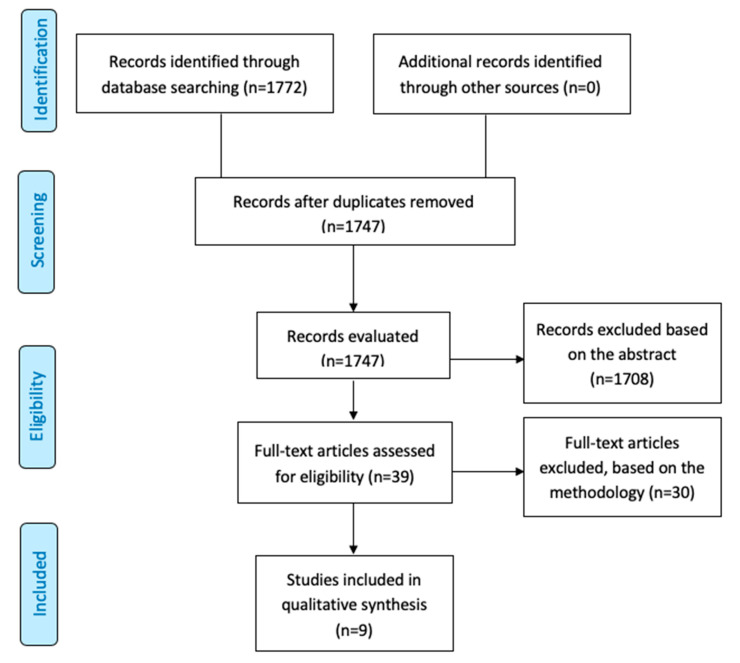
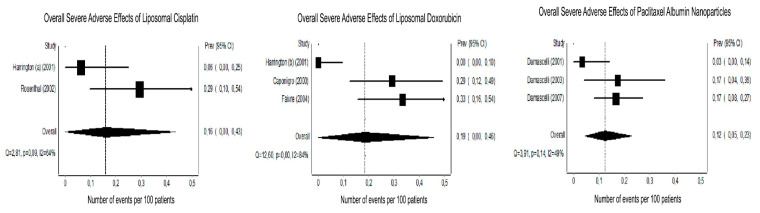
Head and neck cancer (HNC) is a complex and heterogeneous disease associated with high mortality and morbidity worldwide. Standard therapeutic management of advanced HNC, which is based on radiotherapy often combined with chemotherapy, has been hampered by severe long-term side effects. To overcome these side effects, tumor-selective nanoparticles have been exploited as a potential drug delivery system to improve HNC therapy. A combination of MEDLINE, EMBASE, Cochrane Oral Health Group's Trials Register, Cochrane Central Register of Controlled Trials (CENTRAL) and ClinicalTrials.gov from inception up to June 2020 was used for this systematic review. A total of 1747 published manuscripts were reviewed and nine relevant references were retrieved for analysis, while eight of them were eligible for meta-analysis. Based on these studies, the level of evidence about the efficacy of nanoformulation for HNC therapy on tumor response and adverse side effects (SAE) was low. Even though basic research studies have revealed a greater promise of nanomaterial to improve the outcome of cancer therapy, none of them were translated into clinical benefits for HNC patients. This systematic review summarized and discussed the recent progress in the development of targeted nanoparticle approaches for HNC management, and open-up new avenues for future perspectives.
头颈癌(HNC)是一种复杂的异质性疾病,在全球范围内与高死亡率和高发病率相关。晚期HNC的标准治疗管理通常基于放疗,常联合化疗,但因严重的长期副作用而受到阻碍。为克服这些副作用,肿瘤选择性纳米颗粒已被开发为一种潜在的药物递送系统,以改善HNC治疗。本系统评价使用了从创刊至2020年6月的MEDLINE、EMBASE、Cochrane口腔健康组试验注册库、Cochrane对照试验中央注册库(CENTRAL)和ClinicalTrials.gov。共审查了1747篇已发表的手稿,检索到9篇相关参考文献进行分析,其中8篇符合荟萃分析的条件。基于这些研究,纳米制剂对HNC治疗在肿瘤反应和不良副作用(SAE)方面疗效的证据水平较低。尽管基础研究表明纳米材料在改善癌症治疗结果方面有更大的前景,但它们都没有转化为HNC患者的临床益处。本系统评价总结并讨论了用于HNC管理的靶向纳米颗粒方法开发的最新进展,并为未来展望开辟了新途径。