Integrated Cell Biology Program, Loyola University Chicago, Maywood, IL 60513, USA.
Department of Cancer Biology, Loyola University Chicago, Maywood, IL 60513, USA.
Cells. 2020 Sep 29;9(10):2204. doi: 10.3390/cells9102204.
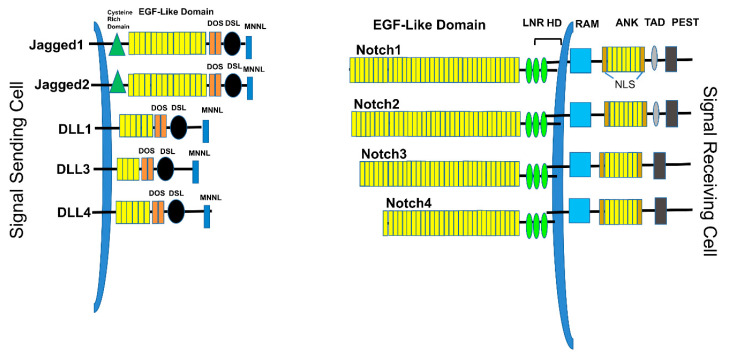
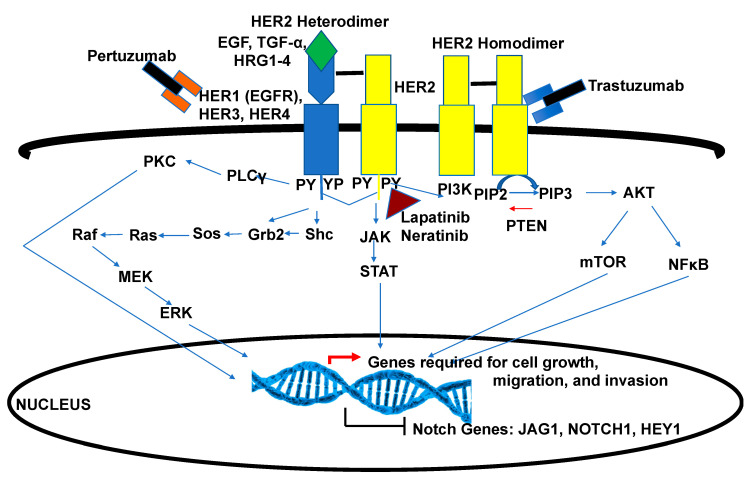
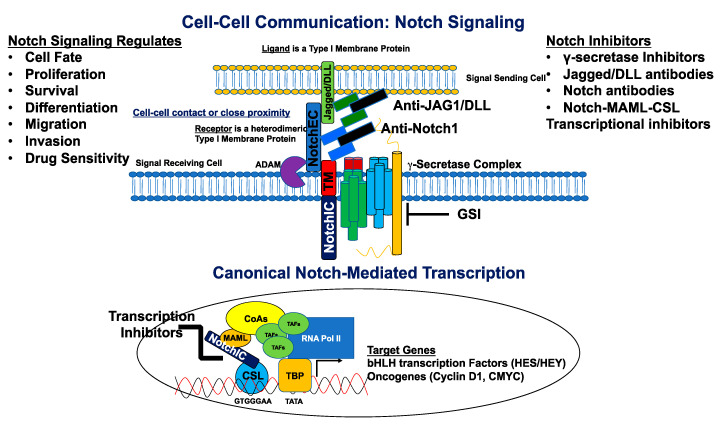
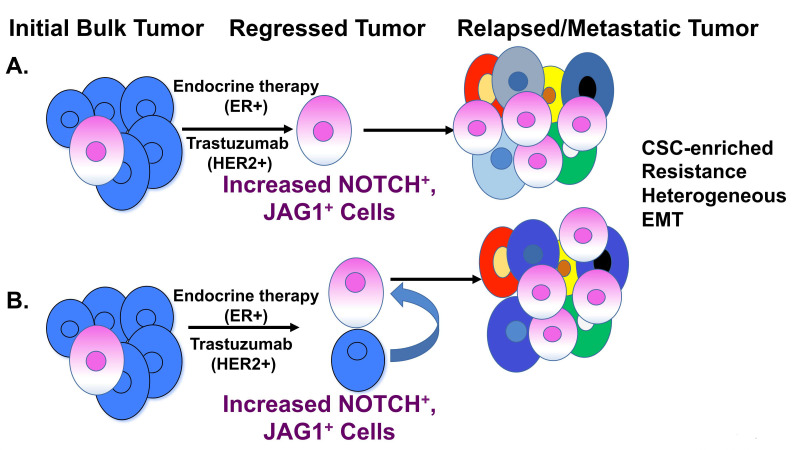
Breast cancer is a heterogeneous disease that can be subdivided into unique molecular subtypes based on protein expression of the Estrogen Receptor, Progesterone Receptor, and/or the Human Epidermal Growth Factor Receptor 2. Therapeutic approaches are designed to inhibit these overexpressed receptors either by endocrine therapy, targeted therapies, or combinations with cytotoxic chemotherapy. However, a significant percentage of breast cancers are inherently resistant or acquire resistance to therapies, and mechanisms that promote resistance remain poorly understood. Notch signaling is an evolutionarily conserved signaling pathway that regulates cell fate, including survival and self-renewal of stem cells, proliferation, or differentiation. Deregulation of Notch signaling promotes resistance to targeted or cytotoxic therapies by enriching of a small population of resistant cells, referred to as breast cancer stem cells, within the bulk tumor; enhancing stem-like features during the process of de-differentiation of tumor cells; or promoting epithelial to mesenchymal transition. Preclinical studies have shown that targeting the Notch pathway can prevent or reverse resistance through reduction or elimination of breast cancer stem cells. However, Notch inhibitors have yet to be clinically approved for the treatment of breast cancer, mainly due to dose-limiting gastrointestinal toxicity. In this review, we discuss potential mechanisms of Notch-mediated resistance in breast cancer cells and breast cancer stem cells, and various methods of targeting Notch through γ-secretase inhibitors, Notch signaling biologics, or transcriptional inhibitors. We also discuss future plans for identification of novel Notch-targeted therapies, in order to reduce toxicity and improve outcomes for women with resistant breast cancer.
乳腺癌是一种异质性疾病,可以根据雌激素受体、孕激素受体和/或人表皮生长因子受体 2 的蛋白表达,分为独特的分子亚型。治疗方法旨在通过内分泌治疗、靶向治疗或与细胞毒性化疗联合抑制这些过表达的受体。然而,相当一部分乳腺癌对治疗具有内在耐药性或获得耐药性,促进耐药性的机制仍知之甚少。Notch 信号通路是一种进化上保守的信号通路,可调节细胞命运,包括干细胞的存活和自我更新、增殖或分化。Notch 信号通路的失调通过在肿瘤的大部分中富集一小部分耐药细胞(称为乳腺癌干细胞),促进对靶向或细胞毒性治疗的耐药性;在肿瘤细胞去分化过程中增强干细胞样特征;或促进上皮细胞向间充质转化。临床前研究表明,通过减少或消除乳腺癌干细胞,靶向 Notch 通路可以预防或逆转耐药性。然而,由于胃肠道毒性的剂量限制,Notch 抑制剂尚未被临床批准用于治疗乳腺癌。在这篇综述中,我们讨论了 Notch 介导的乳腺癌细胞和乳腺癌干细胞耐药的潜在机制,以及通过 γ-分泌酶抑制剂、Notch 信号生物制剂或转录抑制剂靶向 Notch 的各种方法。我们还讨论了确定新型 Notch 靶向治疗方法的未来计划,以降低毒性并改善耐药性乳腺癌女性的治疗效果。