Department of Ophthalmology and Visual Sciences, Kyoto University Graduate School of Medicine, 54 Kawahara-cho Shogoin, Sakyo-ku, Kyoto, 606-8507, Japan.
Sci Rep. 2020 Oct 1;10(1):16248. doi: 10.1038/s41598-020-73303-w.
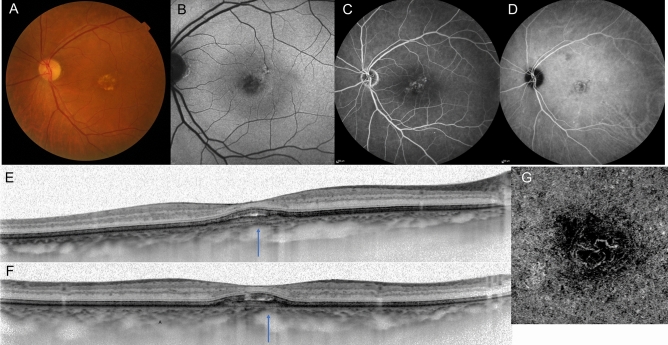
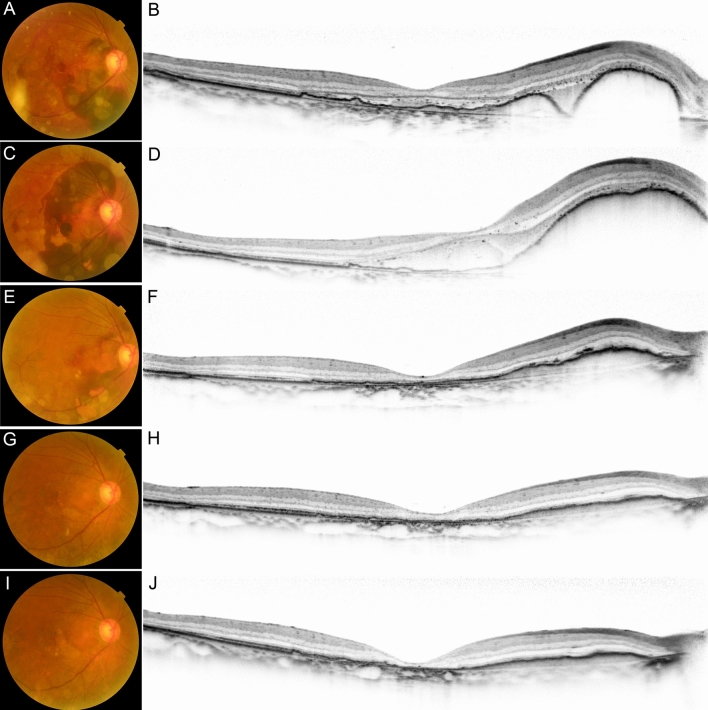
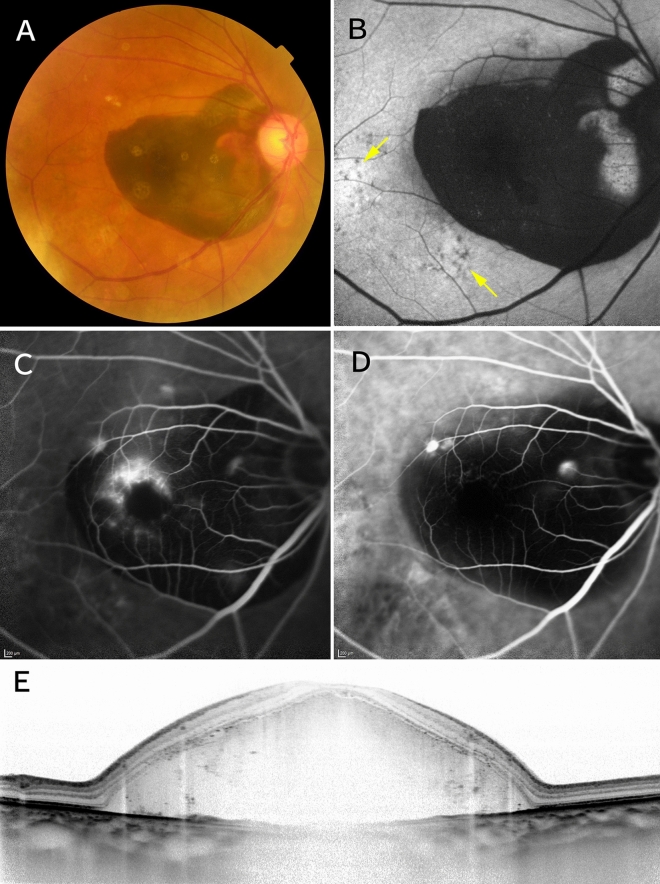
Recently, several research groups have reported a newly recognized clinical entity of choroidal neovascularization, termed pachychoroid neovasculopathy. However, its characteristics have yet to be well described. The purpose of this study was to investigate the clinical and genetic characteristics of pachychoroid neovasculopathy regardless of treatment modality. This study included 99 eyes of 99 patients with treatment-naïve pachychoroid neovasculopathy. Mean initial best-corrected visual acuity (BCVA) was 0.20 ± 0.32 logMAR, and did not change (P = 0.725) during follow-up period (mean ± SD, 37.0 ± 17.6 months). Subretinal hemorrhage (SRH) (≥ 4 disc areas in size) occurred in 20 eyes (20.2%) during follow-up. Age, initial BCVA, central retinal thickness, SRH (≥ 4 disc areas in size) and treatment (aflibercept monotherapy) were significantly associated with the final BCVA (P = 0.024, < 0.001, 0.031, < 0.001, and 0.029, respectively). Multiple regression analysis showed initial BCVA and presence of SRH to be significant predictors of final BCVA (both P < 0.001). Polypoidal lesions were more common in the SRH group than in the non-SRH group (85.0% vs 48.1%, P = 0.004). There was no significant difference in the frequency of the risk allele in ARMS2 A69S, CFH I62V, CFH Y402H between these groups (P = 0.42, 0.77, and 0.85, respectively). SRH (29.1% vs 9.1%, P = 0.014) and choroidal vascular hyperpermiability (65.5% vs 43.2%, P = 0.027) were seen more frequently in the polypoidal lesion (+) group than in the polypoidal lesion (-) group. There was considerable variation in lesion size and visual function in patients with pachychoroid neovasculopathy, and initial BCVA and presence of SRH at the initial visit or during the follow-up period were significant predictors of final BCVA.
最近,有几个研究小组报告了一种新的脉络膜新生血管化临床实体,称为厚脉络膜新生血管病变。然而,其特征尚未得到很好的描述。本研究旨在研究无论治疗方式如何,厚脉络膜新生血管病变的临床和遗传特征。本研究纳入了 99 名未经治疗的厚脉络膜新生血管病变患者的 99 只眼。初始最佳矫正视力(BCVA)平均为 0.20 ± 0.32 logMAR,随访期间无变化(P = 0.725)(平均 ± 标准差,37.0 ± 17.6 个月)。在随访期间,20 只眼(20.2%)发生了脉络膜下出血(SRH)(≥ 4 个盘面积)。年龄、初始 BCVA、中心视网膜厚度、SRH(≥ 4 个盘面积)和治疗(阿柏西普单药治疗)与最终 BCVA 显著相关(P = 0.024,< 0.001,0.031,< 0.001,和 0.029,分别)。多元回归分析显示,初始 BCVA 和 SRH 的存在是最终 BCVA 的显著预测因素(均 P < 0.001)。SRH 组中息肉样病变较非 SRH 组更常见(85.0% vs 48.1%,P = 0.004)。两组间 ARMS2 A69S、CFH I62V、CFH Y402H 的风险等位基因频率无显著差异(P = 0.42、0.77 和 0.85,分别)。SRH(29.1% vs 9.1%,P = 0.014)和脉络膜血管高通透性(65.5% vs 43.2%,P = 0.027)在息肉样病变(+)组中比在息肉样病变(-)组更常见。厚脉络膜新生血管病变患者的病变大小和视力功能存在较大差异,初始 BCVA 和随访期间 SRH 的存在是最终 BCVA 的显著预测因素。