Wahyuddin Wahyuddin, Vongsirinavarat Mantana, Mekhora Keerin, Bovonsunthonchai Sunee, Adisaipoapun Rachaneewan
Faculty of Physical Therapy, Mahidol University, Nakhon Pathom, Thailand.
Hong Kong Physiother J. 2020 Dec;40(2):109-119. doi: 10.1142/S1013702520500109. Epub 2020 Mar 20.
Facet joint is a potential structure to be the source of chronic low back pain (LBP) affecting lumbar motion, pain, and disability. Other than the recommended treatment of lumbar stabilization exercise (LSE), several manual procedures including muscle energy technique (MET) are commonly used in physical therapy clinic. However, little evidences of the effects of MET have been reported.
This study aimed to compare the immediate effects of MET and LSE in patients with chronic LBP with suspected facet joint origin.
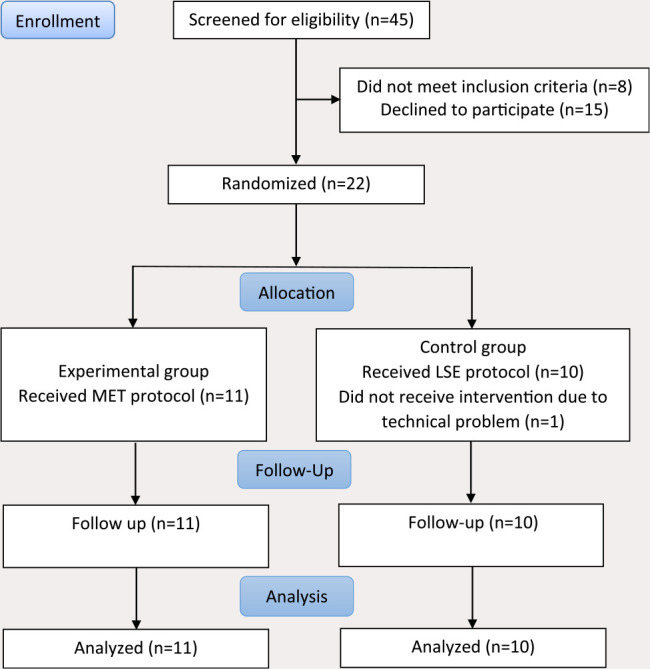
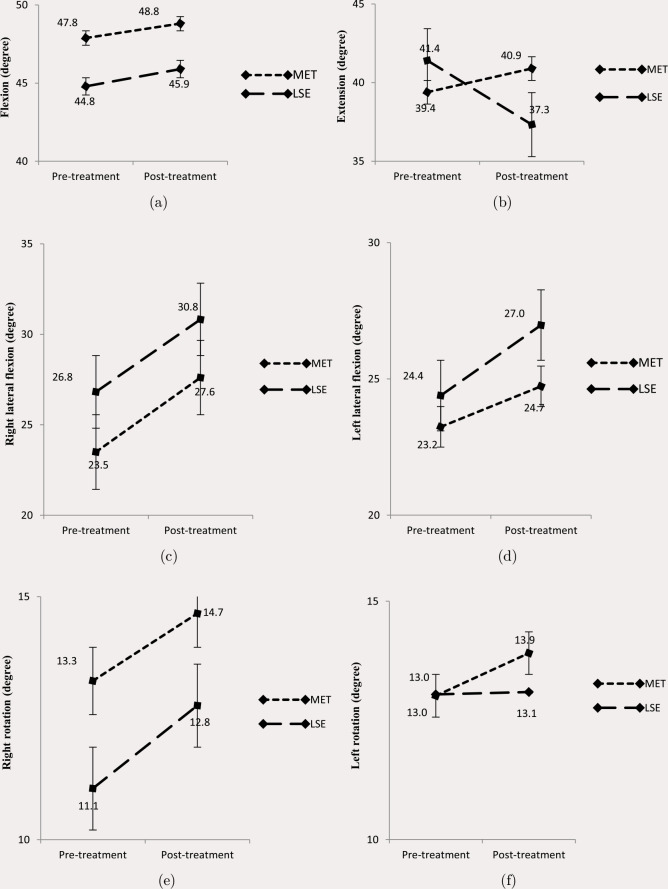
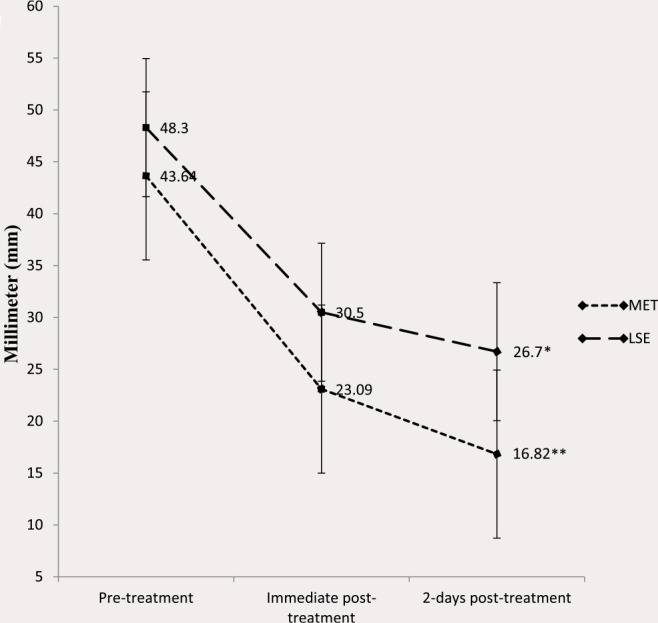
Twenty-one patients with low back pain were recruited and randomly assigned to receive treatment either MET or LSE. The outcomes were kinematic changes, pain intensity, and disability level. Lumbar active range of motion (ROM) of flexion, extension, left and right lateral flexion, and left and right rotation were evaluated using the three-dimension motion analysis system at baseline and immediately after treatment. Pain intensity was evaluated using visual analogue scale (VAS) at baseline, immediately after, and two days after treatment. Thai version of the modified Oswestry disability questionnaire (ODQ) was utilized at baseline and two days after treatment. The mixed model analysis of variance was used to analyze all outcomes.
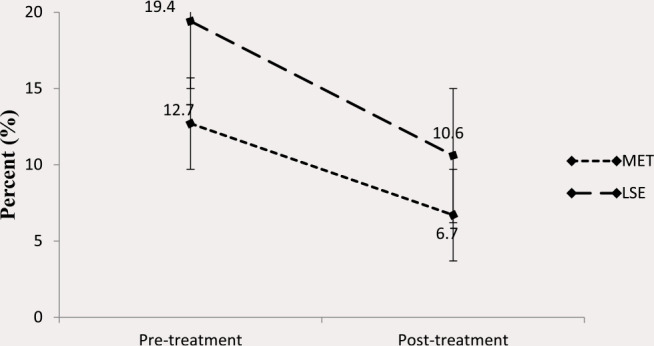
The results showed that all outcomes were not different between groups after treatments. Although there were statistically significant improvements after the treatments when collapsing the groups, the minimal clinically important change was found only for pain but not for lumbar movements and disabilities scores.
The effect of MET and LSE alone in single session might not be intensive enough to improve movements and decrease disability in patients with chronic LBP with suspected facet joint origin.
小关节是慢性下腰痛(LBP)的潜在疼痛源,可影响腰椎活动、疼痛和功能障碍。除了推荐的腰椎稳定训练(LSE)治疗外,包括肌肉能量技术(MET)在内的几种手法治疗在物理治疗诊所中也常用。然而,关于MET疗效的证据报道较少。
本研究旨在比较MET和LSE对疑似小关节源性慢性LBP患者的即时疗效。
招募21例下腰痛患者,随机分为接受MET或LSE治疗组。观察指标为运动学变化、疼痛强度和功能障碍水平。在基线和治疗后即刻,使用三维运动分析系统评估腰椎前屈、后伸、左右侧屈和左右旋转的主动活动范围(ROM)。在基线、治疗后即刻和治疗后两天,使用视觉模拟量表(VAS)评估疼痛强度。在基线和治疗后两天,使用泰国版改良Oswestry功能障碍问卷(ODQ)。采用混合模型方差分析对所有观察指标进行分析。
结果显示,治疗后两组间所有观察指标均无差异。尽管合并组治疗后有统计学显著改善,但仅疼痛有最小临床重要变化,腰椎运动和功能障碍评分未出现。
对于疑似小关节源性慢性LBP患者,单次MET和LSE治疗的效果可能不足以改善运动功能和降低功能障碍。