Muñoz-Gallego Irene, Viedma Esther, Esteban Jaime, Mancheño-Losa Mikel, García-Cañete Joaquín, Blanco-García Antonio, Rico Alicia, García-Perea Adelaida, Ruiz Garbajosa Patricia, Escudero-Sánchez Rosa, Sánchez Somolinos Mar, Marín Arriaza Mercedes, Romanyk Juan, Barbero José María, Arribi Vilela Ana, González Romo Fernando, Pérez-Jorge Conchita, M Arana David, Monereo Alfonso, Domingo Diego, Cordero José, Sánchez Romero Mª Isabel, García Viejo Miguel Ángel, Lora-Tamayo Jaime, Chaves Fernando
Servicio de Microbiología, Hospital Universitario 12 de Octubre, Universidad Complutense, Madrid, Spain.
Instituto de Investigación Sanitaria Hospital 12 de Octubre (imas12), Madrid, Spain.
Open Forum Infect Dis. 2020 Aug 13;7(9):ofaa344. doi: 10.1093/ofid/ofaa344. eCollection 2020 Sep.
is the leading cause of prosthetic joint infection (PJI). Beyond the antibiogram, little attention has been paid to the influence of deep microbiological characteristics on patient prognosis. Our aim was to investigate whether microbiological genotypic and phenotypic features have a significant influence on infection pathogenesis and patient outcome.
A prospective multicenter study was performed, including all PJIs (2016-2017). Clinical data and phenotypic ( functionality, β-hemolysis, biofilm formation) and genotypic characteristics of the strains were collected. Biofilm susceptibility to antimicrobials was investigated (minimal biofilm eradication concentration [MBEC] assay).
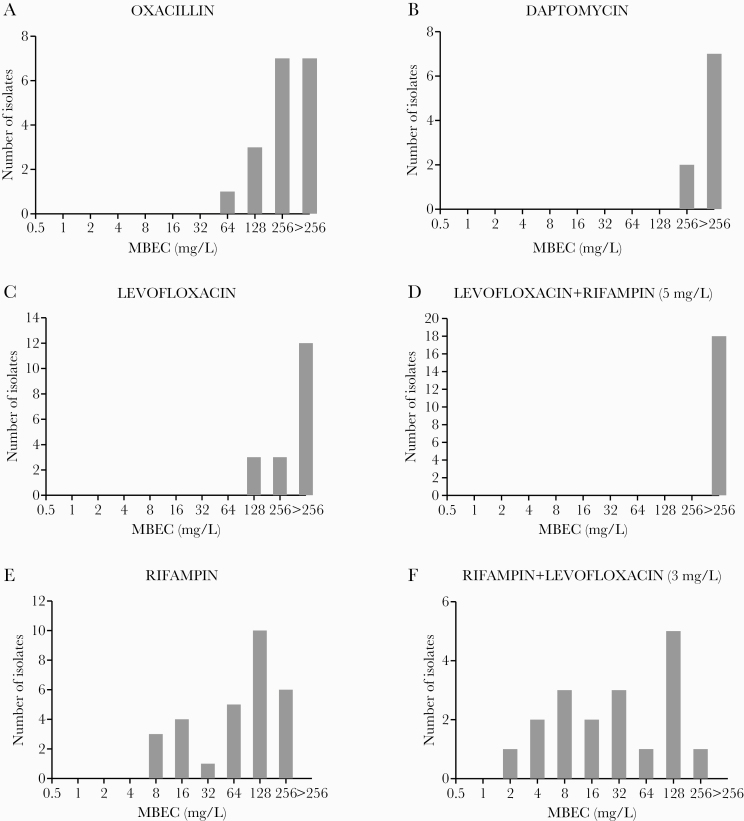
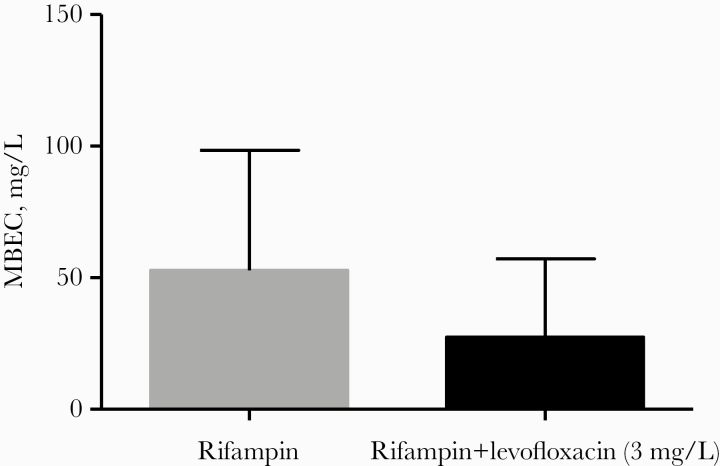
Eighty-eight patients (39.8% men, age 74.7 ± 14.1 years) were included. Forty-five had early postoperative infections (EPIs), 21 had chronic infections (CPIs), and 19 had hematogenous infections (HIs). Twenty (22.7%) were caused by methicillin-resistant . High genotypic diversity was observed, including 16 clonal complexes (CCs), with CC5 being the most frequent (30.7%). activity was greater in EPI than CPI (55.6% vs 28.6%; = .041). Strains causing EPI were phenotypically and genotypically similar, regardless of symptom duration. Treatment failure (36.5%) occurred less frequently among cases treated with implant removal. In cases treated with debridement and implant retention, there were fewer failures among those who received combination therapy with rifampin. No genotypic or phenotypic characteristics predicted failure, except vancomycin minimal inhibitory concentration ≥1.5 mg/L (23.1% failure vs 3.4%; = .044). MBEC was >128 mg/L for all antibiotics tested and showed no association with prognosis.
with different genotypic backgrounds is capable of causing PJI, showing slight differences in clinical presentation and pathogenesis. No major microbiological characteristics were observed to influence the outcome, including MBEC.
是人工关节感染(PJI)的主要原因。除了抗菌谱外,深部微生物学特征对患者预后的影响很少受到关注。我们的目的是研究微生物的基因型和表型特征是否对感染发病机制和患者结局有显著影响。
进行了一项前瞻性多中心研究,纳入了所有PJI病例(2016 - 2017年)。收集了临床数据以及菌株的表型(功能、β-溶血、生物膜形成)和基因型特征。研究了生物膜对抗菌药物的敏感性(最低生物膜清除浓度[MBEC]测定)。
纳入了88例患者(男性占39.8%,年龄74.7±14.1岁)。45例为术后早期感染(EPI),21例为慢性感染(CPI),19例为血源性感染(HI)。20例(22.7%)由耐甲氧西林引起。观察到高度的基因型多样性,包括16个克隆复合体(CCs),其中CC5最为常见(30.7%)。EPI中的活性高于CPI(55.6%对28.6%;P = 0.041)。无论症状持续时间如何,引起EPI的菌株在表型和基因型上相似。在接受植入物取出治疗的病例中,治疗失败(36.5%)的发生率较低。在接受清创和保留植入物治疗的病例中,接受利福平联合治疗的患者失败较少。除万古霉素最低抑菌浓度≥1.5 mg/L外,没有基因型或表型特征可预测失败(失败率23.1%对3.4%;P = 0.044)。所有测试抗生素的MBEC均>128 mg/L,且与预后无关。
具有不同基因型背景的能够引起PJI,在临床表现和发病机制上存在细微差异。未观察到包括MBEC在内的主要微生物学特征影响结局。