Division of Developmental Biology, Cincinnati Children's Hospital Medical Center, Cincinnati, United States.
Division of Plastic Surgery, Department of Surgery, Cincinnati Children's Hospital Medical Center, Cincinnati, United States.
Elife. 2020 Oct 2;9:e56450. doi: 10.7554/eLife.56450.
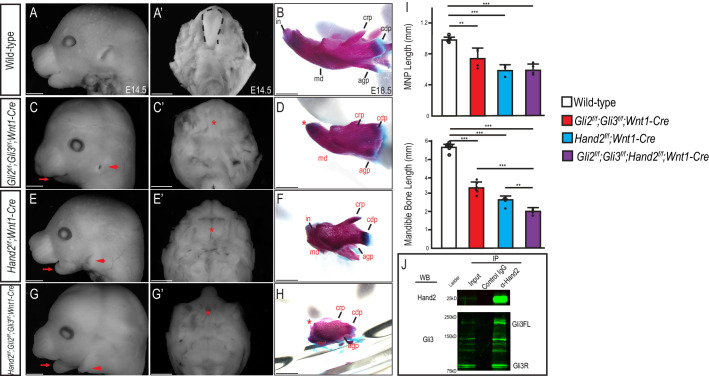
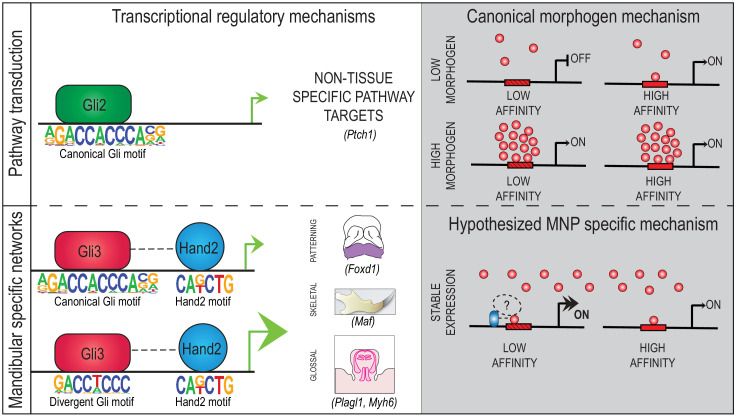
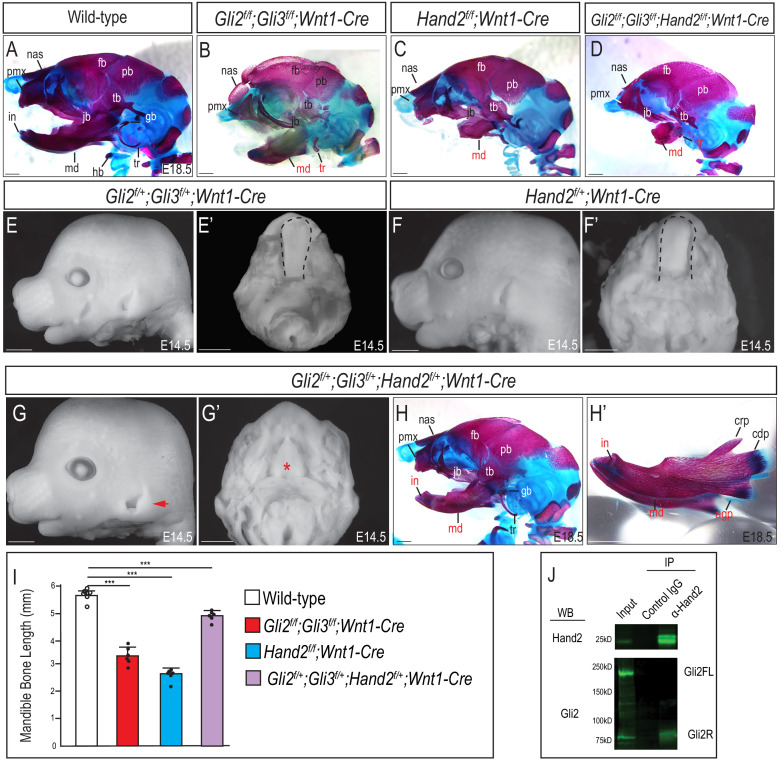
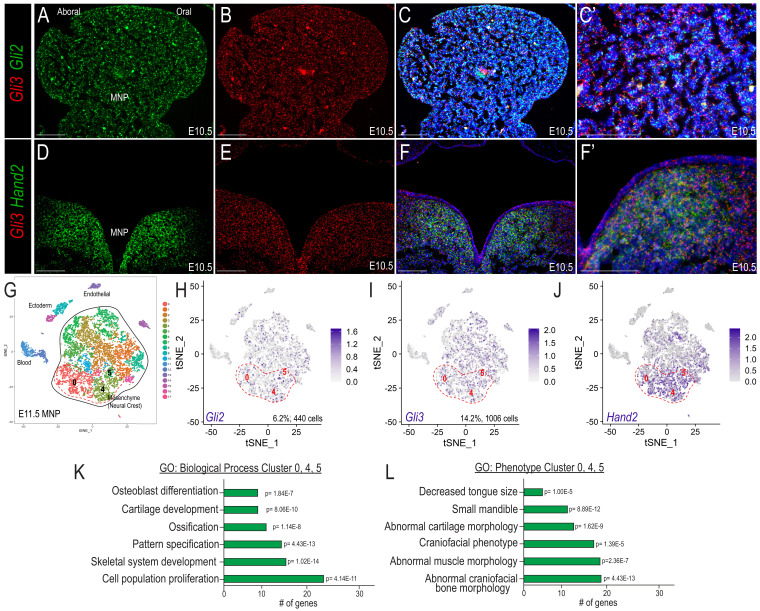
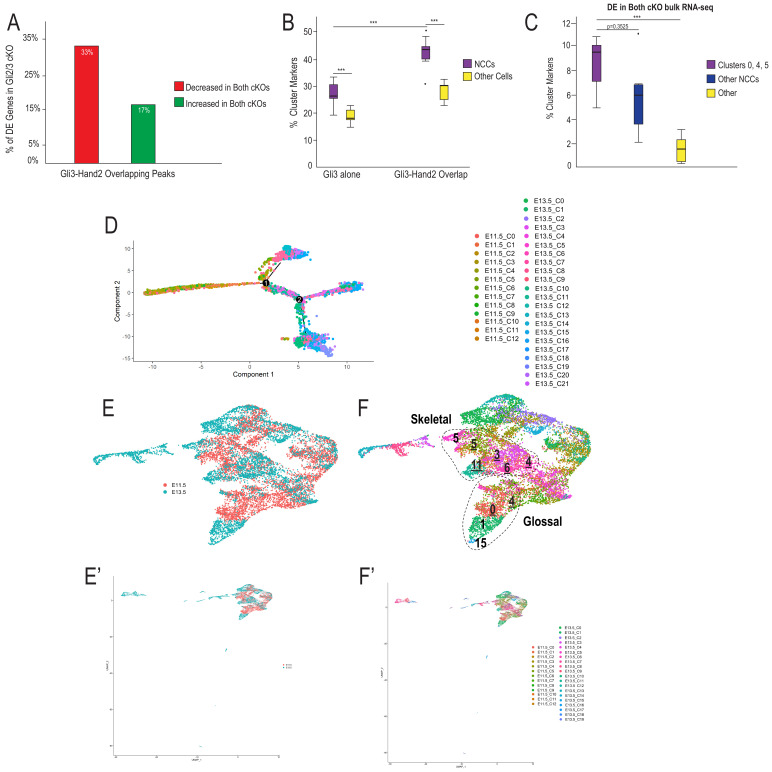
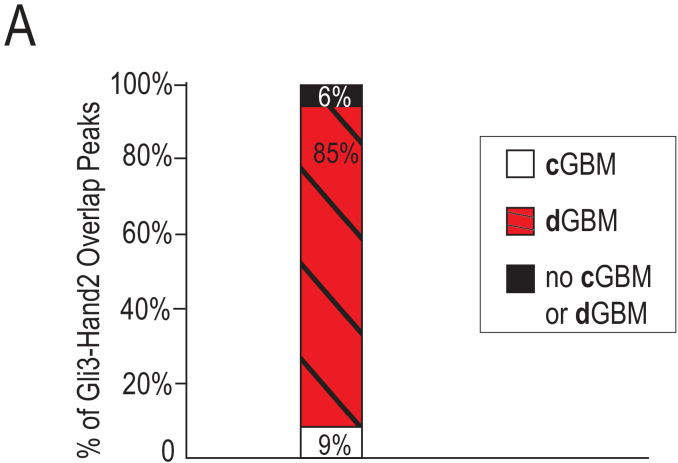
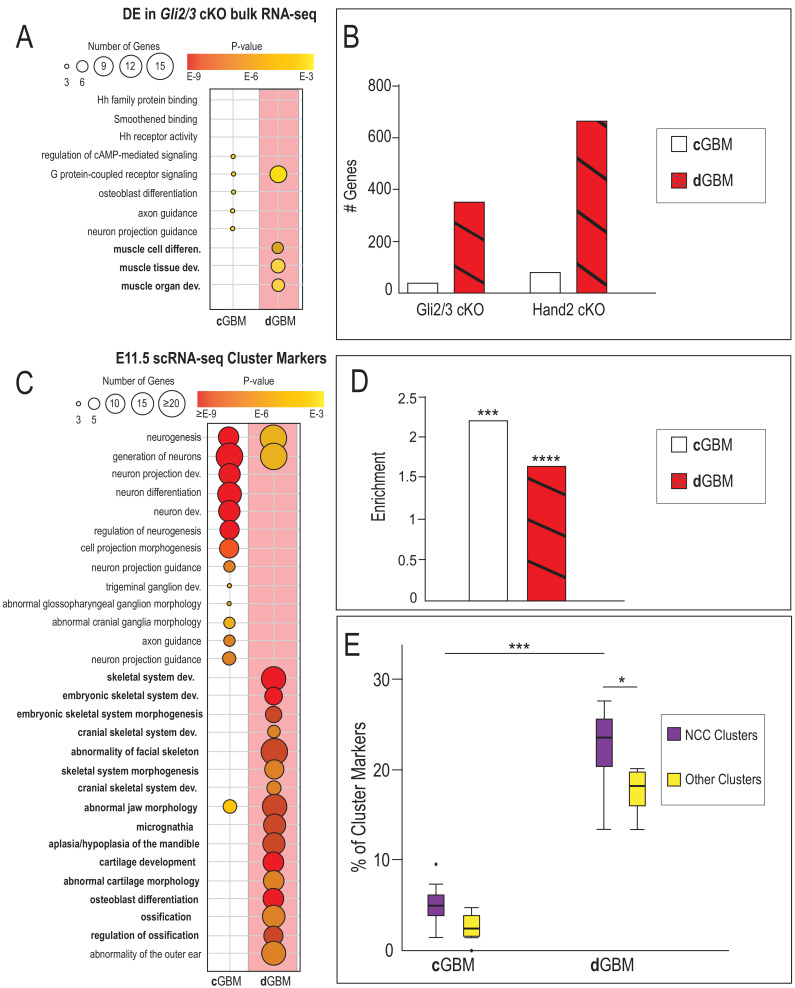
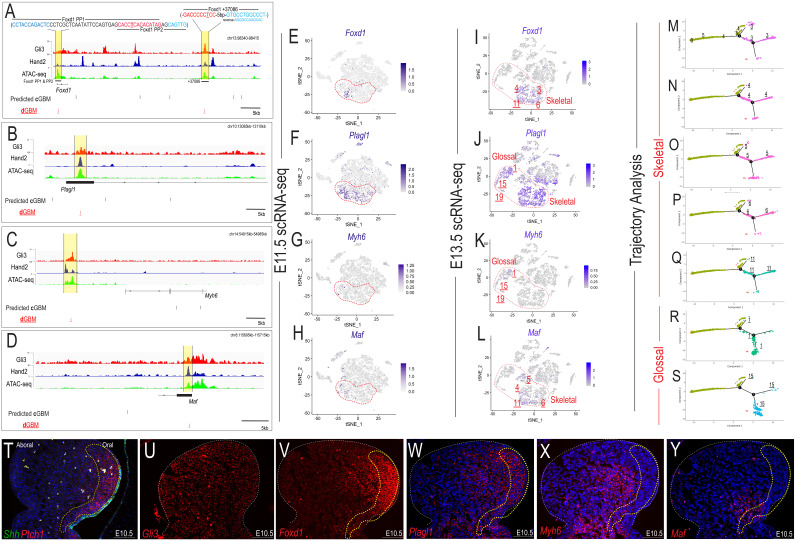
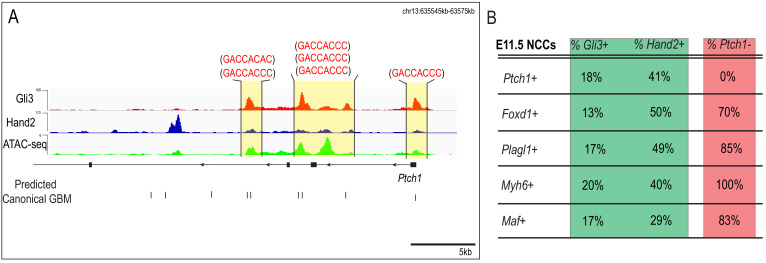
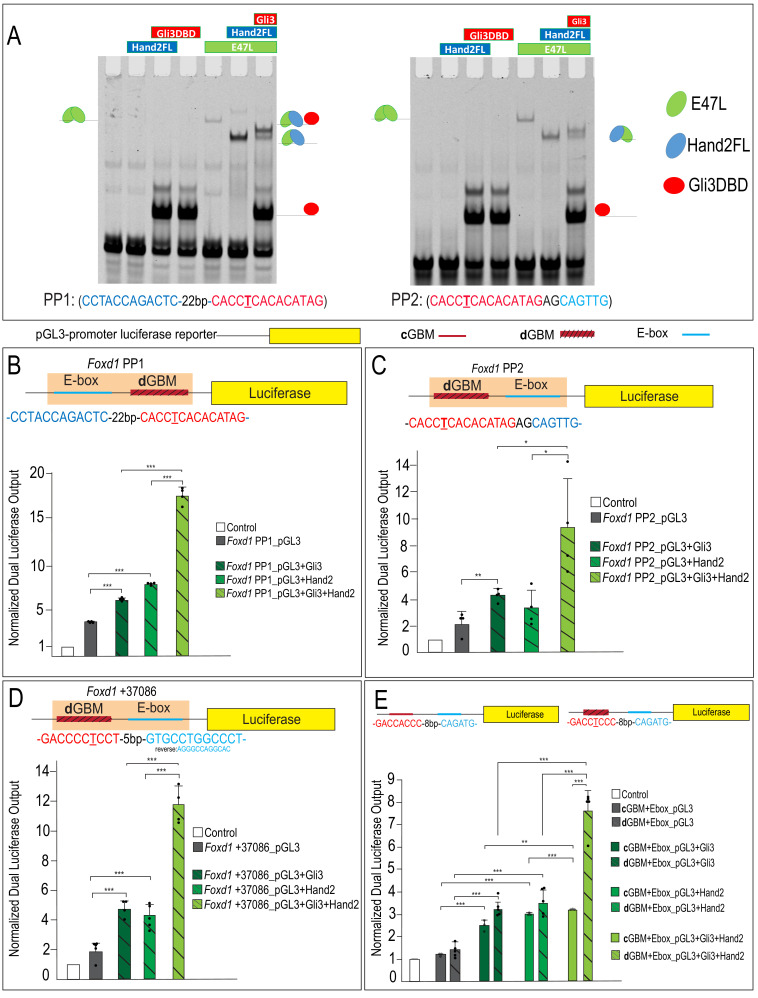
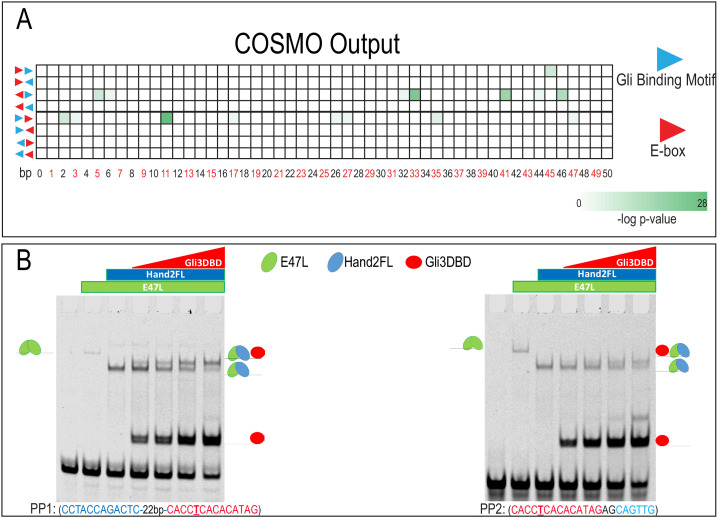
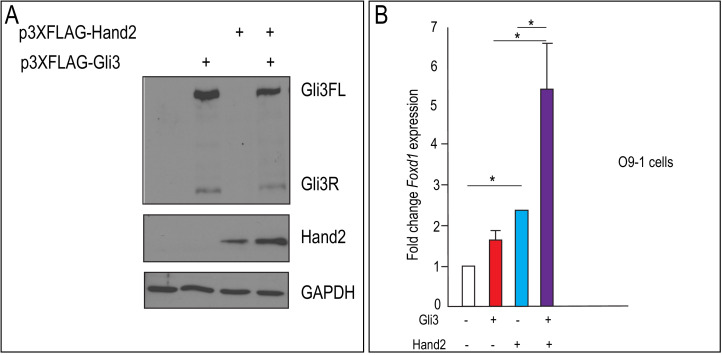
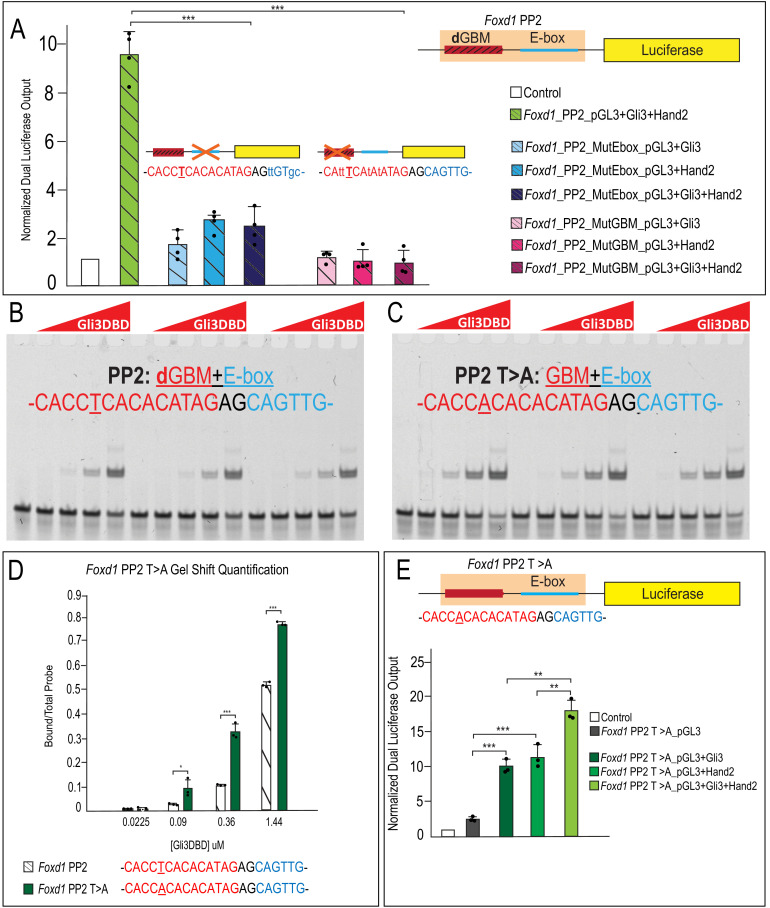
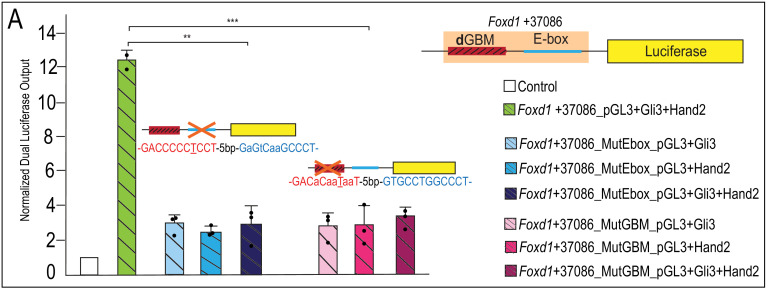
Despite a common understanding that Gli TFs are utilized to convey a Hh morphogen gradient, genetic analyses suggest craniofacial development does not completely fit this paradigm. Using the mouse model (), we demonstrated that rather than being driven by a Hh threshold, robust Gli3 transcriptional activity during skeletal and glossal development required interaction with the basic helix-loop-helix TF Hand2. Not only did genetic and expression data support a co-factorial relationship, but genomic analysis revealed that Gli3 and Hand2 were enriched at regulatory elements for genes essential for mandibular patterning and development. Interestingly, motif analysis at sites co-occupied by Gli3 and Hand2 uncovered mandibular-specific, low-affinity, 'divergent' Gli-binding motifs (GBMs). Functional validation revealed these GBMs conveyed synergistic activation of Gli targets essential for mandibular patterning and development. In summary, this work elucidates a novel, sequence-dependent mechanism for Gli transcriptional activity within the craniofacial complex that is independent of a graded Hh signal.
尽管人们普遍认为 Gli TFs 用于传递 Hh 形态发生梯度,但遗传分析表明颅面发育并不完全符合这一模式。使用小鼠模型(),我们证明,在骨骼和舌部发育过程中,Gli3 转录活性的增强不是由 Hh 阈值驱动的,而是需要与碱性螺旋-环-螺旋 TF Hand2 相互作用。不仅遗传和表达数据支持共同因子关系,而且基因组分析表明,Gli3 和 Hand2 富集在调控元件上,这些调控元件对于下颌骨模式形成和发育所必需的基因至关重要。有趣的是,在 Gli3 和 Hand2 共同占据的位点进行基序分析揭示了下颌骨特异性、低亲和力、“发散”Gli 结合基序(GBMs)。功能验证表明,这些 GBMs 协同激活了下颌骨模式形成和发育所必需的 Gli 靶基因。总之,这项工作阐明了颅面复合体中Gli 转录活性的一种新的、依赖于序列的机制,这种机制独立于分级的 Hh 信号。