Sport Performance Analysis Research Group (SPARG), University of Vic-Central University of Catalonia, Vic, Barcelona, Spain.
UVic-UCC Sport and Physical Activity Studies Centre (CEEAF), University of Vic-Central University of Catalonia, Vic, Barcelona, Spain.
PLoS One. 2020 Oct 2;15(10):e0240135. doi: 10.1371/journal.pone.0240135. eCollection 2020.
The main aim of the present review was to update the available evidence on the value interest of post-competition recovery strategies in male professional or semi-professional soccer players to determine its effect on post-game performance outcomes, physiological markers, and wellness indicators.
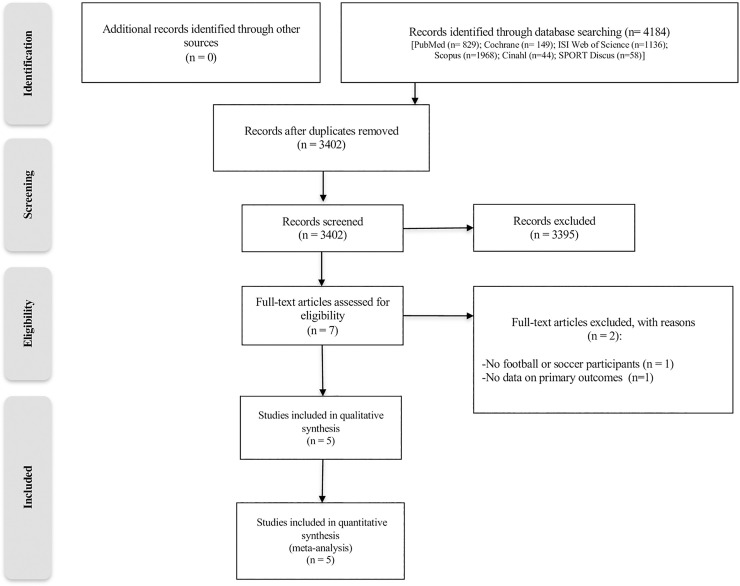
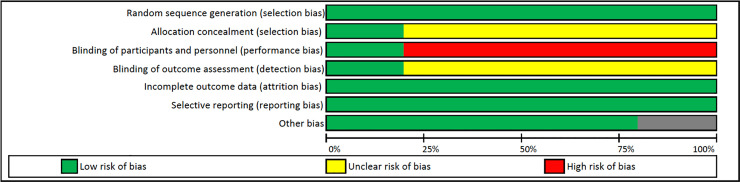
A structured search was carried out following the PRISMA guidelines using six online databases: Pubmed, Scopus, SPORTDiscus, Web of Science, CINAHL and Cochrane Central Register of Controlled Trials. The risk of bias was completed following the Cochrane Collaboration Guidelines. Meta-analyses of randomized controlled trials were conducted to determine the between and within-group effects of different recovery strategies on performance, physiological markers and wellness data. Final meta-analyses were performed using the random-effects model and pooled standardized mean differences (SMD).
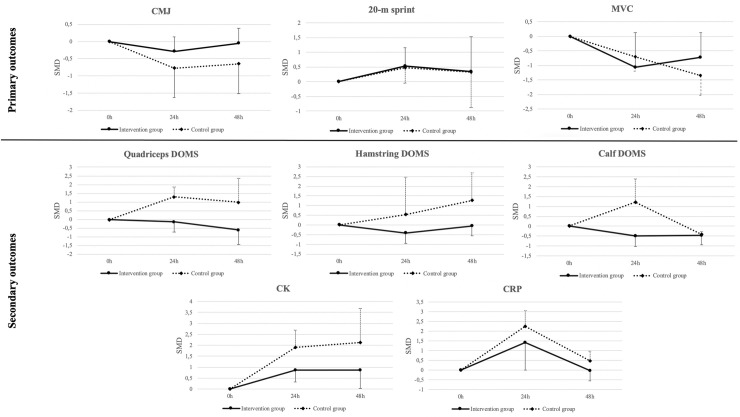
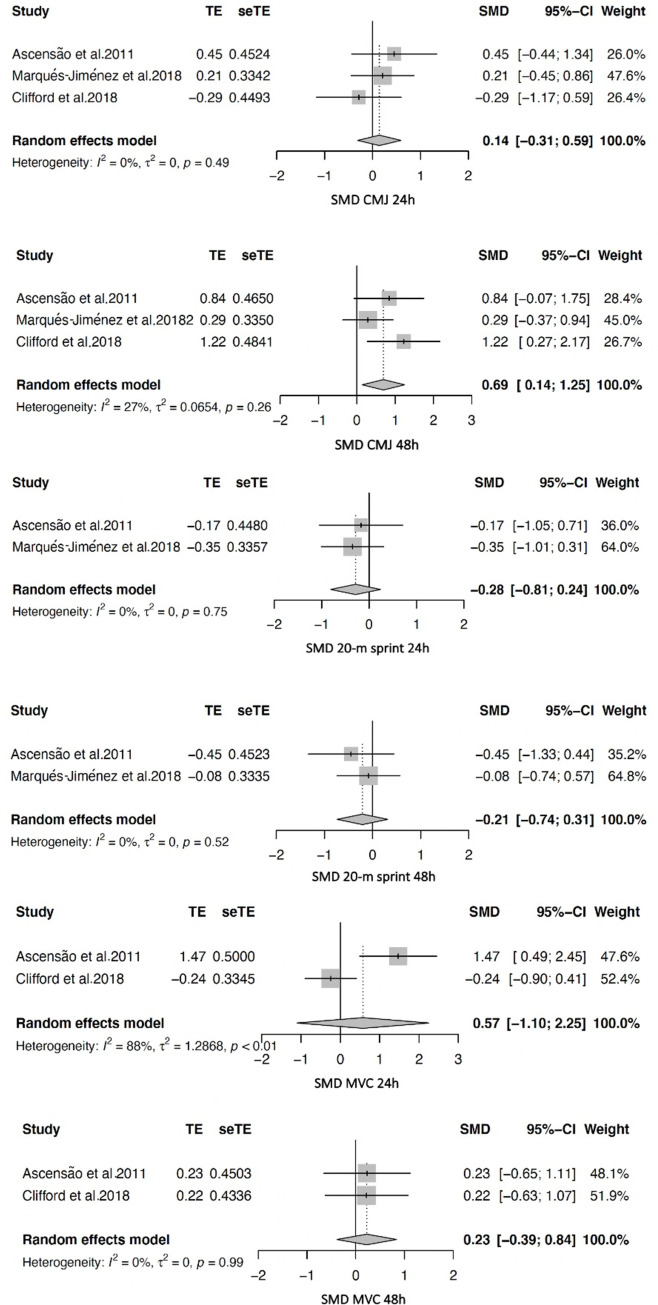
Five randomized controlled trials that used Compression Garments (n = 3), Cold Water Immersion (n = 1), and acute Sleep Hygiene Strategy (n = 1) were included. Greater CMJ values at 48h for the intervention group (SMD = 0.70; 95% CI 0.14 to 1.25; p = 0.001; I2 = 10.4%) were found. For the 20-m sprint and MVC, the results showed no difference either at 24h or 48h. For physiological markers (CK and CRP) and wellness data (DOMS), small to large SMD were present in favor of the intervention group both at 24h (-0.12 to -1.86) and 48h (-0.21 to -0.85). No heterogeneity was present, except for MVC at 24h (I2 = 90.4%; p = 0.0012) and CALF DOMS at 48h (I2 = 93.7%; p = 0.013).
The use of recovery strategies offers significant positive effects only in jumping performance (CMJ), with no effects on the 20-m sprint or MVC. Also, the use of recovery strategies offers greater positive effects on muscle damage (physiological markers and wellness data), highlighting the importance of post-match recovery strategies in soccer.
本综述的主要目的是更新有关男性职业或半职业足球运动员赛后恢复策略价值的现有证据,以确定其对赛后表现结果、生理标志物和健康指标的影响。
按照 PRISMA 指南进行结构化搜索,使用六个在线数据库:PubMed、Scopus、SPORTDiscus、Web of Science、CINAHL 和 Cochrane 对照试验中心注册库。使用 Cochrane 协作组指南完成偏倚风险评估。对随机对照试验进行荟萃分析,以确定不同恢复策略对表现、生理标志物和健康数据的组间和组内效果。使用随机效应模型和汇总标准化均数差(SMD)进行最终荟萃分析。
纳入了 5 项使用压缩衣(n = 3)、冷水浸泡(n = 1)和急性睡眠卫生策略(n = 1)的随机对照试验。干预组在 48 小时时的 CMJ 值更高(SMD = 0.70;95%CI 0.14 至 1.25;p = 0.001;I2 = 10.4%)。对于 20 米冲刺和 MVC,无论是在 24 小时还是 48 小时,结果均无差异。对于生理标志物(CK 和 CRP)和健康数据(DOMS),干预组在 24 小时(-0.12 至-1.86)和 48 小时(-0.21 至-0.85)时都有小到中等大小的 SMD 有利于干预组。除了 24 小时的 MVC(I2 = 90.4%;p = 0.0012)和 48 小时的小腿 DOMS(I2 = 93.7%;p = 0.013)外,不存在异质性。
恢复策略的使用仅对跳跃表现(CMJ)有显著的积极影响,对 20 米冲刺或 MVC 没有影响。此外,恢复策略的使用对肌肉损伤(生理标志物和健康数据)有更大的积极影响,突出了足球比赛后恢复策略的重要性。