Barrenetxea-Garcia Josu, Perazzetti Andrea, Nuell Sergi, Mielgo-Ayuso Juan, de Villarreal Eduardo Sáez, Calleja-González Julio
Water Polo Club Leioa Waterpolo, Leioa, Spain.
Department of Movement, Human and Health Sciences, University of Rome 'Foro Italico', Rome, Italy.
J Exerc Rehabil. 2024 Jun 30;20(3):112-123. doi: 10.12965/jer.2448214.107. eCollection 2024 Jun.
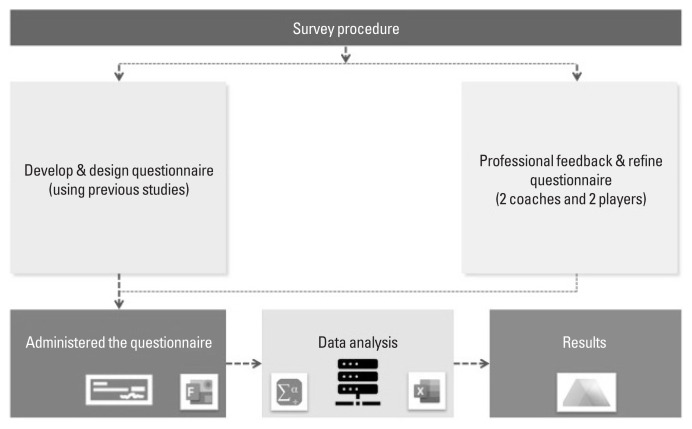
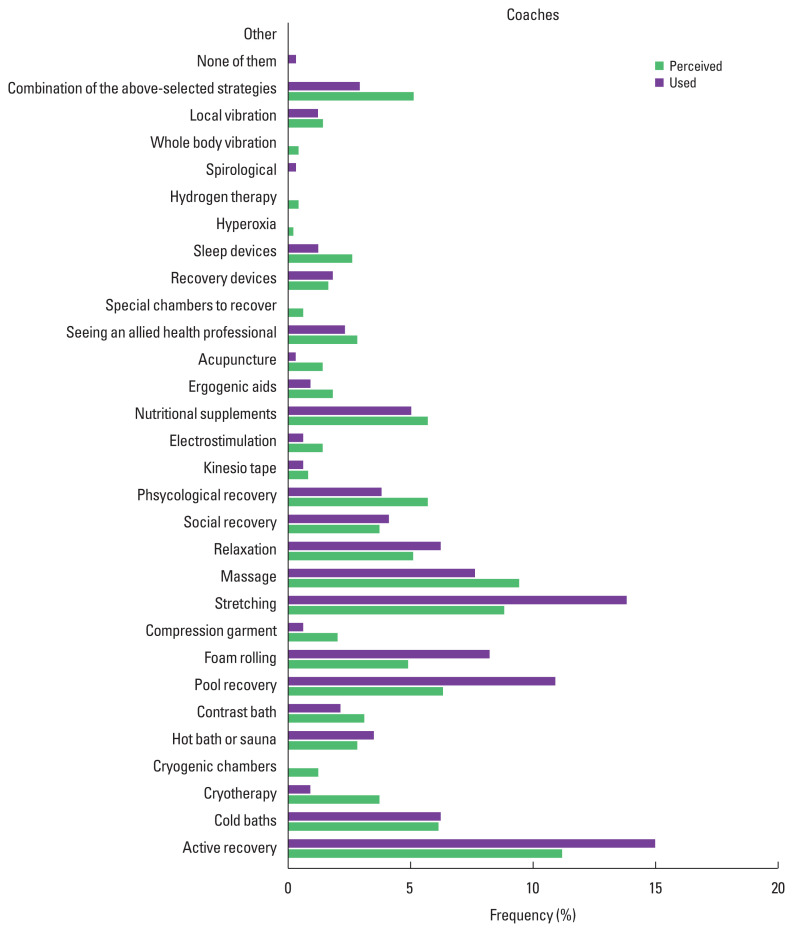
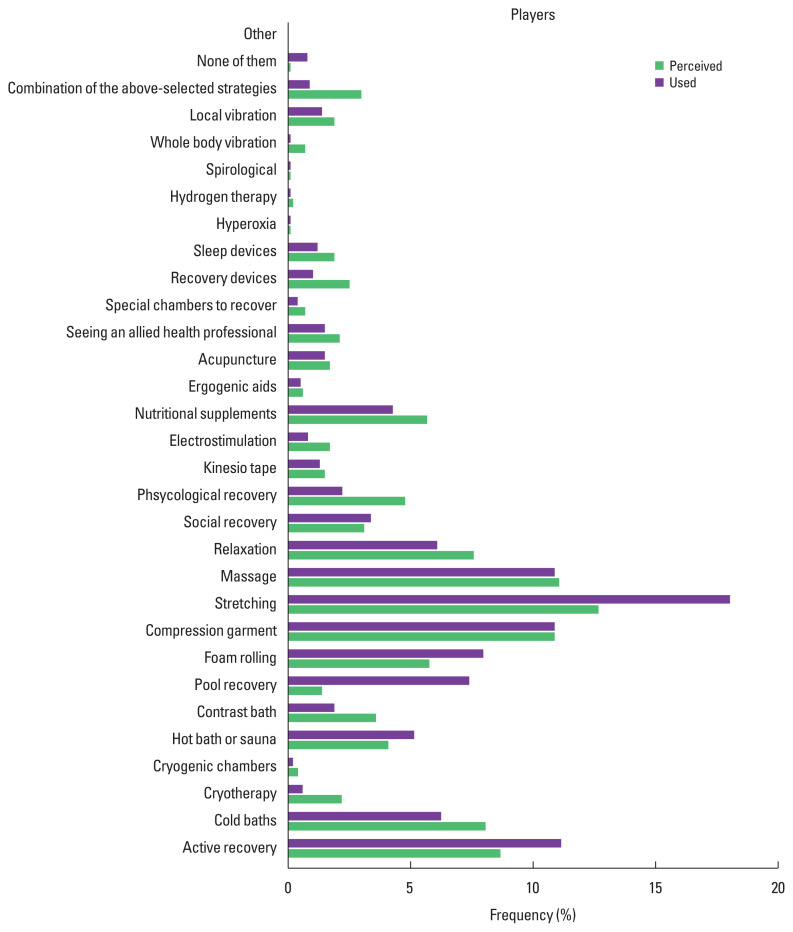
The objective of this study was to assess the perceived usefulness, actual use and limitations for the application of recovery strategies among water polo (WP) players and their coaches around the world. A total of 231 WP players and 76 coaches representing all continents, both genders and all levels of competition, completed a freely accessible online survey. This was divided into three sections: sociodemographic data (8 questions), importance of perceived usefulness of recovery strategies (3 questions), and actual use of recovery methods (6 questions). The majority of players and coaches considered recovery strategies as very important (52.4% and 59.2%, respectively) and posttraining session (28.1% and 26.5%) were the most frequently used times. The most selected reasons to justify their use were to reduce the injury risk (30.4% and 26.9%) and the most limitation to the use of recovery strategies were that they are too time-consuming (34.9% and 29%). In the case of the players, stretching were the strategies perceived as most useful and used (12.7% and 18.1%); and in the case of the coaches, it was active recovery (11.2% and 15%). The present study suggests a degree of discrepancy between the scientific literature and the research participants' perceptions and usages of recovery methods. This information may be of interest for coaches and technical staff of WP teams to look for appropriate recovery strategies for the improvement of their players' performance.
本研究的目的是评估世界各地水球运动员及其教练对恢复策略应用的感知有用性、实际使用情况和局限性。共有来自各大洲、不同性别和各级别的231名水球运动员和76名教练完成了一项可免费访问的在线调查。该调查分为三个部分:社会人口统计学数据(8个问题)、恢复策略感知有用性的重要性(3个问题)以及恢复方法的实际使用情况(6个问题)。大多数运动员和教练认为恢复策略非常重要(分别为52.4%和59.2%),训练后阶段(28.1%和26.5%)是最常使用的时间。选择使用恢复策略的最主要原因是降低受伤风险(30.4%和26.9%),而使用恢复策略的最大限制是它们太耗时(34.9%和29%)。就运动员而言,拉伸被认为是最有用且使用最多的策略(12.7%和18.1%);就教练而言,则是主动恢复(11.2%和15%)。本研究表明,科学文献与研究参与者对恢复方法的认知和使用之间存在一定程度的差异。这些信息可能会引起水球队教练和技术人员的兴趣,以便他们寻找合适的恢复策略来提高球员的表现。