Nikeghbal Kiana, Zamanian Zahra, Shahidi Shoaleh, Spagnuolo Gianrico, Soltani Parisa
Department of Oral and Maxillofacial Radiology, School of Dentistry, Shiraz University of Medical Sciences, Shiraz 71937, Iran.
Shahrekord University of Medical Sciences, Shahrekord 88168, Iran.
Materials (Basel). 2020 Sep 30;13(19):4371. doi: 10.3390/ma13194371.
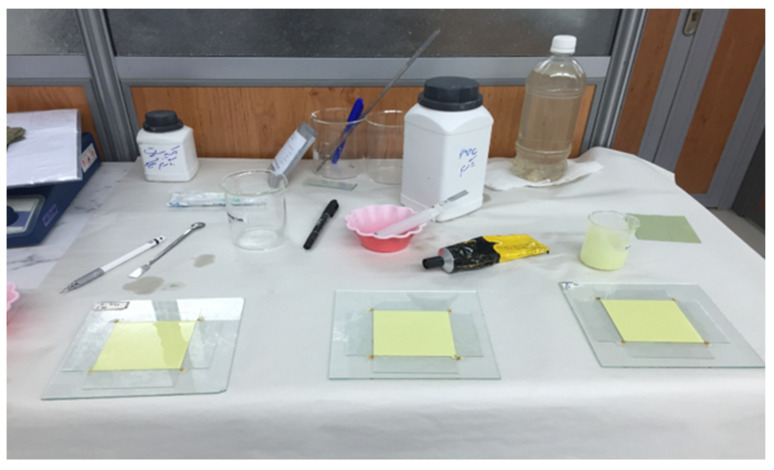
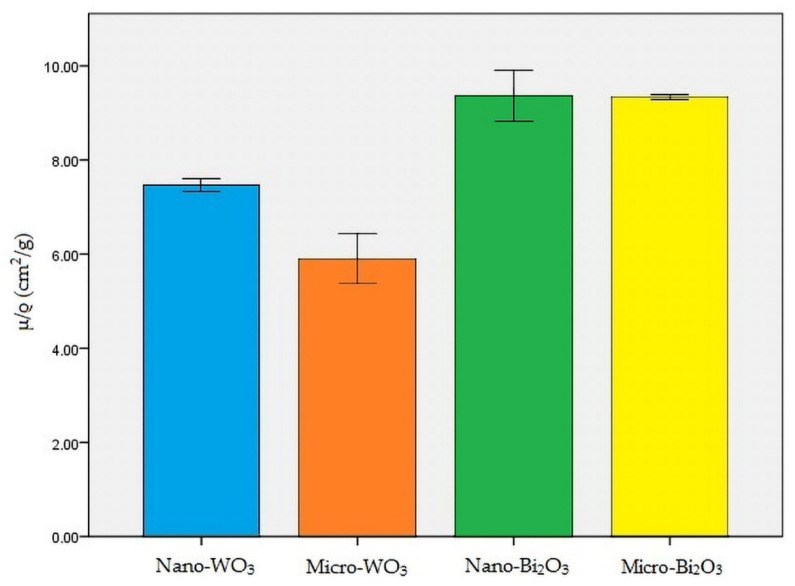
Researchers have always been interested in finding new and effective materials for protection against radiation. This experimental study aimed to design and fabricate new types of nano-material and micro-material based shields against the ionizing effect of cone beam computed tomography (CBCT) X-rays. To fabricate a flexible prototype, we added dioctyl phthalate (DOP) oil to emulsion polyvinyl chloride (PVC) powder. The paste was mixed and dispersed. Then, nano- and micro-powders of WO and BiO were added to the paste, with the weight ratio of 20% PVC, 20% DOP, and 60% nano- and micro-metals. Using an ultrasonic mixer, the polymer matrix and metals were mixed and a paste with a thick texture was developed. The resultant paste was poured into glass molds and the molds were then heated in an oven. After cooling, the resultant sheets were selected for further experiments. A CBCT unit and dosimeter were used to evaluate the characterization and X-ray shielding properties of the fabricated prototypes. The half-value layers (HVL) for nano-WO, micro-WO, nano-BiO and micro-BiO were 0.0390, 0.0524, 0.0351, and 0.0374 cm, respectively. In addition, the linear attenuation coefficient (µ) for these materials were 17.77, 13.20, 19.71, and 18.5 cm, respectively. The findings indicate that nano-structured samples are more effective in the attenuation of X-ray energy. The nano-structured WO prototype was nearly 34% more efficient in attenuating radiation compared to the micro-structured WO prototype. This difference in nano- and micro-structured BiO prototypes was 6.5%.
研究人员一直对寻找新型有效的防辐射材料感兴趣。本实验研究旨在设计并制造新型的基于纳米材料和微材料的屏蔽物,以抵御锥束计算机断层扫描(CBCT)X射线的电离效应。为制造一个柔性原型,我们将邻苯二甲酸二辛酯(DOP)油添加到乳液聚氯乙烯(PVC)粉末中。将糊状物混合并分散。然后,将WO和BiO的纳米粉末和微粉末添加到糊状物中,PVC、DOP和纳米及微金属的重量比分别为20%、20%和60%。使用超声混合器将聚合物基体和金属混合,制得质地浓稠的糊状物。将所得糊状物倒入玻璃模具中,然后在烤箱中加热模具。冷却后,挑选所得薄片进行进一步实验。使用CBCT设备和剂量计来评估所制造原型的特性及X射线屏蔽性能。纳米WO、微米WO、纳米BiO和微米BiO的半值层(HVL)分别为0.0390、0.0524、0.0351和0.0374厘米。此外,这些材料的线性衰减系数(µ)分别为17.77、13.20、19.71和18.5厘米。研究结果表明,纳米结构样品在衰减X射线能量方面更有效。与微米结构的WO原型相比,纳米结构的WO原型在衰减辐射方面效率高出近34%。纳米和微米结构的BiO原型之间的这一差异为6.5%。