Department of Surgery, Trinity Translational Medicine Institute, St. James's Hospital, Trinity College Dublin, Dublin 8, Ireland.
UCD Conway Institute & UCD School of Biomolecular and Biomedical Science, University College Dublin, Dublin 4, Ireland.
BMC Cancer. 2020 Oct 2;20(1):952. doi: 10.1186/s12885-020-07430-y.
Colorectal cancer (CRC) is the second most common cause of cancer-related mortality worldwide with one in every five patients diagnosed with metastatic CRC (mCRC). In mCRC cases, the 5-year survival rate remains at approximately 14%, reflecting the lack of effectiveness of currently available treatments such as the anti-VEGF targeting antibody Bevacizumab combined with the chemotherapy folinic acid, fluorouracil and oxaliplatin (FOLFOX). Approximately 60% of patients do not respond to this combined treatment. Furthermore, Bevacizumab inhibits dendritic cell (DC) maturation in poor responders, a key process for tumor eradication.
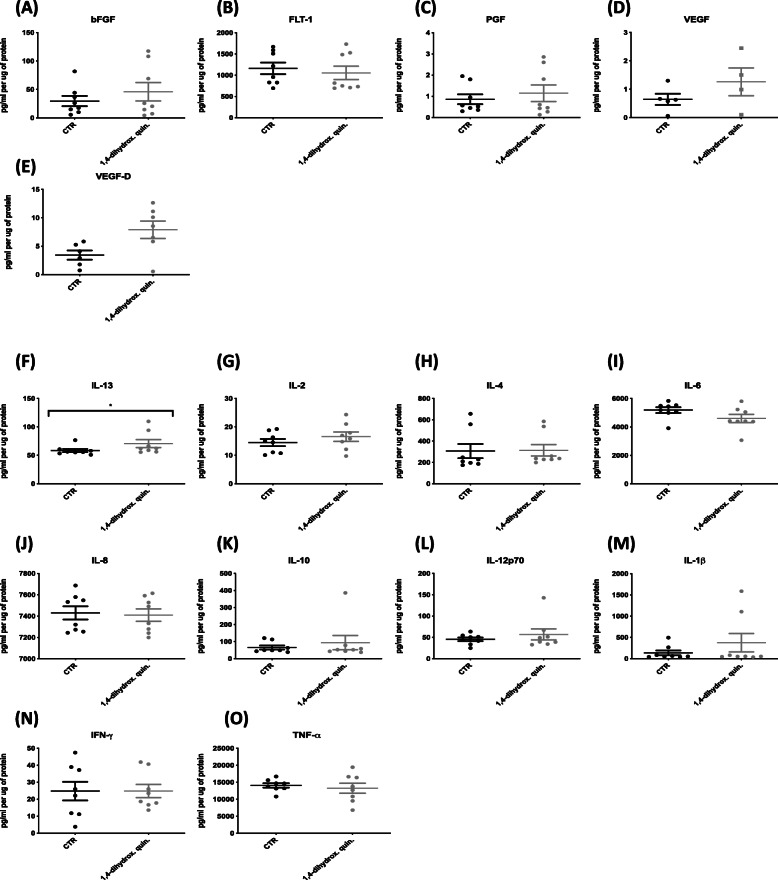
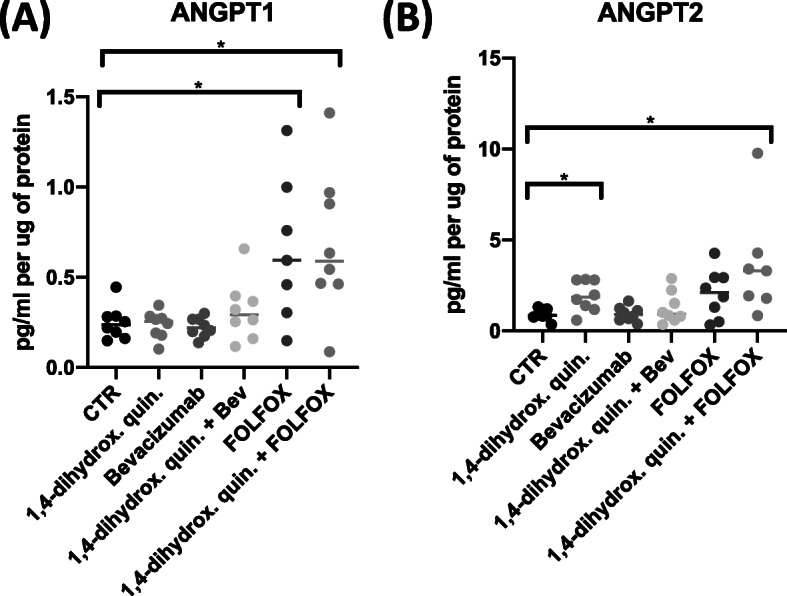
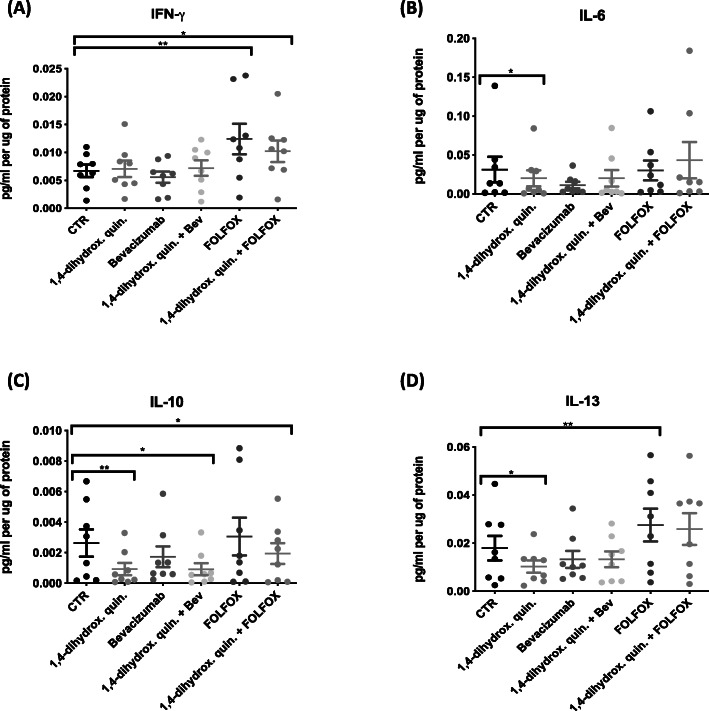
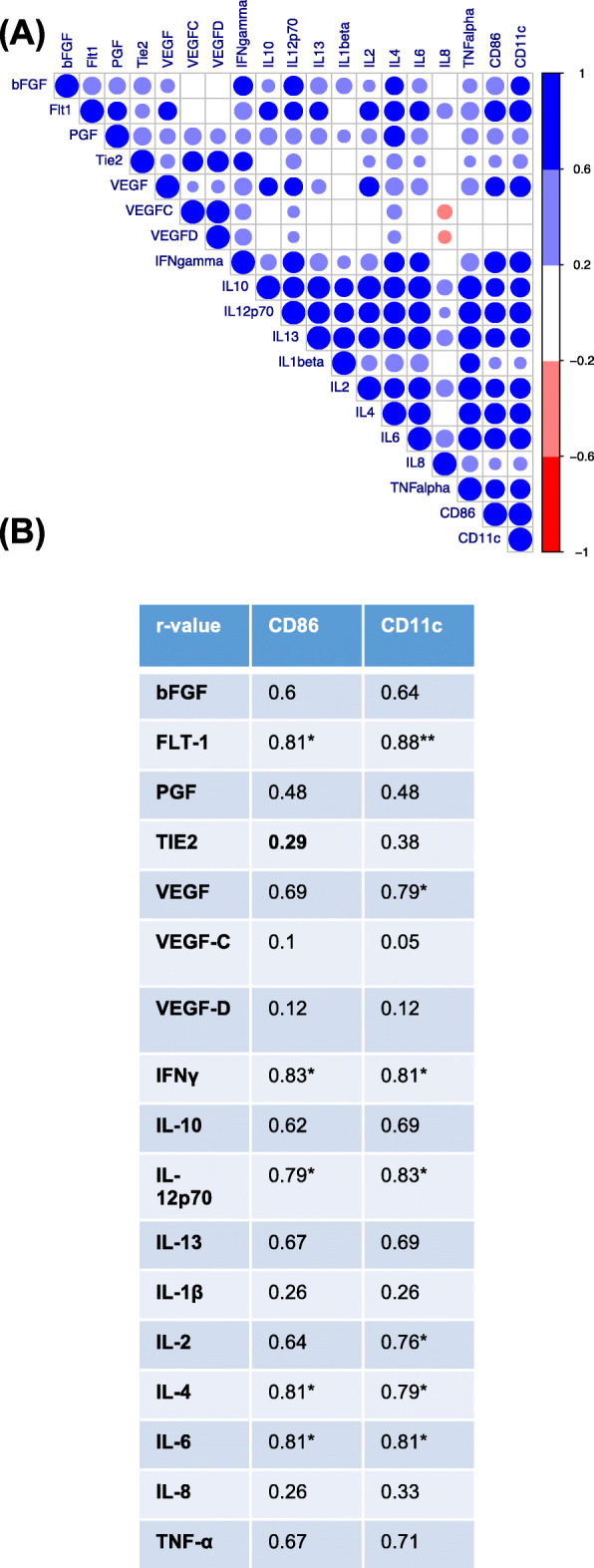
Following drug treatment, secreted expression levels of angiogenic and inflammatory markers in tumor conditioned media generated from human ex vivo colorectal tumors were measured by ELISA. Dendritic cell phenotypic and maturation markers were assessed by flow cytometry.
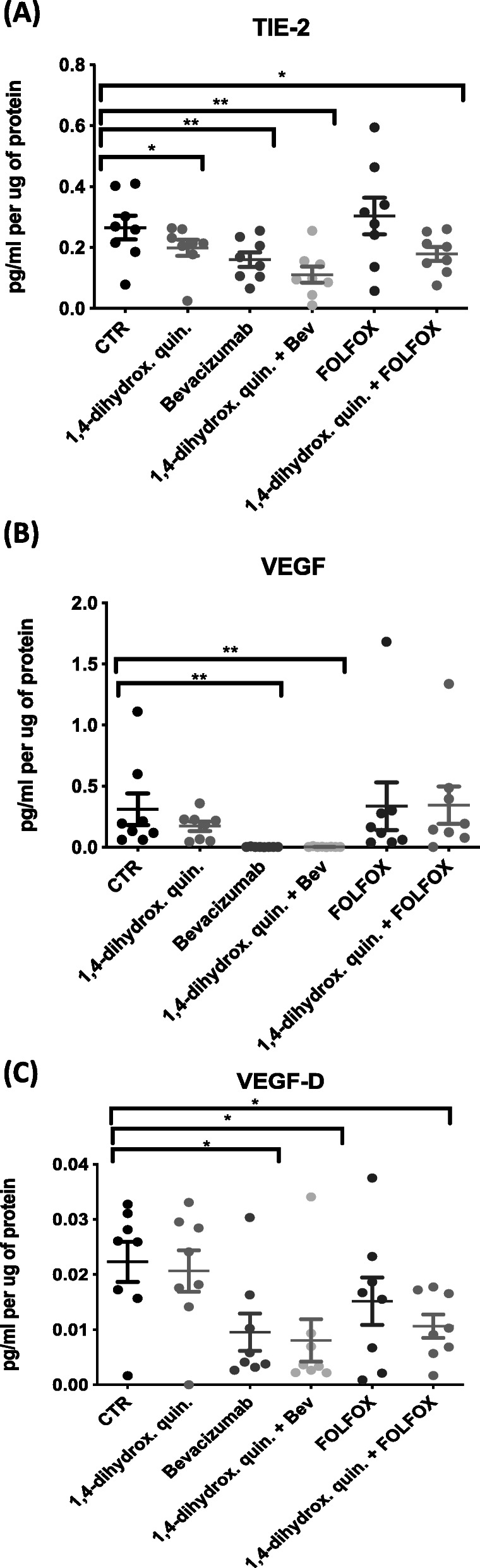
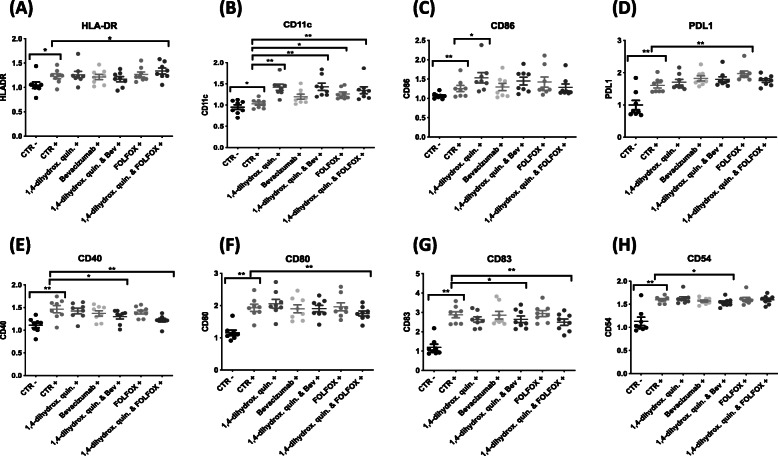
Our novel compound, 1,4-dihydroxy quininib, acts in an alternative pathway compared to the approved therapy Bevacizumab. 1,4-dihydroxy quininib alone, and in combination with Bevacizumab or FOLFOX significantly reduced TIE-2 expression which is involved in the promotion of tumor vascularization. Combination treatment with 1,4-dihydroxy quininib significantly increased the expression level of DC phenotypic and maturation markers.
Our results indicate the anti-angiogenic small molecule 1,4-dihydroxy quininib could be an alternative novel treatment in combination therapy for CRC patients.
结直肠癌(CRC)是全球第二大常见的癌症相关死亡原因,每五名患者中就有一名被诊断为转移性 CRC(mCRC)。在 mCRC 病例中,5 年生存率仍约为 14%,这反映了目前可用的治疗方法(如抗 VEGF 靶向抗体 Bevacizumab 联合化疗叶酸、氟尿嘧啶和奥沙利铂(FOLFOX))的效果有限。大约 60%的患者对这种联合治疗没有反应。此外,Bevacizumab 抑制了不良反应者树突状细胞(DC)的成熟,这是肿瘤消除的关键过程。
通过 ELISA 测量人离体结直肠肿瘤产生的肿瘤条件培养基中血管生成和炎症标志物的分泌表达水平。通过流式细胞术评估树突状细胞表型和成熟标志物。
我们的新型化合物 1,4-二羟基喹尼替尼与已批准的治疗药物 Bevacizumab 作用于不同的途径。1,4-二羟基喹尼替尼单独使用以及与 Bevacizumab 或 FOLFOX 联合使用时,均显著降低了 TIE-2 的表达,TIE-2 参与促进肿瘤血管生成。与 1,4-二羟基喹尼替尼联合治疗显著增加了 DC 表型和成熟标志物的表达水平。
我们的研究结果表明,抗血管生成的小分子 1,4-二羟基喹尼替尼可能是 CRC 患者联合治疗的一种替代新型治疗方法。