Emergency Department of China-Japan Friendship Hospital, No.2 of Yinghua East Street, Chaoyang District, Bejing, 100029, China.
Eur J Med Res. 2020 Oct 2;25(1):45. doi: 10.1186/s40001-020-00446-x.
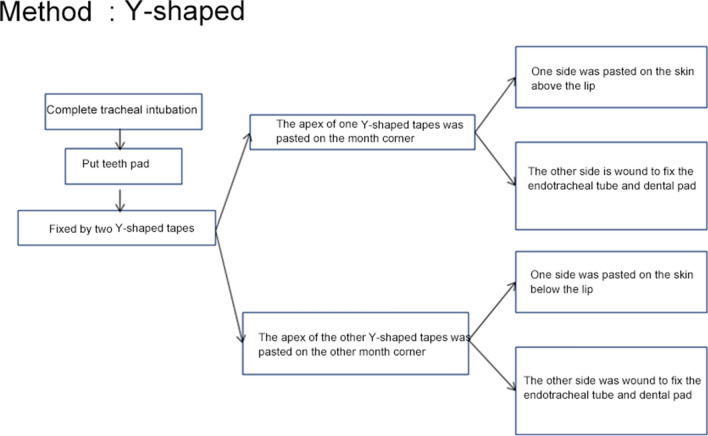
The present study aimed to compare three fixation methods for orotracheal intubation.
Through literature retrieval, the effects of the adhesive/twill tape method, fixator method, and adhesive/twill tape-fixator alternation method on patients with tracheal intubation in the intensive care unit (ICU) were compared.
The fixator and alternation methods were more effective in protecting the tongue mucosa and teeth. The alternation method was superior to the other two methods in maintaining the position of the endotracheal intubation. However, the difference in facial and lip injuries between the three methods was not statistically significant.
The fixator method can significantly reduce intraoral injury and is more suitable for older people with weak tongue mucosa and loose teeth. These are worth popularizing among a wider group.
本研究旨在比较三种经口气管插管固定方法。
通过文献检索,比较了粘性/斜纹胶带法、固定器法和粘性/斜纹胶带-固定器交替法对 ICU 气管插管患者的影响。
固定器法和交替法在保护舌黏膜和牙齿方面更有效。交替法在维持气管插管位置方面优于其他两种方法。然而,三种方法对面部和唇部损伤的差异无统计学意义。
固定器法可显著减少口腔内损伤,更适合舌黏膜较弱、牙齿松动的老年人。这些方法值得更广泛地推广。